

05 November 2025
SD Guthrie’s Stellar Nine-Month Net Profit Soars, Surpassing RM2 billion
- Solid contribution from Upstream operations in Papua New Guinea drove higher upstream profits
- Industrial Development segment realises maiden gains as profits begin to materialise
Petaling Jaya, 5 November 2025 – SD Guthrie Berhad (Guthrie or the Group), delivered an impressive net profit exceeding RM2 billion for the nine months ended 30 September 2025 (9M FY2025), a 44% increase from the previous corresponding period. The Group’s year-to-date (YTD) performance was driven by sustained strong contributions from the Upstream segment as its profit before interest and tax (PBIT) grew by 53% year-on-year (YoY), further complemented by promising contributions from the Industrial Development segment.
Net profit for the quarter (3Q FY2025) rose to RM935 million, a 22% YoY increase against the RM766 million recorded in 3Q FY2024. Higher average realised Crude Palm Oil (CPO) and Palm Kernel (PK) prices and productivity improvements in the Group’s Upstream operations drove the improved results. Meanwhile, encouraging performance from the Group’s Upstream operations in Papua New Guinea (PNG), Solomon Islands (SI), and Malaysia contributed to the Group’s rise in fresh fruit bunch (FFB) production.
SD Guthrie International (SDGI), the Group’s Downstream segment, recorded higher margins in its Asia Pacific bulk operations and enjoyed an increased demand of products in the Oceania region resulting in a PBIT of RM154 million in 3Q FY2025, an 18% YoY increase from RM130 million in 3Q FY2024.
The Industrial Development business vertical demonstrated promising progress, recording gains in its share of profits from the sale of land to Eco Business Park 7 Sdn Bhd, Guthrie’s tri-partite joint venture with Eco World Development Group Berhad and NS Corporation to develop an integrated industrial park on 1,195 acres of land in Bukit Pelandok, Negeri Sembilan. The gains further contributed to the segment’s RM432 million PBIT in 3Q FY2025.
Key Highlights
| 3Q FY2025 | 3Q FY2024 | YoY +/(-) | 9M FY2025 | 9M FY2024 | YoY +/(-) | |
|---|---|---|---|---|---|---|
| Revenue (RM mil) | 5,411 | 5,267 | 3% | 15,397 | 14,574 | 6% |
| PBIT (RM mil) | 1,264 | 1,151 | 10% | 2,886 | 2,156 | 34% |
| Net Profit (RM mil) | 935 | 766 | 22% | 2,007 | 1,392 | 44% |
| CPO Price Realised (RM/ MT) | 4,210 | 3,949 | 7% | 4,292 | 3,957 | 8% |
| FFB Production (MT mil) | 2.30 | 2.29 | 1% | 6.59 | 6.46 | 2% |
| Oil Extraction Rate (OER) (%) | 21.08 | 20.85 | 0.23 | 21.15 | 20.95 | 0.20 |
Chairman, Tan Sri Dr Nik Norzrul Thani Nik Hassan Thani said:
“I am encouraged by Guthrie’s resilience and adaptability in navigating the volatile and uncertain global operating environment. This is a clear demonstration of the tireless effort and dedication of our people in building this organisation to where it is today. With its strong foundation, I am optimistic that Guthrie will sustain its momentum and deliver sustainable growth and long-term value to our stakeholders.”
Group Managing Director, Datuk Mohamad Helmy Othman Basha said:
“Ranking first in the SPOTT assessment was a proud moment for all of us at Guthrie. We work hard and with integrity because it is our fundamental belief that the principles of sustainable development should be embraced and implemented by all businesses. SPOTT shines a light on supply chain transparency which enables partners to work together to advance industry standards and to foster value creation.
At the same time, it is exciting to witness meaningful progress in our new business verticals, particularly the Industrial Development segment. Whilst this is a relatively new frontier for us, we are committed to establishing a clear and impactful path forward, anchored by the synergistic strengths of our strategic collaborations. This is a testament that we are proactively future-proofing our business and unlocking long-term value across adjacent business.
As we continue to build stability across our emerging new business pillars, we remain focused on our core operations. Operational excellence across our integrated value chain will continue to be a key driver of sustainable performance for the Group in the foreseeable future.”
OUTLOOK FOR REMAINING FY2025:
In the coming weeks, CPO prices will be supported positively by expectations of tighter supply as the industry enters a seasonally low output cycle. Despite palm oil’s narrowing price competitiveness against other vegetable oils, demand is expected to remain resilient, as Indonesia reaffirmed plans to launch its B50 biodiesel mandate. However, volatility in the vegetable oil market is likely to persist amid macroeconomic headwinds, policy and regulatory shifts, and global trade uncertainties.
Building on the positive momentum from its new business verticals, the Group is actively progressing several promising collaborations. These initiatives are set to further strengthen the Group’s position in its adjacent Industrial Development and Renewable Energy business, with a clear focus of unlocking value from its strategic landbank assets.
Barring any unforeseen circumstances, the Group is optimistic in delivering a strong performance in FY 2025.
To download PDFs:
English
Bahasa Malaysia

04 November 2025
SD Guthrie Ranks Top in Global SPOTT Palm Oil Assessment
- Scoring 97.5% in SPOTT, an initiative by Zoological Society of London, Guthrie leads in transparency of disclosure on sustainability practices among global palm oil companies
Petaling Jaya, 4 November 2025 – SD Guthrie Berhad scored a first, coming in top spot in the annual SPOTT palm oil assessment. Scoring an outstanding 97.5% in the assessment, Guthrie’s remarkable accomplishment marks a significant leap forward in its sustainability journey, reflecting years of dedicated effort, transparency, and commitment to responsible palm oil production.
Developed by the Zoological Society of London (ZSL), SPOTT scores palm oil, tropical forestry, and natural rubber companies annually against over 100 sector-specific Environmental, Social, and Governance (ESG) indicators to benchmark their progress over time.
“Guthrie’s climb to the number one rank on SPOTT reflects our commitment to responsible agriculture, traceability and responsible sourcing, all of which are critical in strengthening the trust of our stakeholders. We are delighted that our continuous effort to improve our transparency and disclosures have been reflected in this higher score,” said Rashyid Redza Anwarudin, Guthrie’s Chief Sustainability Officer. In 2024, Guthrie came in third place with a score of 94.8%.
 SPOTT evaluates how openly companies disclose their sustainability practices, supporting the financial sector and supply chain stakeholders to manage ESG risk through its assessment of the public disclosure and reporting of soft commodity companies. For the palm oil industry, it assesses 100 producers, processors and traders on their public disclosure regarding their organisation, policies and practices related to ESG issues. Each company receives a percentage score to benchmark their progress over time.
“Achieving transparency of sustainability practices across our entire organisation is no mean feat, given the magnitude of Guthrie’s global operations. This achievement reinforces our determination to continue pushing the envelope, to set standards that will catalyse positive change within the industry, through engagements and collaborations,” Rashyid added.
Among the top 10 companies on SPOTT this year, Guthrie holds the largest landbank. It operates in 12 countries, with upstream operations in Malaysia, Indonesia, Papua New Guinea and Solomon Islands, and serves customers in more than 80 countries. More than 46,000 smallholders are part of Guthrie's supply chain, adding complexity to transparency initiatives. By 2035, Guthrie expects to support at least 50,000 smallholders which will offer greater market access to communities that may otherwise be marginalised. Guthrie is also the world’s first palm oil company with net-zero greenhouse gas emissions reduction targets approved by the Science Based Targets initiative (SBTi).
Click here to view the full list on SPOTT’s website.
To download PDFs:
English
Bahasa Malaysia

03 November 2025
Partners in Action
Speech by Datuk Mohamad Helmy Othman Basha, Group Managing Director of SD Guthrie and Chairman of the Malaysian Palm Oil Board (MPOB), at RSPO RT2025 – Shangri-La Hotel Kuala Lumpur, Malaysia, 3 November 2025

Good afternoon, ladies and gentlemen, distinguished guests, partners in the palm oil industry, friends.
For nearly 30 years, I have been privileged to work in the plantation industry, across estates, mills, and refineries in Malaysia, Indonesia, Papua New Guinea, the Solomon Islands, and Liberia. I was part of the generation that followed the pioneers, still breaking new ground.
Over the years, I have seen with my own eyes, the development of the industry – from the perspective of smallholders, small companies, large companies, communities, and nations. Ring side seats to witness the changes that the industry has brought – yes, negative sometimes, but mostly positive.
I chose the title of this speech “Partners in Action” because it fits with the RSPO’s theme for 2025, “Building the next 20: Sustainability in Action”.
Building something from the ground up takes skill, perseverance, and a clear sense of purpose. After 20 years, we have acquired skillsets that never existed before, and all major companies have at least one department that did not exist 20 years ago – the sustainability department. We have learnt how to persevere against the toughest of situations – my fellow planters will understand what I mean. While some of us here lived through those tough situations, some others also in this room, may have caused them. And yet, we are here today, together, … mostly, living our purpose – which is, to produce, and to support the production and use of certified sustainable palm oil.
At 20 years old, in most countries, the RSPO would be eligible to vote and have a drink. At 20, it is also old enough to do some soul searching. It has built itself from the ground up, because of the skills, perseverance and the sense of purpose that bound its members. It has lasted 20 years because of this partnership and shared vision.
To build on the efforts of the last 20 years, all of us here in this room, must work together towards a common goal. We all know that transformation is only possible when partners work together. For us, that means when growers, governments, brands, financiers, and NGOs come together around a shared vision: to make sustainable palm oil the norm, not the niche.
For partnerships to work, we must be honest with each other. We must be accountable. And we must support each other. I must be able to trust you, as you must be able to trust me.
Big word, isn’t it? Trust.
How does a grower show that it can be trusted. In a word? Traceability.
Twenty years ago, sustainability was a new language. Certification was experimental. Traceability wasn’t in the picture. Today, you can open an app and it’s all there at your fingertips. We’ve done that. All of us together. We have turned what was once a controversial crop into one of the most transparent and traceable commodities in the world.
So, we know how a planter shows good faith. But how would a food company show good faith? Show us, we can trust them? I’ll tell you how, By standing by us and supporting us. By speaking up and speaking to the truth. Yes, and also by calling us out when you need to, and working with us to correct situations that have gone wrong. Unfortunately, I can also tell you how you can show bad faith.
It is hard to accept that those whom we call our partners, some of whom are members of the RSPO, our allies in the sustainability journey – it is hard to accept that those with a seat in this room may choose silence or worse, distance themselves from the very product they claim to support.
This, ladies and gentlemen, is what I mean.
“No palm oil” label by RSPO Members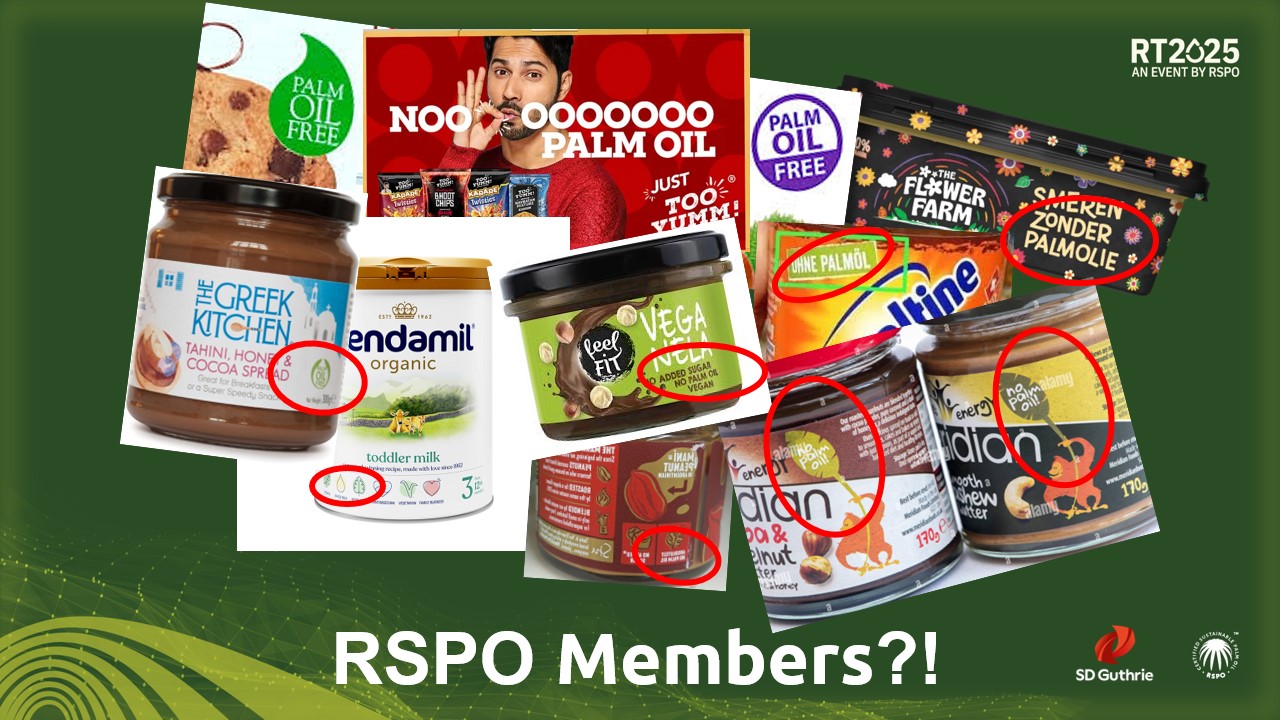
There are brands that sit with us at the same table, that claim to believe in sustainable palm oil — yet proudly sell products that say “No Palm Oil.”
What message does that send to consumers? What does it say about partnership?
If we are truly “Partners”, then our advocacy must match our membership. Our words must match our actions.
We cannot preach sustainability in this room but reinforce the old rhetoric that palm oil is bad. Make no mistake, when you advertise the absence of palm oil, what you are saying is, “this product is good, because there is no palm oil in it.”
Ladies and Gentlemen, to believe in Certified Sustainable Palm Oil is to defend it — consistently, publicly, and without apology. If you are a global brand, you can't hide by claiming your business in Spain is run independently from the one in Malaysia. Just like Guthrie cannot say our business in South Africa is independent from our business in Solomon Islands when it comes to sustainability.
I will be the first to admit, that we don’t get everything right all of the time. Nobody does. In fact, the learning curve is still pretty steep for some. But you must admit, that just as the RSPO has come a long way, so has the industry.
For years, palm oil was associated with deforestation. The images were powerful, emotional, and lasting. However, the narrative has shifted as the changing climate demands honesty. The truth is obvious – the problems the world is facing was never all about palm oil – despite the headlines of the past.
We all know that if every hectare of oil palm plantation in the world is returned to forest, the world would be much worse off. Deforestation would increase as less efficient replacement crops were planted to meet global vegetable oil demand. Socio economic challenges will befall thousands of smallholders and small companies in the producer countries, as they turn towards less financially rewarding crops.
Now, as the narrative seems to be catching up with the reality, we can focus on the real issues that need to be addressed.
What defines a responsible industry is not perfection; it is progress.
What defines a responsible industry is progress
In the case of palm oil, that progress has been driven by regulations, by corporate NDPE policies, by satellite monitoring, by sheer hard work from growers on the ground — by the standards that the RSPO itself has helped shape. And yes, by those buyers who recognise the cost of all these efforts and agree to pay premiums.
To be clear, I am not saying that the industry did not deforest. We did. Neither am I saying that the industry is net zero. We are not. What I am saying is, all human activity affects the environment – mostly negatively. Thus, the singling out of one crop as the primary cause of deforestation, was at best disingenuous, and at worst, a crime against humanity. Because all those calls to ban palm oil for causing deforestation, allowed more serious damage caused by other industries to continue.
This is the data on deforestation…
Deforestation Trends in Indonesia and Malaysia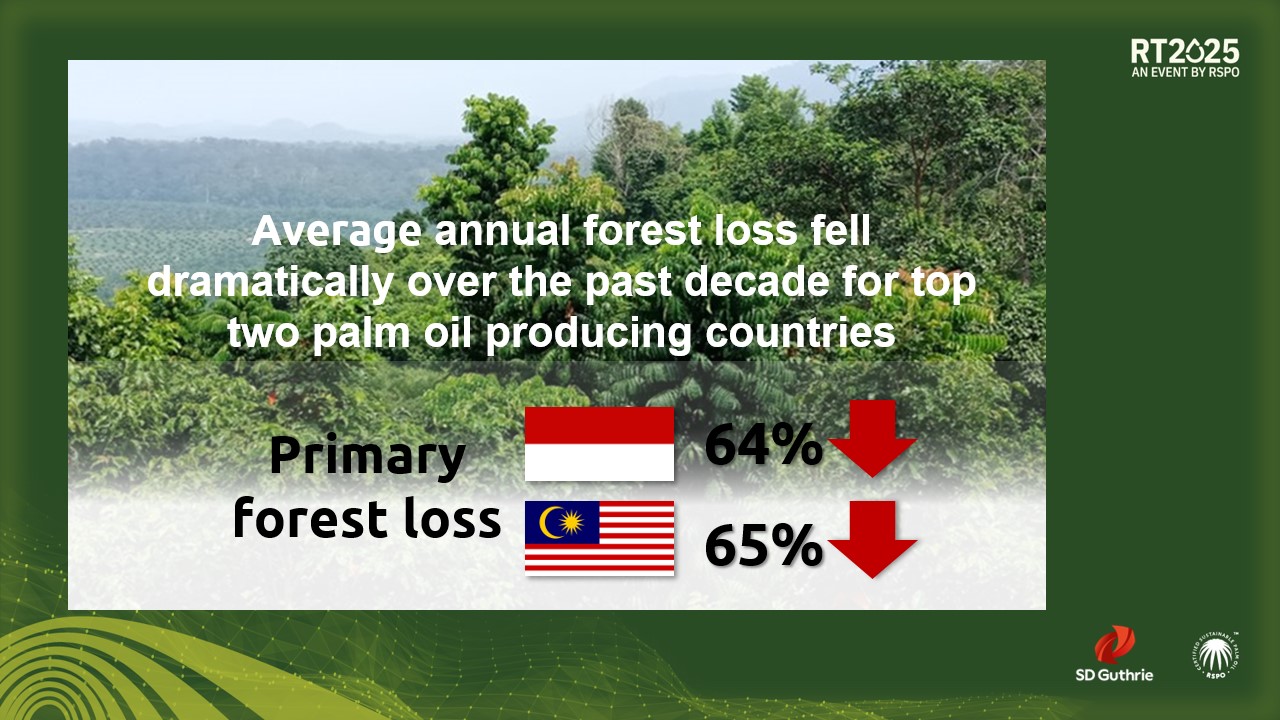
According to the World Resources Institute and Global Forest Watch, primary forest loss in Malaysia and Indonesia has dropped sharply over the past decade.
In Malaysia, it has fallen by more than 60% since its peak. In Indonesia, the trend has been consistent — year after year of declining deforestation, the lowest rates since records began.
Both countries have over 50% of forest cover – more than many rich countries in the world.
These are not empty claims. These are verifiable facts. Facts that too often get ignored and sometimes trivialised.
Take for example the EUDR. A record of declining deforestation and maintaining forest cover at above 50%, landed Malaysia a “standard risk” rating. And yet, other countries with worse track records and lower forest cover, were rated “low risk”. To some of us, it felt like the same old tune – victimise palm oil producers, so the others can continue to do what they always have done.
Applying a single standard for land use change is unfair. However, applying a more stringent standard on a poor or developing country is economic apartheid.
Deforestation cannot be considered in isolation. It has to be considered alongside economic development. The only equitable and ethical solutions for poorer countries are to allow them to use their natural resources and …. this is going to be unpopular … but hear me out … they should be allowed to lose some of their forest to stimulate economic activity for their people.
The quid pro quo? Every rich country that has less than 50% forest cover needs to step up and start planting. Or … they need to start paying underdeveloped nations to maintain their forests.
There is no other way.
Ladies and gentlemen, the hypocrisy needs to stop.
Over the past three decades, while palm oil was being painted as one of the great environmental villains, fossil fuel producers — whose emissions are the largest direct cause of climate change — often escaped equivalent moral outrage, despite having far greater, global-scale impacts.
When fossil fuel use is often excused in the name of ‘energy security’, sustainable palm oil is banned in the name of ‘deforestation’.
Thanks to all these double standards that developing countries cannot afford to fight against, a new challenge is emerging — one that affects global availability itself.
The relentless negativity towards palm oil has resulted in some markets pushing it away. And so, the anti-palm oil folk may soon get their wish – the world is already seeing the steady disappearance of palm oil from the global market. Indonesia, the world’s largest producer of palm oil by far, is turning inward.
Biodiesel Blending and Supply Impact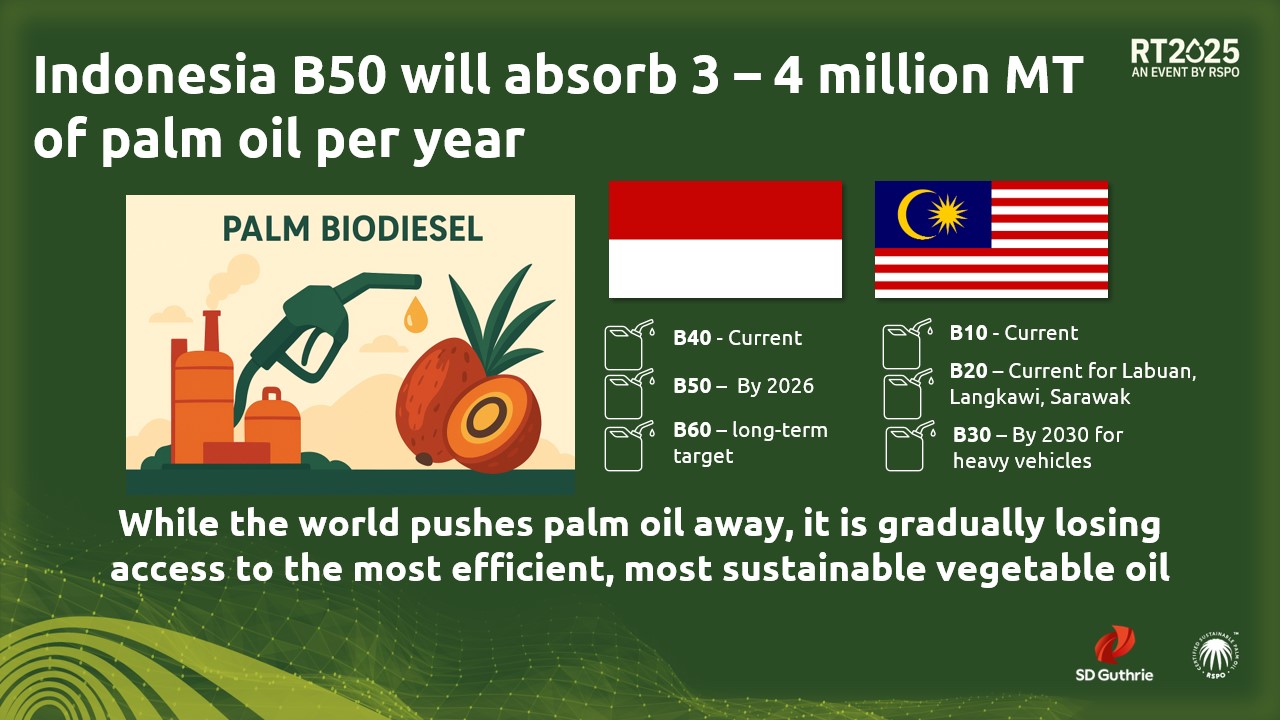
Indonesia is already running B40, with B50 on the horizon and B60 in discussion.
Malaysia is advancing toward B30.
Each increase in blending means more palm oil used domestically for energy — and less available for export.
Analysts estimate that if Indonesia reaches B50, that alone could absorb an additional 3 – 4 million tonnes of palm oil per year.
So, while the global North debates whether to “phase out” palm oil, the two biggest producers are blending it for fuel. Is this the outcome that the anti-palm oil lobby wanted?
The world is losing access to the most efficient, most productive, and most sustainably produced vegetable oil. What are they going to replace it with … and how will that replacement be produced?
It will be easy to say that Indonesia should not move to B50. Sure. But what choice did they have? Every government in the world today protects its own. The countries that were considered “leaders” and our betters, are also taking care of themselves.
Norway became rich on oil money and is still one of the largest exporters of crude oil in the world. Netherlands – a great agricultural country – has more farm animals than people. And … I won’t say anything about the United States. Every country takes care of its own. And Indonesia has the right to do just the same.
If the world continues to reject palm oil using one-sided, myopic, colonial thinking, it will pay the price — in food security, in affordability, in climate targets.
Ladies and gentlemen, now let’s talk about people.
Sustainability is not just about the environment; it is about lives too.
Just Transition for Our Smallholders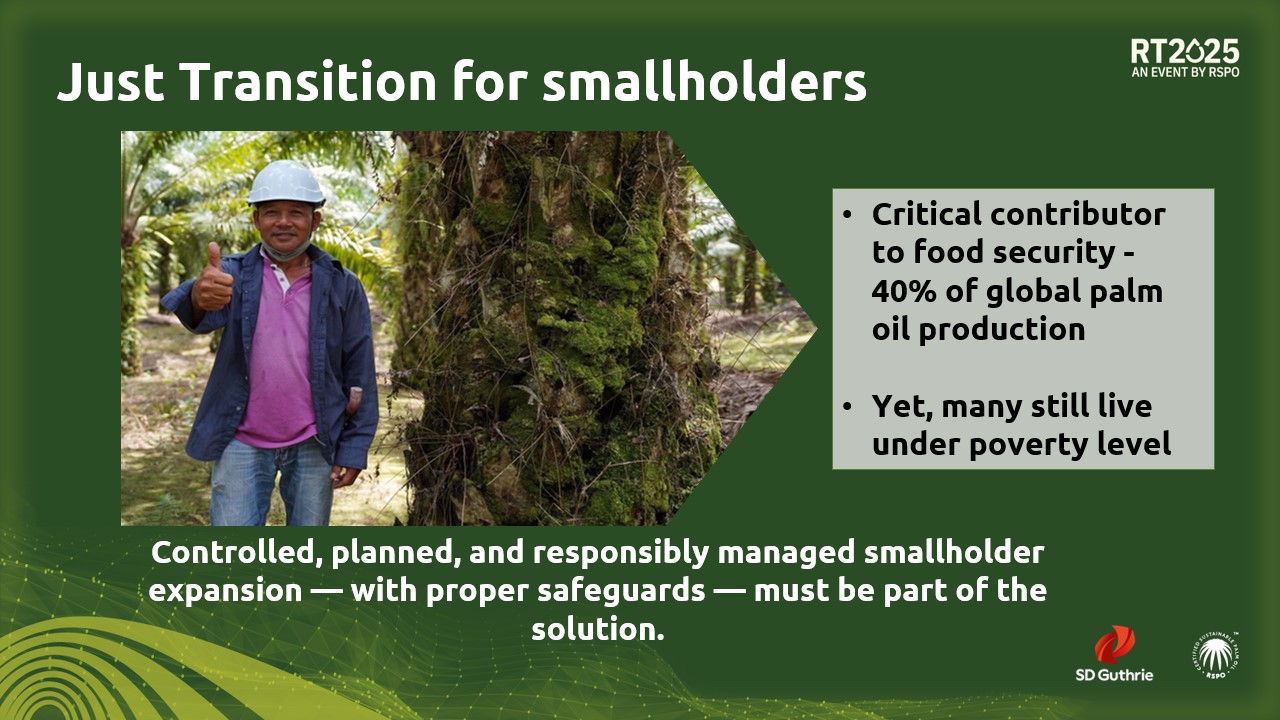
We cannot talk about partnership, without talking about our most important partners - our smallholders. They are the backbone of this industry — in Malaysia, in Indonesia, in Papua New Guinea, and beyond.
In Papua New Guinea for example, smallholders represent nearly half of all palm oil output. But unemployment remains high, and families still live below the poverty line. For the record, PNG has the 8th highest percentage of forest cover in the world. For many in this country, oil palm is the only viable livelihood. It pays for education, healthcare, mobility, dignity ... And it is the hope for a better life for their children.
If we deny them that opportunity — if we say “no expansion ever” — we are effectively saying to them: stay poor, stay behind. That is not sustainability — that is hypocrisy.
That is not what sustainability stands for.
It is our responsibility as members of the RSPO and for the RSPO itself, to find a way to allow the people of PNG and other countries like it, to find a balance between environmental integrity and social justice.
We must support smallholders to grow responsibly, not lock them out of prosperity.
Controlled, planned, and responsibly managed smallholder expansion — with proper safeguards — must be part of the solution.
So, how do we move forward? What does real partnership in action look like?
First, it means standing up, not standing by.
Defining True Partnership
When we see misinformation, we must call it out — not stay silent in fear.. We know what that fear looks like, because we have seen it.
Second, it means telling our story — loudly, visually, emotionally. Facts are powerful, but faces persuade.
Third, it means not betraying our partners.
Our presence here means, we have all signed up to a common purpose. None of us should betray that trust. If we do, we do not deserve a seat at the table.
And finally, it means inclusion — ensuring that smallholders, communities, and workers are part of this journey, not victims of it.
I stand here not just as the head of one company, but as part of an industry.
Here is a fact. Guthrie is one of the largest producers of the most productive and sustainable edible oil on Earth. The best part? We are not alone. There are many in this room who do what we do, every day, day and night. I salute you.
And I make no apology for calling out the hypocrisy of some countries or some members of RSPO. You may have a Cause to champion now and I am a firm believer of that Cause. But without addressing the issues that I have raised, you will soon find that your Cause and RSPO along with it may become irrelevant.
We know that palm oil — done right — feeds billions, sustains the livelihoods of millions, and protects more forest per tonne of oil than any other crop.
Let’s not allow others to define us. Let’s define ourselves — truthfully, transparently, and together.
This is what Partners in Action truly means: standing shoulder to shoulder, telling one story — the right story — for the future of sustainable palm oil.
Thank you.
To download PDFs:
English
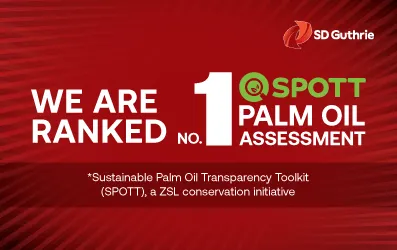
SD Guthrie secured the no. 1 ranking on the SPOTT index for the palm oil sector in 2025 with a 97.5% transparency score.
The SPOTT (Sustainability Policy Transparency Toolkit) ESG Transparency Index is a tool developed by the Zoological Society of London (ZSL) that tracks the public disclosure of environmental, social, and governance (ESG) policies by commodity producers, processors, and traders. The recognition affirms Guthrie’s commitment to traceability, accountability, and responsible sourcing – key factors for our stakeholders to navigate ESG risks. We remain committed to continuous improvement and contributing to higher standards across the industry.
31 October 2025
Carey Heritage Ride Wraps Up a Vibrant October Celebrating Sports and Biodiversity
- The beauty and uniqueness of Carey Island was on show during the inaugural Carey Heritage sports events and bird photography competition
Petaling Jaya, 31 October 2025 – The beauty and uniqueness of Carey Island were on full display during the recent SD Guthrie (Guthrie) Carey Heritage sports events and bird photography competition. From the swift cadence of cyclists, to the rhythmic strides of runners and the quiet focus of photographers capturing elusive birdlife, Carey Island pulsed with energy, culture, and natural beauty.
These events not only celebrated National Sports Month but also highlighted Carey Island’s rich heritage and ecological charm.
The recently concluded Carey Heritage Ride brought together over 160 cycling enthusiasts, with 18 participants taking on the 20KM route, 92 tackling the 45KM challenge, and 52 pushing through the demanding 100KM course.
The event showcased not only athletic endurance but also the scenic charm and cultural richness of Carey Island, said Guthrie's Group Managing Director, Datuk Mohamad Helmy Othman Basha.
“The weather was perfect, everything went smoothly, and many participants gave us positive feedback because this year’s event was well-organised, with clear pit stops, signboards, and directions.
“They were excited to discover that Carey Island is only 40 to 45 minutes from Kuala Lumpur and offers such scenic beauty,” he said, adding that the events organised aligned with October being the National Sports Month.
Guthrie encourages its employees, friends and families to stay active and to participate in outdoor activities, including cycling, running, tennis, or volleyball. “Two weeks ago, we organised the Carey Run, and the response was very encouraging,” Mohamad Helmy said, adding that Guthrie will host cycling events every two months.
The Carey Ride 2026 will kick off in February and will be open to the public with a minimal participation fee.
On 12 October, The Carey Heritage Run drew more than 1,100 runners, which included members of the public and Guthrie employees, to the lush landscapes of Carey Island. The run event featured 12 categories: 21, 10 and 5 kilometre runs, for men, women and veteran men and veteran women. The run was flagged-off from 6.30 a.m. to great fanfare and festivity.
During the run, Guthrie’s women leaders, Board Member Jenifer Thien and Chief Human Resources Officer Shahrizan Aini Shamsul Khalil, made their mark by securing 2nd and 3rd place respectively in the 10KM Women’s Veteran category — a proud moment for all present.
The run, followed the success of the Carey Heritage Bird Photography Competition, held the weekend before, during which, nature enthusiasts documented 65 bird species in stunning detail, a testament to the island’s rich biodiversity and its growing reputation as a haven for eco-tourism and conservation. Of the 65 bird species spotted last week, 34 were new ones identified during the weekend, thus bringing the tally of sighted species to about 100.
To download PDFs:
English
SD Guthrie is proud to be ranked 85th in the Fortune 2025 Southeast Asia 500, a list that recognises the region’s largest companies by revenue.
The Fortune Southeast Asia 500 is a prestigious annual ranking that celebrates leading corporations driving economic growth across the region. It highlights businesses that play a significant role in shaping Southeast Asia’s industries, from energy and plantations to finance, manufacturing and technology, reflecting their scale, performance and influence in the regional economy.

SD Guthrie is the winner for the Best Corporate Responsibility (CR) Initiatives category at The Edge Malaysia BRC Awards 2025.
The Edge Malaysia Billion Ringgit Club (BRC) Awards 2025, organised by The Edge Malaysia, recognise public-listed companies that demonstrate excellence in business performance, corporate governance, and sustainability practices.
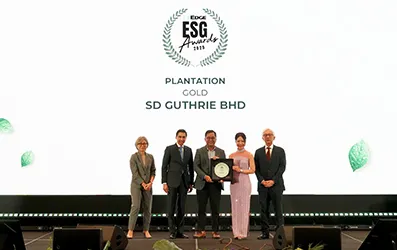
SD Guthrie received the Gold Award for Plantation Sector at the Edge Malaysia ESG Awards 2025.
The awards, organised by The Edge Malaysia, aim to highlight corporations that integrate sustainability into their core strategies and operations - setting benchmarks for transparency, ethical practices and long-term value creation.

SD Guthrie has been awarded Bronze in the Excellence in Workplace Culture category at the HR Excellence Awards 2025.
The HR Excellence Awards is a regional platform that celebrates the best in HR, bringing together organisations and teams who drive meaningful change in the workplace.