

27 October 2026
Wildlife Findings Point to Opportunities for Ecological Connectivity in Sabah Palm Oil Landscape
Petaling Jaya, 27 October 2026 – Camera trap surveys in identified ecological corridors within Guthrie's plantation landscape in Sabah recorded several threatened species, including the Bornean clouded leopard, sun bear and Sunda pangolin, highlighting the importance of connected habitats within production landscapes and their potential role in supporting biodiversity conservation.
The wildlife records form part of a baseline assessment conducted under a regenerative palm oil pilot jointly implemented by Guthrie and WWF-Malaysia. Covering about 13,000 hectares within Guthrie's Binuang plantation in eastern Sabah, the pilot landscape borders more than 56,000 hectares of neighbouring forest habitat, including the Madai Baturong and Ulu Kalumpang Forest Reserves. The assessment helps identify opportunities to strengthen ecological connectivity across the landscape, while the pilot serves as a practical testbed for understanding how regenerative palm oil approaches can support production, conservation and restoration goals at scale. Lessons from the pilot may help inform similar efforts across palm oil-producing landscapes in Malaysia and beyond.
KEY FINDINGS
• 13,000-hectare regenerative palm oil pilot landscape in eastern Sabah
• Bornean clouded leopard, Sunda pangolin and sun bear recorded through camera trap surveys
• Orangutan nests documented in adjacent forest habitats
• Three priority connectivity zones identified to strengthen links between the Madai Baturong and Ulu Kalumpang Forest Reserves
• 1,073 hectares of conservation areas within Guthrie operations
• More than 56,000 hectares of neighbouring forest habitat connected to the landscape
• Independent third-party review completed
The findings reinforce one of the assessment's key recommendations: strengthening habitat connectivity between the Madai Baturong and Ulu Kalumpang Forest Reserves through three priority corridor areas identified within the plantation landscape. By improving links between forest habitats, these corridors can help facilitate wildlife movement across the landscape, enhance long-term ecological resilience and improve opportunities across the wider landscape.
The assessment found that important forest habitats remain across the wider landscape and continue to support a rich diversity of wildlife, including threatened and Borneo-endemic species. Surveys also documented orangutan nests in adjacent forest habitats, further underscoring the area's conservation significance.
While the findings point to important biodiversity values across the landscape, the assessment also identified opportunities to strengthen ecological connectivity. These include restoring degraded habitat, enhancing riparian corridors and addressing barriers to wildlife movement, such as electric fencing in selected areas.
The baseline assessment was conducted between February and September 2026 across four estates and one mill within the Binuang plantation. It assessed conditions across six Priority Commitments that underpin the regenerative palm oil pilot: productivity, human wellbeing, biodiversity, ecosystem services, climate resilience, and greenhouse gas emissions and carbon storage.
The findings provide an evidence-based foundation for the pilot's next phase, helping to identify priority actions to strengthen habitat connectivity, restore degraded areas and improve landscape resilience. Through this process, the pilot is testing how regenerative palm oil approaches can support biodiversity conservation, ecosystem health and climate resilience while maintaining productive agricultural landscapes.
Dr Henry Chan, Senior Director, Strategic Conservation Partnerships, WWF-Malaysia, said, "The presence of threatened wildlife within these proposed corridor areas highlights the importance of maintaining and restoring habitat connectivity across the landscape. This baseline assessment provides valuable evidence to guide conservation actions that can strengthen ecological linkages and support nature recovery. Importantly, it also helps identify where regenerative palm oil approaches can deliver the greatest impact, by addressing landscape-level challenges such as habitat fragmentation while maintaining productive agricultural land. This pilot demonstrates how working landscapes can contribute to biodiversity recovery by enhancing habitat connectivity and restoring ecological functions. It also offers an opportunity to test how regenerative palm oil approaches can address drivers of species decline while supporting resilient agricultural production."
Mohd Haris Mohd Arshad, President & Group Chief Executive Officer of Guthrie, said the baseline is an important step in moving from ambition to measurable action.
“Our 13,000-hectare pilot landscape borders more than 56,000 hectares of forest habitat. That makes the way we manage our estates important not only for palm oil production, but also for the ecological links between these forests. The assessment has identified three priority connectivity areas, giving us a clear basis for targeting restoration and improving wildlife movement. For us, regenerative palm oil must translate into practical changes on the ground, supported by evidence. This baseline will guide those interventions and provide the starting point for measuring their results. The test is whether we can strengthen biodiversity and ecosystem resilience while maintaining productive estates and build credible evidence to inform how these approaches could be applied more widely,” he said.
The findings were presented during the COP17 side event, "The Role of Plantations Towards Global Biodiversity Targets: Guthrie's Adoption of a Regenerative Palm Oil Framework," co-organised by Guthrie and WWF-Malaysia. The pilot illustrates how production landscapes can contribute to implementation of the Kunming-Montreal Global Biodiversity Framework by supporting ecosystem connectivity, habitat restoration and species conservation alongside sustainable agricultural production.
The baseline assessment will inform the next phase of the pilot, including targeted interventions to strengthen habitat connectivity, restore degraded areas and improve landscape resilience. By translating these findings into on-the-ground action, the initiative aims to demonstrate how regenerative palm oil can contribute to biodiversity conservation, climate resilience and sustainable production goals. Lessons from the pilot may also help inform broader efforts to integrate biodiversity conservation and sustainable commodity production across palm oil landscapes in Malaysia and beyond.
The partnership was formalised on 1 February 2026 to pilot regenerative palm oil approaches in Sabah. For Guthrie, the pilot is a testbed that could guide how its plantations in Malaysia, Indonesia, Papua New Guinea and Solomon Islands change over the long term, supporting its “Beyond Zero” sustainability commitment.
To download PDF:
English
27 October 2026
Iran War Boosts Malaysian Data Center Appeal, SD Guthrie Says
Malaysia is expected to attract more interest as a data center hub following the outbreak of the US-Iran war, according to SD Guthrie Bhd., giving the palm oil giant and the country’s biggest landowner an opportunity to capitalize on the boom.
Even before the Middle East conflict, Malaysia was already drawing data center investment from companies including Alphabet Inc.’s Google, Amazon.com Inc. and Microsoft Corp. Over the weekend, Prime Minister Anwar Ibrahim said Masayoshi Son of SoftBank Group Corp. chose locations in the country for $50 billion in technology investments.
While the war wasn’t cited as a factor in Son’s investment, SD Guthrie President and Group Chief Executive Officer Mohd Haris Mohd Arshad said Malaysia was the “most stable country” in Southeast Asia for building data centers. The world’s biggest palm oil planter by acreage previously flagged plans to use some of its lower-yielding land for industrial development to tap into the data center boom.
The Middle East had been particularly attractive for data center investment because of its abundant energy options, but the war has heightened risks in the region, Haris said during an interview on Friday, his first with foreign media since taking the helm in January.
“If you’re going to build data centers for $10 billion, you’re not going to put it in a place where you might be bombed,” he said. “We are riding that wave of investment that is coming into” Malaysia, Haris added.
A large share of data center investment flowing into Malaysia has been earmarked for Johor, which is adjacent to land-constrained Singapore. But as investment pledges roll in, Haris warned that energy constraints will need to be addressed for the region to realize its full potential.
Data centers have signed agreements with Malaysia’s power utility Tenaga Nasional Bhd for as much as 8.77 gigawatts of peak demand, according to officials, equivalent to almost a third of 2025 installed capacity. More power generation will be needed if the industry is to expand. In Johor, the centers could consume as much as 23% of Peninsular Malaysia’s energy supply by 2031, according to BMI, a Fitch Solutions company.
SD Guthrie has over 210,000 hectares (519,000 acres) of freehold land, making the company Malaysia’s largest landowner, and has earmarked roughly 10% of its current landbank for industrial development, along with renewable energy assets. The palm oil producer expects income from industrial development to account for a third of its revenue by the end of the decade, Haris said.
Even as it seeks to capitalize on the data center boom, SD Guthrie’s core palm oil business faces a more uncertain supply outlook. Haris said Malaysian production is expected to remain steady at around 20 million tons next year despite a severe El Niño, although dry weather across Indonesia will likely disrupt crop development and delay fruit ripening. The company operates plantations in both countries.
“The concern is in Indonesia,” said Haris, adding that haze stemming from wildfires is slowing harvesting at estates in Kalimantan and Sumatra and could weigh on productivity. “Indonesia may potentially struggle with crop size next year and this could then become a supply problem for the industry.”
Malaysia, the world’s second-biggest grower, is currently grappling with a supply glut but Haris sees stockpiles starting to decline by February or March, helping to support prices. He expects benchmark palm oil futures to climb to around 5,000 ringgit ($1,224) a ton by the end of the first quarter of 2027 on slowing output and firm demand. They are currently near 4,800 ringgit a ton.
SD Guthrie is keen to expand in Indonesia even as greater state controlover the commodities sector creates some “uncertainty and angst”among producers, Haris said. The company’s operations haven’t been disrupted by the policy shifts, he added, which include plans for centralized export controls.
“I would be willing to double down on Indonesia, with the right assets toacquire and with the right partners,” Haris said. “It may not be in upstream, but I’m quite interested to look at downstream.”
Source: Bloomberg
23 October 2026
Guthrie Steps Up Fire Response in Indonesia
At Guthrie, fire prevention and response remain integral to our operations and our work with surrounding communities in Indonesia. Our investigations into recent reports found that some cited areas were not owned, managed or controlled by us, while other claims relied on outdated maps and former company names.
“For us at Guthrie, there is no reason to burn prime-age and productive trees because it simply makes no business sense. We have maintained a zero-burning policy since 1985 and have not used fire for more than 40 years,” said Rashyid Redza Anwarudin, Chief Sustainability Officer of Guthrie.
Our ground checks found no evidence that our subsidiaries or employees started fires at the locations investigated. We monitor our operations using satellite imagery, drones and ground teams. When a fire is detected, we extinguish it first, then work with local authorities and police on investigations supported by photographic evidence and GPS coordinates.
From January to September 2026, our teams extinguished 2,411 fires in Indonesia, 2,376 of which were in community areas outside our operations. Our 67 firefighting teams, comprising 1,005 trained personnel, monitor around the clock, covering more than 320,000 hectares of community land within five kilometres of our operations. We also invest approximately RM800,000 each month in fire prevention and response.
Fire prevention requires collective action. Through our Masyarakat Peduli Api programme, we work with 385 villages to promote fire prevention and sustainable land management. By combining zero-burning practices, early detection, rapid response and close collaboration with communities and authorities, we remain committed to protecting people, the environment and our operations.
Source: BFM
20 October 2026
Guthrie Rejects Allegations of Active Fires at its Indonesian Estates
Petaling Jaya, 20 October 2026 – Guthrie categorically denies reports alleging that its subsidiaries or employees caused forest and land fires in Indonesia. The Group takes fire incidents seriously because of its impact on communities. The allegations against Guthrie are not supported by credible evidence and do not reflect the facts established through the Group’s latest ground checks which confirms no active fires in any of its estates in Indonesia. Guthrie also found no evidence that its subsidiaries or employees started the fires.
Some of the companies mentioned in public reports as affiliates of Guthrie are not owned, managed or controlled by the Group. Any outdated or incorrect attribution to Guthrie should be corrected, as it is misleading.
Guthrie has maintained a strict Zero-Burning Policy across all its operations since 1985 and also upholds a No Deforestation, No Peat and No Exploitation commitment. The Group’s fire-prevention measures include real-time monitoring of water levels, water-table monitoring in peatland areas, measures to maintain appropriate moisture levels, community fire-prevention programmes, and training for smallholders and local farmers on responsible land management.
When a fire is detected within or near its operational boundaries, the Group’s operations will respond immediately, regardless of its source. Guthrie’s Indonesian subsidiary, Minamas Plantation, has 67 firefighting teams comprising 1,005 trained personnel. Their work is supported by drone and infrared monitoring across its plantations concession area and approximately 322,000 hectares of surrounding community land. The Group spends an estimated IDR3.5 billion (RM800,000) each month to maintain and deploy these resources. Guthrie, through its Indonesian subsidiaries, works with the authorities to tackle forest and land fires beyond the Group’s concession areas.
Between January and September 2026, these teams responded to and extinguished 2,411 fires. Of these, 2,376 were on community land. Their response to fires beyond Guthrie’s concession area should not be taken as evidence that the Group caused them. Fires which happen within Guthrie’s concession area are detected early with action taken immediately to extinguish them.
The reports also appear to rely on outdated Hak Guna Usaha (HGU) maps that do not reflect current ownership or operational boundaries. They also overlook a basic operational fact: the palms in the areas concerned are productive and relatively young, rather than mature palms due for clearing. There would therefore be no operational rationale for burning them for land clearing, and their age profile is wholly inconsistent with any suggestion that the Group deliberately started the fires.
Guthrie will continue to work with the relevant Indonesian authorities and stakeholders. The Group calls for any inaccurate data or ownership attribution to be corrected and for allegations to be supported by credible evidence. Guthrie remains open to constructive engagement with relevant stakeholders towards the shared objective of preventing fires and protecting communities and the environment.
To download PDF:
English
Bahasa Malaysia
Bahasa Indonesia
Related Post

27 October 2026
Wildlife Findings Point to Opportunities for Ecological Connectivity in Sabah Palm Oil Landscape
Read More
14 October 2026
SD Guthrie Renewable Energy Project Recognised at ASEAN Energy Awards 2026
Read More
02 October 2026
SD Guthrie International Expands Liverpool Facility with New Enzymatic Interesterification Line
Read More
14 October 2026
SD Guthrie Renewable Energy Project Recognised at ASEAN Energy Awards 2026
- The recognition follows the project's success at the National Energy Awards 2026, where it emerged as a winner in August
Petaling Jaya, 14 October 2026 – SD Guthrie Berhad's (Guthrie) co-firing biogas plant at Lavang Oil Mill in Sarawak has been recognised as the 1st Runner-up in the Off-Grid Thermal Category at the ASEAN Energy Awards 2026, further cementing the Group's position as a leader in renewable energy innovation.
Representing Malaysia, the award was presented on 7 October 2026 at Museo del Galeón, Manila, Philippines. The recognition follows the project's success at the National Energy Awards 2026, where it emerged as a winner in August, marking another significant milestone for Guthrie's efforts to advance practical and scalable renewable energy solutions across the region.
The award-winning project, titled "Pioneering Co-Firing Biogas Plant Utilising Palm Oil Mill Effluent from Lavang Oil Mill to Improve Boiler Efficiency, Deliver Sustainable Thermal Energy and Enhance Biomass Fuel Usage", converts palm oil mill effluent (POME) into renewable thermal energy. With a rated capacity of 1,000 Nm³ per hour, the plant utilised approximately 3.80 million Nm³ of biogas in FY2025 as renewable boiler fuel, reducing reliance on palm kernel shell (PKS) while improving boiler efficiency. The facility also achieved 97% plant availability and delivered an estimated 44,480 tCO₂e reduction in carbon emissions, demonstrating the scalability and effectiveness of the solution in supporting lower-carbon mill operations.
Renaka Ramachandran, Guthrie’s Chief Business Officer, who oversees its Industrial Development & Renewable Energy business, said it was an honour for the company to receive the award.
"We are pleased that our co-firing biogas project has been recognised at the ASEAN Energy Awards 2026. This achievement reflects the dedication, innovation and teamwork of everyone involved in transforming palm oil mill effluent into renewable thermal energy while improving operational efficiency and reducing our carbon footprint.
"The recognition is testament to the team's ability to deliver innovative solutions with meaningful impact. We are proud to showcase Guthrie's renewable energy capabilities on a regional platform and demonstrate how innovation, sustainability and strong execution can work together to create value for both the business and the environment,” she added.
The project supports Guthrie's broader sustainability ambitions under its “Beyond Zero” framework by advancing low-carbon operational practices and exploring innovative pathways to maximise resource efficiency across its operations.
The ASEAN Energy Awards recognise outstanding energy projects and initiatives across Southeast Asia that demonstrate innovation, sustainability and excellence in advancing the region's energy transition agenda.
To download PDF:
English
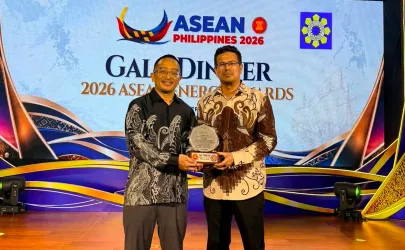
SD Guthrie's co-firing biogas plant at Lavang Oil Mill in Sarawak has been recognised as the 1st Runner-up in the Off-Grid Thermal Category at the ASEAN Energy Awards 2026.
The award-winning project, titled "Pioneering Co-Firing Biogas Plant Utilising Palm Oil Mill Effluent from Lavang Oil Mill to Improve Boiler Efficiency, Deliver Sustainable Thermal Energy and Enhance Biomass Fuel Usage", converts palm oil mill effluent (POME) into renewable thermal energy. The innovative solution improves boiler efficiency, optimises biomass fuel utilisation and contributes to reducing greenhouse gas emissions from mill operations.
13 October 2026
Strengthening Papua New Guinea's National Food Security
- Through Ramu Agri Industries Limited (RAI), New Britain Palm Oil Limited (NBPOL) is Papua New Guinea's (PNG) only commercial sugar producer and largest beef producer, playing a key role in supporting local communities
In Papua New Guinea, food security begins with the ability to produce more at home. RAI is helping strengthen the country’s domestic food supply while creating jobs and economic opportunities for local communities. Operating in the Ramu and Markham valleys and West New Britain, RAI is PNG’s only commercial sugar producer and its largest beef producer. Its Ramu Sugar range serves household and commercial needs, while Ramu Premium Beef and Numundo Beef supply locally produced beef to the domestic market.
Operating in the Ramu and Markham valleys, RAI produces sugar for household and commercial markets under its Ramu Sugar range. Its Ramu Premium Beef, together with NBPOL’s Numundo Beef operation in West New Britain, supplies locally produced beef to the domestic market.
The scale of these operations underlines their importance to PNG’s food ecosystem. In 2025, RAI produced approximately 25,703 MT of sugar, helping meet national demand and reduce reliance on imports. In the same year, NBPOL’s beef operations produced approximately 2.0 million kg of beef, contributing to the availability of locally produced protein.
The impact extends well beyond food production. NBPOL has operated in PNG since 1967 and today employs more than 25,000 people, while supporting landowners, smallholders, suppliers and communities across its operations. The addition of RAI to the NBPOL Group in 2008 further diversified its agricultural footprint, bringing sugar and an expanded beef business alongside its established palm oil operations.
As PNG looks to strengthen its domestic agricultural capacity, NBPOL and RAI have an important role to play. By investing in local production and supporting livelihoods, the businesses are helping build a more resilient food system while creating long-term value for Papua New Guinea and its communities.
12 October 2026
Preventing Fires Through Community Partnership
- A village-based programme that places awareness, sustainable practices and local participation at the centre of fire prevention.
Since 2014, SD Guthrie's Indonesian subsidiary, Minamas Plantation, has worked with universities in Indonesia to develop Desa Mandiri Cegah Api, an integrated community-based fire-prevention programme. It operates in high-risk areas around the company's operations and covers more than 3,425 villages.
The programme helps communities understand forest and land-fire risks and promotes sustainable agricultural practices. Its outreach extends to teachers, principals and students through Guru Peduli Api and Sekolah Peduli Api. The Penghargaan Desa Bebas Api initiative recognises fire-free villages, encouraging zero-burning practices on farms.
Fire prevention is linked with village development. Guthrie reports initiatives including handicraft production using palm fronds and other local materials, designed to help communities develop viable sources of income. In peatland areas, the related Desa Mandiri Peduli Gambut programme focuses specifically on peat-fire awareness.
Community action is supported by Guthrie's Zero Burning Policy and its commitment to monitor areas within five kilometres of its Indonesian estate boundaries. The company uses satellite, ground and drone monitoring, alongside fire towers, trained response teams and a public hotspot dashboard. Its monitoring covers more than 2300,000 hectares in Indonesia and uses more than 50 drones.
Desa Mandiri Cegah Api shifts the emphasis from reacting to fires to reducing the conditions in which they begin. By combining local knowledge, education, sustainable practices and operational monitoring, the programme aims to protect communities, ecosystems and air quality through shared responsibility.
09 October 2026
Producing Thailand’s No.1 Cooking Oil
- How our Morakot Refinery Delivers Quality, Trust and Innovation to Thai Consumers
For more than four decades, SD Guthrie International (SDGI) has been part of everyday life in Thailand. Established in 1981, the company has grown into one of the country’s leading manufacturers of cooking oils and food ingredients, serving households, food businesses and industrial customers nationwide.
At the heart of its success is ‘Morakot’, a household cooking oil brand trusted by generations of Thai consumers. Backed by decades of manufacturing expertise and a focus on quality, the brand has earned multiple industry and consumer recognitions, including Superbrands Thailand and No. 1 Brand Thailand accolades.
From palm olein and soybean oil to sunflower, rice bran, corn, canola and coconut oils, Morakot offers a broad portfolio designed around the evolving needs of consumers. Beyond the retail market, the company also supplies food manufacturers with specialty fats, margarine, shortening and other ingredient solutions, extending its role across Thailand’s food ecosystem.
As part of SDGI’s global downstream network, Morakot brings together agricultural production, refining expertise and everyday food consumption. This integrated approach helps ensure consistent quality standards, operational efficiency and reliable supply for customers.
Today, Morakot’s journey is about more than producing cooking oil. It is a story of how more than 40 years of experience, trusted quality and continuous innovation have built a brand that remains close to Thai consumers, while supporting SDGI’s ambitions for sustainable, long-term growth.
02 October 2026
SD Guthrie International Expands Liverpool Facility with New Enzymatic Interesterification Line
- Investment strengthens capacity to deliver tailored, high-performance palm-based solutions to customers
Liverpool, 2 October 2026 – SD Guthrie International (SDGI), the downstream arm of SD Guthrie Berhad (Guthrie), has expanded its manufacturing capabilities in Liverpool, United Kingdom, with a new Enzymatic Interesterification (EIE) line.
The facility features two independent EIE production lines, each with a capacity of up to 20,000 tonnes, supported by new storage tanks, a loading bay, weighbridge and effluent treatment plant.
EIE is a process that uses enzymes to selectively rearrange fatty acids within a fat structure. Interesterification can be carried out using either chemical or enzymatic methods, with the facility utilising an enzyme-based process. The new production line has been designed to operate under milder processing conditions while eliminating the need for post-treatment, helping to improve process efficiency and reduce effluent generation and overall environmental impact.
Richard Town, Chief Operations Officer (Manufacturing) of SDGI, said the plant would enable the Company to deliver tailored palm-based fat solutions with greater precision.
“This is across a wide range of applications. These include margarines and spreads requiring smoothness, spreadability and controlled melting; bakery fats requiring structure, aeration and consistent performance; biscuit fillings and confectionery requiring stability, controlled melting and desired mouthfeel; and specialty fats designed for customised applications. This expanded capability strengthens our ability to respond to customers’ evolving needs, while enhancing the efficiency and sustainability of our manufacturing operations,” he said.
Mohd Haris Mohd Arshad, President & Group Chief Executive Officer of Guthrie, said the Company’s strength lies in its presence across the palm oil value chain, from upstream and midstream to downstream.
“Investments like this allow us to build on that integrated model by transforming the palm oil we produce into higher-value, specialised solutions for our customers. The new EIE facility is about more precision and more possibilities. More precision in how we develop products with specific functional characteristics, and more possibilities to help our customers meet evolving market demands.
“At the same time, it strengthens our downstream capabilities, supports our sustainability ambitions under our “Beyond Zero” framework and enables us to capture greater value across the chain while responding more effectively to customer needs,” he added.
The expansion reinforces Guthrie’s focus on maximising the versatility of palm-based oils and fats. The new EIE line enhances the Group’s capability to develop fat systems with precise functional characteristics, giving food manufacturers greater flexibility in designing products for different applications and performance requirements. The facility also strengthens service to UK customers through local production and can help reduce the overall carbon footprint associated with supplying the UK market.
The investment also complements SDGI’s existing manufacturing capabilities and supports the Group’s ambition to strengthen its downstream business through technology, innovation and the development of higher-value products.
To download PDF:
English