

19 September 2014
Major Growers Commit to No HCS Development as HCS Study Starts in Earnest
Kuala Lumpur, 19 September 2014 - The world’s five biggest growers of oil palm, namely Asian Agri, IOI Corporation Berhad, Kuala Lumpur Kepong Berhad, Musim Mas Group and Sime Darby Plantation, have agreed not to develop potential high carbon stock areas with immediate effect, while the High Carbon Stock (HCS) Study they are funding is underway.
The HCS Study will, when completed, provide reliable information on greenhouse gas emissions (GHG) and socio-economic considerations to guide decisions on land conversion to oil palm plantations. The steering committee overseeing the 12-month study is led by leading environmentalist Sir Jonathon Porritt and eminent forest ecologist Dr John Raison.
The study is being funded by the five grower companies, agribusiness groups Wilmar International and Cargill and consumer-goods company Unilever.
This latest decision by the growers comes as a technical committee of 8 scientific experts comes together to undertake the task of guiding and contributing to the work for the HCS Study.
Dr Raison, who is leading the science study said “This study is both well-resourced and fully independent, with all findings to be publicly available. It will extend earlier HCS work to provide more reliable estimates of GHG emissions from both biomass and soils resulting from the establishment as well as on-going management of oil palm plantations. It will also examine the socio-economic implications of setting varying thresholds for acceptable GHG emissions in different locations. These are critical inputs to guide improved land use planning, and better management of oil palm plantations.”
The grower companies and their co-funders in the HCS Study recognise that the findings of the Study will have far reaching implications on developing countries along the equatorial belt, where oil palm is typically grown. As this is a relatively new and complex area of study, similar efforts such as the HCS Approach which was announced on 16 September 2014, are welcome developments that will bring more knowledge and experience to the table, furthering the advancement of sustainable development along the palm oil supply chain.
As members of the Roundtable on Sustainable Palm Oil (RSPO), the growers are already preserving virgin forests, High Conservation Value (HCV) areas, and peat land. They are also working to submit carbon maps and greenhouse gas emission estimates voluntarily to the RSPO.
Sustainable Palm Oil Manifesto
The five growers are signatories of the Manifesto, which sets higher standards on sustainable palm oil production compared to the RSPO, for growers, traders, end users, and other stakeholders.
The Manifesto demands increased commitment to sustainable production across the supply chain. This includes no deforestation, creating traceable and transparent supply chains, and protecting peat areas, while ensuring economic and social benefits for the local people and communities where oil palm is grown, and respecting their right to give consent to proposed developments or conservation through the Free, Prior and Informed Consent (FPIC) process.
The HCS Study is a key component of the Manifesto.
Further announcements will be made on the progress of the study.

05 November 2014
World Leading Experts Embark on High Carbon Stock Study
Kuala Lumpur, 5 November 2014 - A team of leading experts has been appointed to undertake a comprehensive, independent and scientifically robust Study on what constitutes high carbon stock forests in the context of their conversion to oil palm plantations. A detailed description of the Study can be found at www.carbonstockstudy.com.
The Study will take into account socio-economic considerations, including the rights of nations’ and peoples’ to development. The team is made up of acknowledged experts in different academic areas, who will together form the Technical Committee for the High Carbon Stock (HCS) Study. The Technical Committee is chaired by Chief Research Scientist at Australia’s Commonwealth Scientific and Industrial Research Organisation (CSIRO), Dr John Raison, and is made up of:
- Dr Jerome Chave of Laboratoire Evolution et Diversité Biologique, leading above and below ground biomass studies;
- Dr Hans Joosten of University of Greifswald, leading soil carbon studies;
- Dr Florian Siegert of Ludwig-Maximilians-Universität München, leading remote sensing work;
- Dr Ruth DeFries of Columbia University; leading the socio-economic and sustainable development aspects of the study, together with
- Dr Philippa Atkinson; author, consultant and researcher specialising in Liberia and the West African sub-region; and
- Goh Kah Joo of Applied Agricultural Resources Sdn Bhd, who will provide insights into the global oil palm industry.
The Technical Committee will be supported by a team of Research Consultants. The Technical Committee will provide guidance to, and monitor the progress of these Research Consultants in undertaking the in-depth scientific analyses required.
The Technical Committee will prepare a draft synthesis report based on the research done, and provide recommendations for consideration by a wide range of stakeholders, including governments on:
- A definition of HCS forests that is based on potential GHG emissions from biomass and soils; as well as a practical method for identifying and delineating HCS forests on the ground;
- Suggested threshold values for GHG emissions from HCS forests, that take account of the regional socio-economic context in Southeast Asian and African countries where new oil palm developments are planned; and
- Guidance on how to accommodate the rights and livelihoods of local communities and indigenous peoples when implementing a future HCS approach to land use planning.
The draft synthesis report will be open to review and comment during a 2-month consultation period in mid-2015. The Technical Committee will independently finalise its report after considering feedback from that process.
The first Technical Committee meeting will also include a representative of the HCS Approach Steering Group, and Marcus Colchester representing the human rights organisation, Forest Peoples Programme, who will both provide their insights and experience to the research work.
Throughout the duration of the Study, Dr John Raison, who is also Co-chair of the Steering Committee charged with the task of overseeing the Study, will provide regular updates on the progress of the work to the Steering Committee. Steering Committee members are some of the world’s largest palm oil producers, such as Asian Agri, IOI Corporation Berhad, Kuala Lumpur Kepong Berhad, Musim Mas Group and Sime Darby Plantation; global agribusiness groups Cargill and Wilmar International; and consumer-goods company Unilever. The palm oil producing companies have all agreed to set aside areas that could be considered to contain high levels of carbon stock, whilst the Study is being conducted.
Observers to the Steering Committee include representatives from the Roundtable on Sustainable Palm Oil (RSPO), IDH, The Sustainable Trade Initiative, Neste Oil, the Malaysian Palm Oil Board (MPOB), Proforest and the Global Environment Centre (GEC), who will all actively contribute to ensure a transparent, objective and holistic approach.
Once the findings of the Study have been released, Signatories of the Sustainable Palm Oil Manifesto shall adopt these findings across their operations and supply chains. All of the Signatories’ direct suppliers are required to comply with the RSPO’s Principles and Criteria, and to take remedial action to correct any violations. Signatories will not do business with serious repeat violators of the RSPO’s Principles and Criteria.
07 November 2014
Sime Darby Donates 5.7 Million Rubber Gloves to Fight Ebola in Liberia
Monrovia, 7 November 2014 – The Sime Darby Foundation (SDF), the philanthropic arm of Sime Darby, is donating 5.7 million rubber gloves worth USD155,000 to help Liberia fight the Ebola virus disease (EVD).
The gloves shipment, which came in three containers, arrived at the Port of Monrovia on 31 October. The assistance is part of a collaborative effort by the Malaysian government with Malaysian companies to assist five African countries, namely Liberia, Guinea, Sierra Leone, Nigeria and Congo combat the spread of Ebola.
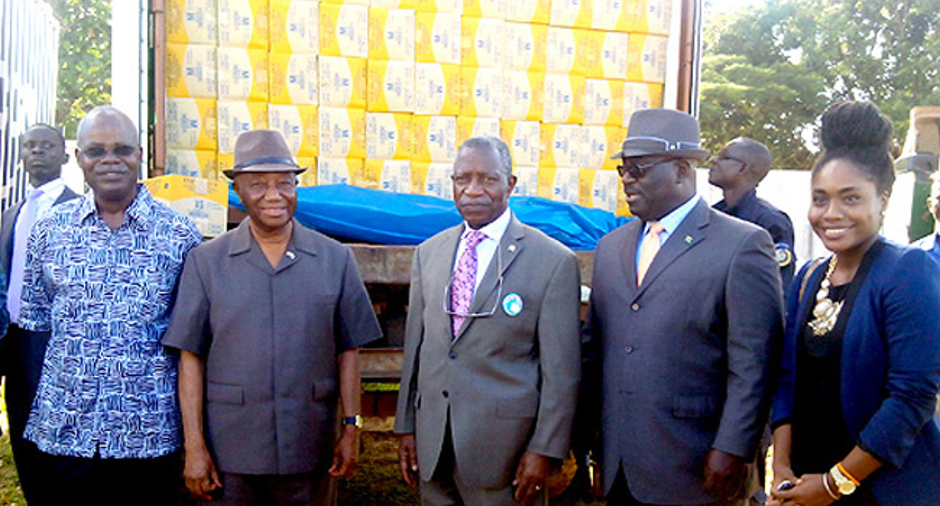
Sime Darby, which operates in Liberia, will hand over the shipment to the Government of Liberia. Subsequently, the gloves will be distributed to health workers, non-government organisations (NGOs) and communities.
The Government of Liberia has requested for help from countries all over the world to fight the deadly disease which has hit Liberia the hardest. The Ebola outbreak has claimed more than 4,500 lives across West Africa, including 2,200 in Liberia.In the worst-affected countries - Guinea,Liberia and Sierra Leone - about 9,000 people have been found to have the Ebola virus,which has a fatality rate of about 70% of those infected.
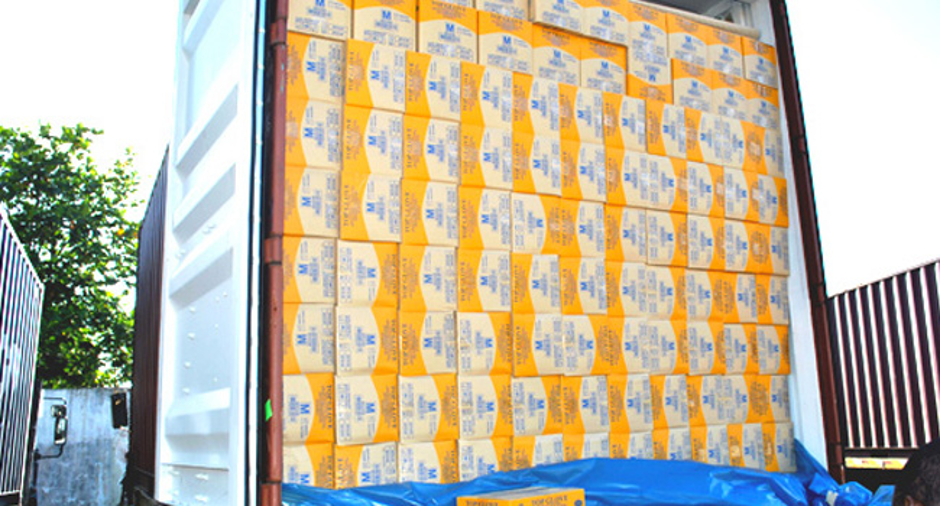
Besides the gloves, the SDF has also contributed USD157,220 to the International Federation of the Red Cross and Red Crescent Societies(IFRC) to carry out Ebola awareness programmes and campaigns in Liberia.
IFRC is working with the Liberian Red Cross Society (LRCS), which is leading efforts to control the spread of the virus through programmes to reduce mortality and morbidity related to Ebola.

Key activities include training and mobilisation of volunteers to affected communities and providing psychosocial support to help those affected continue with their lives. Other activities include setting up diagnosis facilities, expanding on-going awareness programmes to Sime Darby estates and developing an identification system to manage any outbreak of EVD. Sime Darby Plantation Liberia currently has a workforce of almost 3,000.
In 2009, Sime Darby Plantation signed a 63-year concession agreement with the government of Liberia to develop oil palm and rubber plantations in Grand Cape Mount, Bomi, Gbarpoluand Bong counties.
28 November 2014
Sime Darby Berhad Registers a Pre-Tax Profit of RM674.9 million for 1Q FY2014/2015
The Group sets a Key Performance Indicator (KPI) Net Earnings target of RM2.5 billion and a Return on Average Shareholders’ Equity target of 8.5% for FY2014/15
Kuala Lumpur, 28 November 2014 – Sime Darby Berhad recorded a pre-tax profit of RM674.9 million and a net profit of RM500.7 million for the first quarter ended 30 September 2014 (1Q FY2014/15), representing a slight increase of 1 percent and 2 percent respectively, compared to the same period in the last financial year.
The Group posted a resilient financial performance in the quarter under review despite the highly challenging operating environment. The Plantation Division was the biggest contributor to profit on the back of improvements in fresh fruit bunches (FFB) production and oil extraction rate (OER). The Motors and Property Divisions also achieved improved earnings due to better vehicle sales in Australia, New Zealand and Vietnam and higher profit from recently launched property development projects, respectively.
“In the first three months of the current financial year, we continued to face significant challenges to the Group, particularly lower average crude palm oil (CPO) price realised and falling coal prices. However, our ability to drive operational improvements across the Group and undertake stringent capital management has allowed us to achieve a satisfactory performance. The strength and depth of the Group’s diversified portfolio remains crucial in withstanding the ever changing market conditions,” said Tan Sri Dato’ Seri Mohd Bakke Salleh, Sime Darby’s President and Group Chief Executive.
1Q FY2014/15 versus 1Q FY2013/14 (Year-on-Year Comparison)
The Plantation Division achieved a profit before interest and tax (PBIT) of RM289.3 million in the period under review compared to RM254.6 million in the same period last financial year. The PBIT increase of 14 percent was attributable to improved profit from the Upstream segment, which achieved higher sales volume and lower operating cost in addition to the improvement in operational efficiencies. This helped to offset the lower average CPO price realised of RM2,187 per tonne in 1Q FY2014/15 compared to RM2,331 per tonne in 1Q FY2013/14. The Group’s FFB production was higher at 2.52 million tonnes in the first quarter of the current financial year compared to 2.47 million tonnes in the first quarter of the previous financial year. Indonesian FFB production improved by 11 percent YoY. However, Malaysian operations registered lower FFB production by 2 percent YoY, for the quarter under review. Overall OER also improved by 0.26 percentage point from 21.39% in the first quarter of FY2013/14 to 21.65% in the first quarter of FY2014/15.
The midstream and downstream operations recorded a loss of RM18.9 million for the current quarter compared to a profit of RM11.0 million previously. The loss was largely due to unfavourable sales mix from the company’s refineries in Europe and Indonesia.
The Industrial Division recorded a PBIT of RM190.1 million in 1Q FY2014/15, a drop of 42 percent compared to RM327.2 million in 1Q FY2013/14. Cost cutting pressure from key mining customers as a response to persistently low coal prices and resultant lower margins continue to adversely impact the Australasian operations. Consequently, the results in Australia have been negatively impacted by lower equipment deliveries and lower product support sales. However, China operations posted a YoY PBIT improvement of 22 percent due to better margin realisation from engine deliveries. In Malaysia, despite the softening market conditions, profit contribution for the period under review rose by 24 percent to RM27 million as a result of the various cost saving measures and project finalisation.
The Motors Division’s PBIT increased by 3 percent from RM106.6 million in the first quarter of the last financial year to RM110.0 million in the first quarter of the current financial year. This improvement was mainly driven by higher PBIT from Australia and New Zealand, which increased 7 fold to RM21.4 million, on the back of contributions from the newly acquired BMW operations in Brisbane and also the Trucks operations in New Zealand. BMW operations in Vietnam continued its commendable performance in its third quarter of operations, post-acquisition. China/HK and Malaysia, however, reported a decline of 37 percent and 12 percent respectively. The China/HK operations continue to face margin pressures due to stiff competition in the luxury segment while the Malaysian operations are faced with supply issues and the tightening of consumer credit.
For the quarter under review, the Property Division posted a PBIT of RM137.1 million, an increase of more than 100 percent compared to RM65.5 million in the same quarter last financial year. The improved performance was partly the result of a gain on the disposal of a 9.9% equity interest in Eastern & Oriental Berhad amounting to RM55.5 million. Excluding this gain, the Division achieved a PBIT increase of 25 percent in view of higher profits from the Elmina East project and contributions from the construction works at the Pagoh Education Hub. The Division has unbilled sales of RM2.2 billion as at 30th September 2014.
The Energy & Utilities Division recorded a PBIT of RM21.7 million for 1Q FY2014/15. The increase of 67 percent from RM13.0 million in 1Q FY2013/14 was largely due to higher profit from the ports and water operations in China, reflecting the positive impact of an increase in throughput and higher average tariff achieved.
Headline Key Performance Indicators (KPIs)
The Group also announced its KPIs for the financial year ending 30 June 2015, with a Net Earnings target of RM2.5 billion and a Return on Average Shareholders’ Equity target of 8.5 percent.
02 March 2015
Sime Darby Plantation Completed NBPOL Acquisition
Total landbank grows to one million hectares and NBPOL will immediately contribute to profits
Kuala Lumpur, 2 March 2015 - Sime Darby Plantation (SDP), the plantation arm of Sime Darby Berhad, has completed the acquisition of New Britain Palm Oil Limited (NBPOL) today, bringing it closer to meeting its expansion target.
The purchase of NBPOL adds another 135,000 hectares of land in Papua New Guinea, bringing SDP’s total land bank to almost one million hectares spread out in five countries.
“This is a historic day for Sime Darby. NBPOL was founded by Harrisons & Crosfield, the company that was part of a merger exercise that created the Sime Darby of today, the world’s biggest producer of certified sustainable palm oil. It is a family reunion of sorts,” said Sime Darby Berhad President and Group Chief Executive Tan Sri Dato’ Seri Mohd Bakke Salleh.
SDP will have five representatives on the board of NBPOL, namely Dato’ Henry Sackville Barlow, Dato’ Rashidi Che Omar, Encik Rosely Kusip, Tan Sri Dato’ Seri Mohd Bakke Salleh and Datuk Franki Anthony Dass. Dato’ Henry Sackville Barlow is set to be appointed chairman of the board.
They will replace the outgoing directors namely Mr Antonio Monteiro de Castro, Dato’ Kamaruzzaman Abu Kassim and Encik Ahamad Mohamad.
SDP will focus on integrating the operations of both companies over the next few months. NBPOL provides a strategic fit to SDP with its track record in sustainability as all of its production is certified sustainable. SDP is a founder member of the Roundtable on Sustainable Palm Oil and together with NBPOL’s capacity, it can produce almost 26 per cent of the global CSPO output.
“As a well-managed company with an experienced management team, NBPOL will immediately contribute to the bottom line of SDP. We have been working on identifying the synergies and our immediate priority will be to unlock value from these synergies,” said Datuk Franki Anthony Dass, Managing Director of SDP.
Apart from the expansion of its upstream business in Papua New Guinea, NBPOL provides the opportunity for SDP to grow its downstream operations in Europe. NBPOL’s Liverpool refinery will complement SDP’s refinery in the Netherlands. NBPOL already supplies to more than 110 customers in the United Kingdom and Ireland.
“NBPOL has a long standing commitment to sustainability, similar to SDP. This is a union of like-minded organisations and we’re excited to be part of the Sime Darby family,” said Nick Thompson, CEO of NBPOL.
13 May 2015
High Carbon Stock Scientific Studies Nearing Completion
Kuala Lumpur, 13 May 2015 - 50 scientific experts are nearing the completion of a set of research reports, which were initiated in February this year. The work will underpin the development of a new methodology for the assessment of High Carbon Stock (HCS) forests.
Led by Dr John Raison, a former Chief Research Scientist at Australia’s Commonwealth Scientific and Industrial Research Organisation (CSIRO), this team of experts (listed below) are providing critical input to an independent and scientifically robust study that will guide decisions on land conversion to oil palm. The scientists provide global experience in the estimation of changes in soil and biomass carbon stocks, the use of remote sensing to support estimation of greenhouse gas (GHG) fluxes, and assessment of the socio-economic impacts of new plantation development.
These independent studies will be made publicly available. These individual reports will provide the basis for a Synthesis Report which will be publicly available in late 2015. The Synthesis Report aims to provide:
- A definition of HCS forests that is based on the level of net GHG emissions from biomass and soils that would result from their conversion to oil palm plantations;
- Threshold values for GHG emissions to enable the identification of forests where conversion to oil palm is acceptable. The thresholds will vary geographically to take account of the regional socio-economic context (and thus the variable social welfare benefit resulting from new plantation development) in Southeast Asian and African countries where expansion of the oil palm industry is planned;
- A practical method for identifying and delineating (mapping) these HCS forests on the ground; and
- Guidance on how to accommodate the rights and livelihoods of local communities and indigenous peoples when implementing a future HCS approach to land use planning.
A draft Synthesis Report will be open to public review during a 6-week consultation period from June 2015. Feedback from that process will be considered in the finalisation of the Synthesis Report. A detailed description of the Study can be found at www.carbonstockstudy.com.
“We’re making good progress and with the full technical team on board, we’re moving ahead rapidly. This landmark study aims to provide decision makers with critical information on the environmental and socio-economic implications of setting different thresholds for acceptable GHG emissions in any new development,” said Dr John Raison.
The technical team is fully cognisant of the fact that HCS is merely one of several inputs to be considered in land use planning decisions. Other critical inputs such as government policies and regulations, high conservation values (HCVs), agronomic considerations, socio-economic factors and other externalities must also be taken into account. The loss of carbon stock (resulting in GHG emissions) will rarely be the sole factor in determining whether a particular forest should be developed.
Chair of the Steering Committee overseeing the HCS Study, Sir Jonathon Porritt added: “It is hoped that the tools developed will provide additional guidance on the impacts of forest conversion to people and the planet, and assist in the land use change planning process along with other established processes such as High Conservation Value (HCV), Environmental and Social Impact Assessments (ESIA), and Free, Prior and Informed Consent (FPIC).”
The HCS Study invites input from all stakeholders, and is open to collaboration in the spirit of improving the sustainability of the palm oil industry.
19 June 2015
High Carbon Stock Draft Synthesis Report Open for Public Consultation
Kuala Lumpur, 19 June 2015 - A landmark scientific study which will provide a definition of high carbon stock forests, enabling oil palms to be grown more sustainably, is now open for public consultation.
The High Carbon Stock (HCS) Science Study’s draft Synthesis Report brings together independent research and discussions to date, conducted by 50 scientific experts in the fields of biomass, soil carbon, remote sensing, and socio-economics as they relate to the development of new oil palm plantations.
The methodology derived from the HCS Science Study is termed HCS+. “HCS” relates to the focus on greenhouse gas (GHG) emissions which are important due to its adverse impact on global climate, and the “+” indicates that there will be opportunities for improved livelihoods created at the concession or regional scale by allowing some level of responsible conversion (with associated net GHG emissions) of land to oil palm plantations.
A wide range of stakeholders have already been consulted, and members of the scientific community, palm oil industry figures, NGOs, academia, and other interested parties are now invited to submit feedback via the HCS Study’s website, www.carbonstockstudy.com , before the end of July 2015.
The Synthesis Report provides:
- A definition of HCS+ forests that is based on the level of net GHG emissions from biomass and soils resulting from the development of oil palm plantations;
- Threshold values for GHG emissions to enable the identification of forests where conversion to oil palm is acceptable. The thresholds may vary geographically to take account of the regional differences in forests as well as socio-economic context (and thus the variable socio-economic benefit resulting from new plantation development) in Southeast Asian and African countries where expansion of the oil palm industry is planned;
- A practical method for identifying and mapping these HCS+ forests on the ground; and
- Guidance on how to accommodate the rights and livelihoods of local communities and indigenous peoples when implementing a future HCS+ approach into land use planning.
All feedback from the public consultation process will be considered in the finalisation of the Synthesis Report, which is scheduled for completion in December 2015.
“In line with our commitment to transparency and inclusivity, we welcome input from all stakeholders to further strengthen our research findings. Given the high level of interest from the palm oil industry, we will also be conducting targeted peer reviews with leading experts and industry veterans to ensure our findings are based on the best available science and practical experience,” said Dr John Raison, former Chief Research Scientist at Australia’s Commonwealth Scientific and Industrial Research Organisation (CSIRO) who is leading the HCS Science Study.
Chair of the Steering Committee overseeing the HCS Study, Sir Jonathon Porritt added: “We are committed to ensuring a science-based process that is independent, objective and holistic, building upon existing knowledge in this critical area of enquiry. Feedback and public scrutiny is an important part of that scientific process, in ensuring our findings meet the highest standards of scientific quality. We urge interested parties to use this opportunity to come forward with comments on our work.”
The draft Synthesis Report and information on the HCS Study is available at www.carbonstockstudy.com.
06 October 2015
Sime Darby Plantation Launches Hotspot Dashboard
Kuala Lumpur, 6 October 2015 - Sime Darby Plantation (SDP), the world’s biggest producer of sustainable palm oil, has launched a hotspot monitoring dashboard in the interest of transparency and to provide insights that could lead to long-term solutions to the recurring haze situation.
The dashboard, available on its website at www.simedarby.com, will show the incidences of hotspots detected in the region by the company’s monitoring system using satellite data. It will also indicate the actions taken by the respective estates to extinguish fires.
“We believe that it is important to be transparent about this recurring industry issue so that all relevant stakeholders can start discussing long term solutions. SDP is open to sharing its initiatives with other stakeholders,” said Datuk Franki Anthony Dass, Managing Director of SDP.
So far this year, SDP has detected 17 hotspots and out of that, 14 fires. Six of them were found to be outside its concession area and the remaining were in community areas inside the company’s concession area.
The dashboard is based on the company’s real-time monitoring system, which is managed in Kuala Lumpur and Jakarta. Alerts are immediately communicated to estates which will then verify if there is indeed a fire. If a fire is detected, the estate will put it out immediately. The system complements the response measures on the ground such as observation towers and regular patrols.
The company has also been engaging communities in partnership with local authorities and academic institutions to better understand the drivers of traditional farming methods, which typically involves slashing and burning, and to raise the awareness of sustainable farming practices.
An existing project with the University of Riau found that while villagers are aware of the dangers and implications of fire, burning land for clearing has been practised and considered by communities to be the most efficient way to clear land.
Based on these insights, SDP’s operating company PT Bhumireksa Nusa Sejati and the university have been training the local communities in sustainable farming practices and educating them on the benefits of zero burning. As a result, the number of hotspots in the community area has fallen to just three from 40 previously.
“We are encouraged and excited by the results of this engagement and we hope to do more in the future. The hotspot dashboard is another initiative that we are proud of and it is an important milestone in the sustainability journey of SDP,” said Datuk Franki.
SDP pioneered the zero burning replanting technique in 1985 and it is now recognised as an industry standard. This led to the company winning an award from the United Nations in 1992 for its environmental achievements.
17 November 2015
Sime Darby Plantation Launches Traceability Dashboard
Kuala Lumpur, 17 November 2015 - Sime Darby Plantation (SDP), the world’s largest producer of certified sustainable palm oil, has launched ‘Open Palm’ – an online dashboard that provides critical information on the traceability of its supply chain.
Open Palm provides SDP customers with access to key data on the origin of all palm products that go through SDP refineries, be it from its various oil palm mills, right down to its plantations, as well as third party plantations.
“This is a significant milestone for Sime Darby Plantation in our efforts to provide more value to our discerning customers. In addition to our enduring commitment to promote sustainable products and practices in this industry, we also seek to demonstrate the integrity of our supply chain. Open Palm will allow our clients to trace and assess the origin of our palm oil products,” said Datuk Franki Anthony Dass, Managing Director of SDP.
With growing concerns among global Fast-Moving-Consumer-Goods (FMCG) companies over the perceived link of palm oil to deforestation, climate change and breach of human rights, many of SDP’s key customers are focusing their attention on sourcing palm oil from 100% traceable and sustainable sources. With Open Palm, SDP’s customers will now be able to convey a higher level of assurance to the end consumers.
“It is important for the public to know that sustainable palm oil is not only possible, but it is already available. Many responsible consumer-goods manufacturers and palm oil companies are continuously striving towards further progress in sustainability. With Open Palm, SDP hopes to make a difference by being transparent about our own efforts and progress in achieving a sustainable supply chain,” added Datuk Franki.
The main features of the Open Palm dashboard concept can be viewed online at sime-darby-plantation-launches-traceability-dashboard from 17th November 2015. Full access to the traceability dashboard will only be made available to key SDP clients in order to protect the confidential nature of commercial information contained, which may include data on products and purchasing patterns.
In addition to Open Palm, SDP has recently launched an online hotspot monitoring dashboard that provides up-to-date information on hotspots occurring within its concession areas. Furthermore, to address the haze issue, the company has also been engaging communities in partnership with local authorities and academic institutions to raise awareness of sustainable farming with zero-burning practices, among others. SDP’s latest initiative in partnership with the University of Riau has so far resulted in a drastic reduction in the number of hotspots in the community area from 40 previously to just three. The Zero-burning Replanting Technique is also a hallmark sustainable practice pioneered by SDP in 1985 for which the company received the United Nations Environment Programme Global 500 Award.
11 December 2015
Sime Darby Plantation to trial High Carbon Stock methodologies in Liberia
Kuala Lumpur, 11 December 2015 – Sime Darby Plantation (SDP), one of the signatories of the Sustainable Palm Oil Manifesto which commissioned the High Carbon Stock (HCS) Science Study last year, plans to carry out trials in its Liberian operations following the release of the findings from the study.
The HCS Science Study, which is supported by a wide range of stakeholders worldwide, has proposed HCS+ as a guide for oil palm growers to develop plantations that are carbon neutral, conflict-free, transparent and equitable to all stakeholders.
As a signatory to the Manifesto, SDP will also trial the HCS Approach, an alternative methodology that proposes a forest stratification model to identify and conserve high carbon stock forests.
The HCS+ methodology is built on three pillars namely, the maintenance of critical ecosystem services, the assurance of socio-economic benefits for local communities and economic viability of development. It emphasises equitable, transparent, conflict-free and carbon-neutral oil palm development.
HCS+ is built to support existing frameworks, such as the Roundtable on Sustainable Palm Oil (RSPO). It helps to address RSPO’s requirement to avoid developments on land with high carbon stocks. HCS+ should be used together with the full suite of tools available within the RSPO framework, such as Free Prior and Informed Consent (FPIC) and High Conservation Value assessments, for sustainable oil palm development. It also recommends a stronger social contract between the company and local communities to ensure the equitable distribution of economic value derived from oil palm developments.
Sime Darby Plantation Managing Director Datuk Franki Anthony Dass said he believes both HCS methodologies can be converged to provide clear and consistent guidance for companies and governments.
“We will fulfil our commitment to follow through on the pledge made in the Sustainable Palm Oil Manifesto, and trial the HCS+ methodology. By testing both HCS methodologies jointly, we hope to ensure the practicality of implementation, and contribute to efforts towards the development of a single HCS methodology for the oil palm sector.
“We have started to commission a Light Detection and Radar (LiDAR) study to obtain a baseline carbon map of the area identified to carry out the trials in Liberia. The map will be completed in the next six months, while socio-economic studies will be designed in the next few months,” said Franki.
Liberia was chosen because it is SDP’s only greenfield development for oil palm currently. SDP has planted about 10,000 hectares in the country.
The trials will allow the comparison of both the HCS+ and HCS Approach methodologies in terms of conservation and developmental outcomes, as well as practicality of implementation.
The final report of the HCS Science Study draws upon 17 other consulting reports, which provide critical input in terms of biomass estimation, soil carbon dynamics, remote sensing, and socio-economics. All reports are now publicly available and may be downloaded at www.carbonstockstudy.com.