

27 February 2025
SD Guthrie sees palm oil prices moderating this year as supply concern eases
SD Guthrie Bhd (KL:SDG) said on Thursday that palm oil prices may moderate this year as favourable weather conditions boost output in Indonesia and Papua New Guinea.
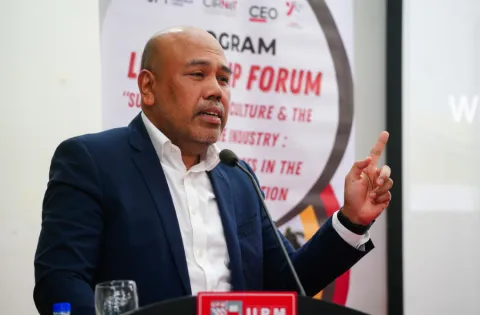
Crude palm oil (CPO) is expected to decline after Ramadan to average around RM4,000 per tonne, “if not lower,” said group chief operating officer Mohd Haris Mohd Arshad. Strong supply of substitute soybean oil from Latin America is also adding to the competition in the vegetable oil market, he noted.
“Palm oil will likely need to close the premium gap it currently holds over soybean oil,” he said at an earnings briefing. “As a result, we expect palm oil prices to weaken relative to soybean oil.”
Prices of the edible oil used in everything from lipstick to biodiesel have been trading in a tight range since the year began after gaining nearly 20% last year amid supply concerns. CPO are also commanding a rare premium over that of soybean enjoying a bumper global production season.
The benchmark palm oil futures contract for May delivery is currently trading at RM4,525 on Bursa Malaysia Derivatives.
Higher costs
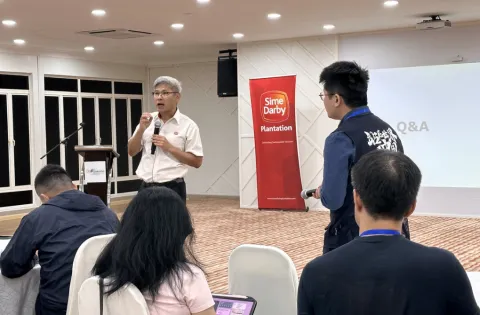
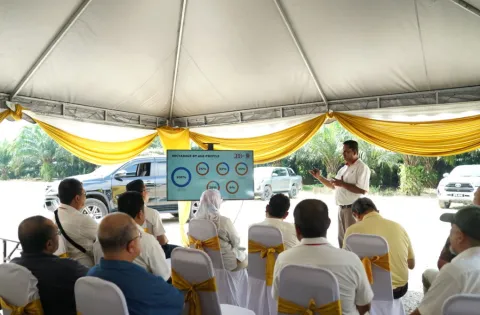
Meanwhile, SD Guthrie expects higher costs ahead due to the increased minimum wage and planned pension fund contribution for foreign workers, said managing director Datuk Mohamad Helmy Othman Basha.
SD Guthrie remains heavily reliant on foreign labour, with around 20,000 foreign workers in the company’s labour force even with ongoing efforts to mechanise and automate operations, he said at the same briefing.
A mandated 2% contribution to the Employees Provident Fund for foreign labour will have “quite an impact on our overall costs” when coupled with the RM200 increase in monthly minimum wage, he said, without discussing the cost impact on SD Guthrie.
Malaysia relies heavily on foreign workers, particularly from its neighbour Indonesia and South Asian countries India, Nepal and Bangladesh, to toil on its estates as harvesters while locals shun such jobs.
With an estimated 336,500 foreign workers employed in the plantation sector, the industry could be hit by additional costs of about RM137 million each year, according to a February 4 statement adopted by 11 Malaysian plantation organisations affiliated with the industry.
Click to see the article
28 February 2025
Looking At SD Guthrie’s Long Term Prospects
Various research houses have maintained their BUY calls on SD Guthrie Bhd, citing a strong finish to the financial year 2024, supported by high crude palm oil (CPO) prices and improving fresh fruit bunch (FFB) output. RHB Investment Bank Bhd (RHB Research) has raised its target price (TP) to RM5.65 from RM5.55, MIDF Investment Bank Bhd (MIDF Research) maintained its TP at RM5.43, while CIMB Investment Bank Bhd (CIMB Securities) has kept its TP at RM5.50.
SD Guthrie’s FY24 core earnings exceeded expectations, with RHB Research noting that its results came in at 110% of their full-year estimate and 105% of consensus. CIMB Securities highlighted a 71% year-on-year (YoY) increase in core net profit to RM1.54 billion, driven by stronger palm product prices and lower production costs. The group declared a final dividend of 11.7 sen per share, bringing the full-year dividend to 16.4 sen, reflecting a payout ratio of 60%.
Upstream operations were the key driver of earnings, with CIMB Securities reporting an 81% YoY rise in earnings before interest and tax (EBIT) to RM2.08 billion. Higher CPO and palm kernel (PK) prices contributed to the increase, with 4QFY24’s average CPO selling price rising to RM4,477 per tonne and PK at RM2,966 per tonne. Papua New Guinea recorded the strongest quarterly earnings growth, followed by Indonesia, due to better pricing and higher output. Meanwhile, Malaysian operations faced a decline in earnings, impacted by an 11% drop in FFB output and higher costs.
MIDF Research remains optimistic about SD Guthrie’s upstream segment, citing FFB yields reaching 19 metric tonnes per hectare in FY24 due to rehabilitation efforts in Malaysia. However, Indonesia and Papua New Guinea operations saw production declines of 13.6% and 8.8% YoY, respectively, due to prolonged weather disruptions. For FY25, SD Guthrie expects FFB growth in the single-digit range, with RHB Research raising its forecast to 5.8% from its previous estimate of 3-4%.
Downstream earnings continued to weaken in 4QFY24, with CIMB Securities noting a 44% YoY and 21% quarter-on-quarter (QoQ) decline to RM103 million. Margin pressures in the Asia Pacific region, weak European demand, and government price control regulations contributed to the drop. However, RHB Research pointed out that improved profitability in Asia-Pacific bulk operations provided some offset. SD Guthrie anticipates a modest improvement in refining margins in Indonesia for FY25, though overall sales volumes are expected to remain subdued.
SD Guthrie introduced two new business segments in 4QFY24—renewable energy and industrial development. The renewable energy segment, which includes biogas, biomass, and solar projects, posted a RM4 million loss, while industrial development recorded a RM3 million loss. CIMB Securities noted that land sales from industrial park joint ventures in Johor, Negeri Sembilan, and Perak are expected to contribute from 2QFY25 onwards.
Looking ahead, SD Guthrie expects FY25 unit costs to decline by 6-7% to RM2,400 per tonne, supported by higher output and slightly lower fertiliser costs. However, the group foresees a potential softening in CPO prices after Ramadan, averaging around RM4,000 per tonne or lower due to increased supply from South America. Analysts from all three research houses remain positive on SD Guthrie’s long-term prospects, citing stable valuations and the potential for industrial park monetisation as key catalysts.
Click to see the article
17 June 2024
SD Guthrie is ready for its close-up
For companies, changing their name can be both a bittersweet and complicated process.
For one as well-known and as long-tenured as Sime Darby Plantation Bhd, it can be all that, but more importantly for the plantation group now known as SD Guthrie Bhd, it would represent an opportunity to step away from the familiar and explore much more than it has in the past.
It will be on this that SD Guthrie will build on as it seeks to navigate the next phase of its growth. In order for companies to survive, the hard truth is that they need to evolve, and this is no different for SD Guthrie, whose roots can be traced back over two centuries. In a world where the global economic landscape is still not fully recovered from the Covid-19 pandemic, marred by geopolitical tension, some may question the timing.
However, according to group chief operating officer Haris Arshad, this was the perfect time for the company to make the seismic shift and come out as a new version of itself. “It can be anytime, actually, but one of the realisations we had is that we want to move beyond having a name that has a descriptive, and that descriptive in this case is plantation.”
“I experienced that myself when I went out to speak to customers in the Americas, for example, and I say I’m from Sime Darby Plantation, immediately in their minds they picture a company that cultivates bananas, potatoes and pineapple. So why is he talking about oil?” he explains.
According to Haris Arshad, SD Guthrie had the revelation several years ago that the group could not remain in the upstream segment indefinitely. Upstream in the oil palm industry in this case means the harvesting of fresh fruit bunches and the production of crude palm oil (CPO), of which SD Guthrie is one of the largest in the world.
Along with the new name comes a new tagline, “Unlocking Nature’s Superpower”. With that also come two new verticals for the group: renewable energy and green industrial parks. Even at a glance, these segments make sense given SD Guthrie’s vast land bank and easy access to fuel that could go into biogas plants. The company has made public its intention to expand its involvement in large-scale solar (LSS) projects from just land lease agreements to owning and operating these green energy projects.
Group managing director Datuk Mohamad Helmy Othman Basha was quoted as saying that as part of SD Guthrie’s aspiration to hold its own generation assets, it was looking to invest some RM2.5 billion over the next three to five years. It had also announced on May 7, 2024, its plan to co-develop a green industrial park supported by solar energy spanning 1,000 acres in Kerian, Perak. All projects are clearly sustainable and are designed to benefit future generations.
Haris Arshad also feels that, with its new identity, the sky is basically the limit for the group. “Well, the possibilities are endless. Let’s start with, what is it that we have? We currently have 600,000 hectares of land within Malaysia, Indonesia and Papua New Guinea. What is it that we’re good at? We’re very good at agronomy and we’re good at plantation practices management; that is our bread and butter.
“But if you look at the land that we have, some of it can be better used — say, to go into renewable energy, industrial development or industrial parks. Given that we are now SD Guthrie, we can go into all that.”
On other possibilities of global expansion beyond just producing more CPO, Haris Arshad says SD Guthrie is also looking at going further downstream with its portfolio, stopping just short of competing outright with its customers. “I think we can do that if we remove the perception that we are only a plantation company. What we want is for the market to see us as an integrated player.”
However, he adds that one business that SD Guthrie would be unlikely to touch is one where having a massive land bank would be an asset — namely property development. This is no surprise given the existence of Sime Darby Property Bhd.
Haris Arshad admits that it would take some time for investors and customers to see SD Guthrie as standing apart from its Sime Darby brethren, consisting of Sime Darby Property and Sime Darby Bhd, which is in the business of automotive and industrial.
It has been 17 years since the enlarged Sime Darby was born of one of the biggest mergers in the history of Corporate Malaysia. Three giants — Sime Darby, Kumpulan Guthrie Bhd and Golden Hope Plantations Bhd — merged and the new entity was named Sime Darby. When the individual units were eventually demerged and listed in another notable corporate exercise, it was always in the pipeline that all three would have their own identities.
“It was decided at one point that the three companies would be free to choose the name they wanted to be known by, so the time has come for us.
“While we still have friends at both Sime Darby and Sime Darby Property, many of whom were our colleagues once, the only thing we have in common now is that we have the same substantial shareholders. But for all intents and purposes, we are three separate entities,” says Haris Arshad.
The integrated plantation player also has no intention to be kacang lupakan kulit — as the saying goes in Bahasa Malaysia — hence “SD” is still a part of its name. But Haris Arshad is also unflinchingly honest about the limitations that its previous name had when it came to branding. To clarify, SD Guthrie was allowed to use the Sime Darby name from its parent, under licence. This placed restrictions on how it could present itself to its business partners, similar to how a franchise agreement would work.
“When you don’t own the brand and you pay a fee, no matter how nominal that fee is, at the end of the day, you don’t own it. You will need to go back to the brand owner to ask, ‘Hey, can I do this? Can I do that?’. It means your hands are tied.
“We also understand the importance of goodwill. As the company grows, there’s the goodwill that you attach to the brand. Today, we are at around RM32 billion in market capitalisation and I don’t see why we can’t eventually reach RM60 billion. But if you don’t own the name, all that goodwill that comes with the brand will not be ascribed to you. The only way to ensure it will be is to have a new name,” he says.
What’s in a name?
Choosing a new name for a company is not one that is made overnight. After all, there is a reason why intellectual property and branding are important to organisations and are fiercely guarded to the point of litigation. There have been more than a handful of stories about how bad branding could tank a brand, even for a short while.
When it came to choosing a new name for Sime Darby Plantation, it took a specially put together task force to decide it, composed of the organisation’s most senior personnel, known internally as Pentagon Six, according to Haris Arshad.
While the name may have been given half in jest, the team knew what was actually at stake. As he puts it, beyond just changing the logos and branding, it would also put a stamp on what would be their identity and purpose going forward.
It was eventually revealed on a star-studded night in front of more than a thousand guests. With interlocking symbols reflecting the colour of the palm fruit, SD Guthrie finally stepped into the spotlight.
In order to determine their future, the team decided to mine their past, going back to the very beginning, back to Singapore in the 1800s when a Scotsman named Alexander Guthrie first appeared on those shores.
“I’m not sure many people know this but the name Guthrie is a lot older than Sime Darby. For some quarters, this idea of a change may be a very difficult one to accept. Especially if you’ve been a Sime Darby person since the first day you joined.
“But others may be more accepting knowing that the decision to use SD Guthrie rests on this lineage and signifies our history — that we have been here for over 200 years. It is a name that is strong and one that is not alien to Malaysians,” Haris Arshad explains.
Contemplatively, he adds, “Then, of course, there is the dawn raid.”
A new dawn breaks
While it is a story that may prove new to a younger generation of Malaysians, for those in Corporate Malaysia, it has taken on an almost legendary status. In investing terms, a dawn raid is a tactic where an investor acquires a substantial number of shares in the target company the minute the opening bell is rung. By the time the target realises that it is under siege, it is already too late to pull up the drawbridge.
Of course, in this day and age, a dawn raid is almost impossible to pull off given how rapidly information is being disseminated. But it wasn’t the case back in September of 1981, when with tactical precision, a group of Malaysians wrested back control of Kumpulan Guthrie from British ownership by executing a dawn raid on the London Stock Exchange.
Led by former Bank Negara Governor Tun Ismail Ali and assisted by a doggedly determined young man who eventually became Selangor’s menteri besar, Tan Sri Abdul Khalid Ibrahim, they, along with a few others, brought the ownership of the group home to Permodalan Nasional Bhd in under four hours.
It was a gutsy move by an upstart developing nation, and it is this spirit that Haris Arshad hopes is stitched into the fabric of SD Guthrie’s banner.
“It was bold and it was brave. I suppose you can call it the embodiment of that entrepreneurial spirit, because you need to be an entrepreneur in order to stomach that kind of risk. The whole idea is to bring that out again, and that by renaming Sime Darby Plantation to SD Guthrie, it reminds all of us of where we were and how we came to be today.”
He adds that it was also a lesson to constantly strive to be a trailblazer. “In terms of business, we are now in far-flung places. Papua New Guinea, for example, or the whole archipelago of Indonesia. That trailblazer spirit is indeed very much alive.”
Haris Arshad is also aware, however, that this kind of change will not come overnight and that communicating it to not only the market but also to its customers, who may have become more familiar with doing business with its previous incarnation, is important.
“Sime Darby Plantation is well-known within the oil palm industry — among the largest, a true integrated CPO player. So yes, it will require us to be a bit more measured and to deliberate on how we communicate this change, but it will not necessarily change our customers’ view of us. I don’t think it will. Because, at the end of the day, it is not just the name. It is the ability to deliver the products that you want in the right quantity, quality, and so forth.
“That won’t change one bit. That human interaction between the buyers and the sellers is not going to deteriorate. In fact, it will be stronger than ever. The relationship they will have with SD Guthrie will be both a better and a stronger relationship. Hence why we want to grow with a name that belongs to us,” he says.
Making nature your superpower
However, now that the confetti has been swept up and the silverware put away, the hard work truly begins. Although physically it will take a few more months for the entire overhaul to be completed, from inside the organisation, the staff members have already been imbued with a new sense of purpose, Haris Arshad says.
Diving deeper into the new tagline, he says the main purpose of the company, boiled down, is to leave something that will not only outlast him, but for an organisation that may last another century. He says the important thing to remember is that, while the superficial may change or may evolve to rise and meet the changing tide, SD Guthrie will never forget its roots.
“Deep inside us, we are basically people that work with nature and that will never change. There may be iterations of it, but [we are] at the essence of it. Yes, we started off with a plantation company, but that comes with a lot of responsibilities, [such as] looking after the land that we own and the people that work for us. There are whole communities that are involved in our activities, and that is never going to change. That is who we are,” he says.
Along with the rest of SD Guthrie’s management team, he is not under any illusion that it will be all easy going in the coming years. Reports and worries over the sustainability of CPO and allegations of the environmental scars that it leaves are a complicated issue that SD Guthrie will always have to deal with but Haris Arshad is heartened that there are bright pinpricks outlining the horizon, backed by a sense of purpose.
“The notion of sustainability goes beyond the fact that we are RSPO-certified. That is just one part of it, right? What we are concentrating on is ensuring that everybody who is involved in the supply chain benefits from it.
“We will continue to educate the children who live on the plantations and continue to help and reach out to the communities that surround us. We will continue to help look after the environment as well, leaving the space much better for those who will inherit it, our grandchildren and future generations.”
When asked what SD Guthrie will look like five years down the line, Haris Arshad says he hopes for investors to find a truly sustainable company. He says the new energy sector that the group is going into will create new revenue streams from what was previously considered wasteful and put it on a good trajectory, which he hopes will appeal to new talent looking for their next place of employment.
He also believes that SD Guthrie is on the right path to reach net zero by 2050, which he says is ambitious but achievable, as they have an approved pathway towards achieving that. “I admit, the plantation industry is not the sexiest business to be in. But if you believe in creating a better future, if you believe in actually helping preserve this precious earth that we have, we want to be one of the guys who try to do that.”
Click to see the article
15 June 2024
Govt Launches KIGIP Master Plan Within 8 Months Of Announcement
The government has launched the Kerian Integrated Green Industrial Park (KIGIP) Master Plan which is a follow-up to the development of a high tech industrial zone in Kerian district, Perak.
The KIGIP Master Plan developed through the collaboration of the Federal Government, Perak State Government, SD Guthrie Berhad and Permodalan Nasional Berhad will see the use of solar energy as its main source of power.
The Kerian indistrial zone is being targeted to be a major hub in the nothern region supported by the readily available talent based on its strategic location and close to various educational institutions and high skills, institutions TVET and MARA Intensive Training Center. The Ministry of International Trade and Investment said the strategic location will ensure supply enough skilled graduates to fill skilled and valuable positions high required by the industry, in addition to developing the workforce local skilled to continue to thrive.
MITI Minister Tengku Zafrul said, “Implementation of KIGIP as a greenfield project after only eight months when announced during Budget 2024 reflects the Government’s determination to speed up the implementation of projects that is of national interest.
The government is looking at KIGIP as a catalyst to attract high quality investment especially in sectors such as electrical and electronics including semiconductors, logistics, ICT and knowledge-based industries.
The indistrral zone’s attractive features include, Strategic location through easy access to the North Highway South, as well as connectivity with major logistics hubs such as airports, ports and railway stations; a Primary Industrial Zone with an area of approximately 1,000 acres, with premises and infrastructure for industrial and commercial use, including residential areas and green environments and A 660-acre solar farm capable of supplying resources green energy.
The KIGIP Master Plan prepared by SD Guthrie Berhad will be implemented and monitored under the KIGIP Development Special Task Force which will be jointly chaired by MITI and the Perak State Government.
Click to see the article
10 May 2024
PM urges Sime Darby Plantation to pioneer less reliance on foreign labour
Prime Minister Datuk Seri Anwar Ibrahim has urged Sime Darby Plantation Bhd (Sime Darby Plantation) to be a supporter and pioneer of the government’s efforts to reduce dependency on foreign labour in the plantation sector.
In his Facebook post tonight, Anwar said the approach and technological advancement used by the plantation company should be emulated as a model by smallholders in the future.
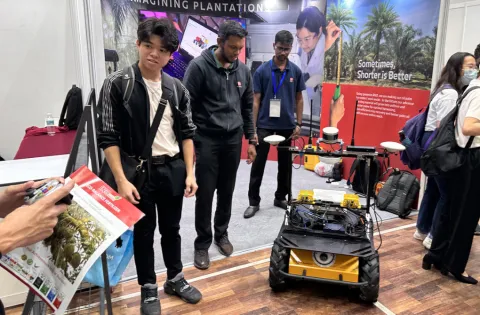
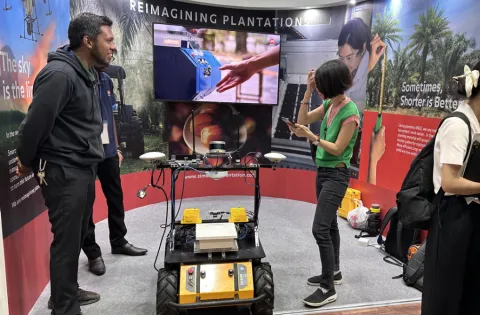
Sharing about his working visit to the Sime Darby Plantation’s operation site at Pulau Carey, Selangor, Anwar said he was shown the transformative potential of mechanisation, automation and digitalisation in the oil palm plantation sector.
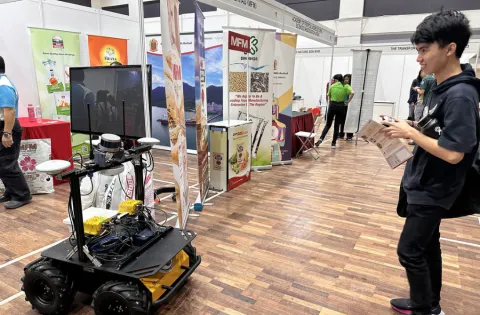
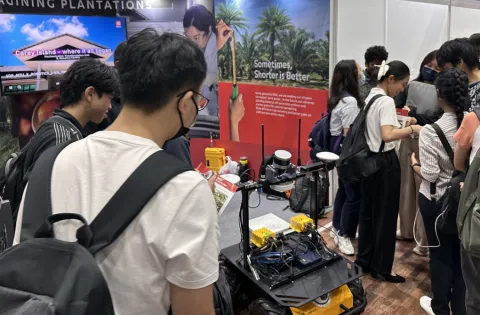
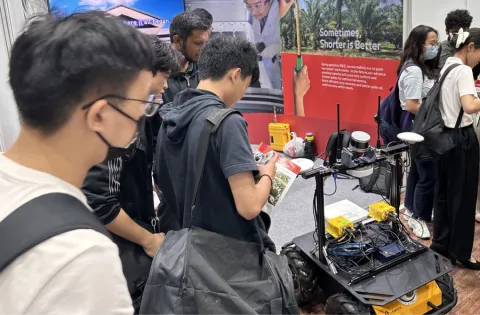
“This includes the use of new plantation technology and machinery, like autonomous palm fruit picking robots and fertiliser application machinery developed by the company’s in-house expertise.
“SD Plantation is also pioneering advanced technology that is equipped with AI (artificial intelligence) and machine learning to reduce the sector’s reliance on manual labour and, thus, attract more young local talents to be involved in the oil palm industry,” he said.
Anwar also expressed his pride after being told of the existence of technologies at the Sime Darby Plantation operations centre which is operated by local companies like eMooVit Technology Sdn Bhd, which is a high-tech company that specialises in autonomous vehicle technology and robotics.
“In its collaboration with Sime Darby Plantation, eMooVit has developed various technologies, including the Autonomous Mechanical Buffalo Grabber (AMBG), which is a driverless vehicle to pick oil palm,” he said.
The Prime Minister said another local start-up company which has partnered with Sime Darby Plantation is Braintree Technologies Sdn Bhd, which assists Sime Darby Plantation in developing an autonomous fertiliser sprayer to ensure the fertilisation process is done efficiently and accurately.
In addition, he also hopes that government-linked companies (GLCs) and government-linked investment companies (GLICs) in the plantation sector will mobilise energy and funds and share ideas with start-up companies to ensure they expand to the international stage and achieve their maximum potential, as envisioned through the Madani Economy framework.
Click to see the article
07 May 2024
Sime Darby Plantation to work with PNB to develop 404ha Kerian Integrated Green Industrial Park
Sime Darby Plantation Bhd (SD Plantation) today said it will work with major shareholder Permodalan Nasional Bhd to develop the 404 hectare Kerian Integrated Green Industrial Park (KIGIP), in Perak.
In a statement today, the company said a joint proposal was submitted to the Ministry of Investment, Trade & Industry (MITI) in February.
The development will be located in SD Plantation's Tali Ayer Estate in Perak.
KIGIP, conceptualised to attract green electrical and electronics (E&E) investments into the country, was announced by the government in the 2024 Budget.
The plan involves the establishment of 267 hectare of solar farms as the principal green energy source for the area, designed to attract semiconductors and E&E investments, two of the fastest growing sectors in the global economy.
"The decision to actively participate in the KIGIP development is an important milestone for us as we venture into the natural adjacency of plantation companies," SD Plantation's group managing director, Datuk Mohamad Helmy Othman Basha said.
Conceptually, SD Plantation said about 67 per cent of the main zone will comprise industrial areas, whilst the balance will house other infrastructure such as commercial and residential facilities and large green spaces.
Its plans are subject to feasibility studies, due diligence, legal requirements, and other internal approval processes.
On its push into industrial park development, Mohamad Helmy said the company is well positioned to expand into the industrial park development area due to its landbank and strong balance sheet.
"By collaborating in such projects, instead of just signing off our land, we aim to secure more sustainable revenue streams for our shareholders," Mohamad Helmy said.
The group holds strategic landbanks in various states throughout Malaysia, and active discussions are currently ongoing with several state agencies to develop these lands into industrial parks.
The intention is to replicate KIGIP's green energy model where feasible.
SD Plantation said the solar farms for KIGIP will be owned and operated by the company, as renewable energy has been identified as a key strategic pillar and revenue source for the group.
It is also a key component of SD Plantation's net-zero strategy, specifically, a 42 per cent reduction target in Scope 1 and Scope 2 Energy and Industrial carbon emissions by 2030.
Renewable energy is expected to contribute significantly to the company within the next five years.
SD Plantation said moving forward, the company will identify less productive agricultural lands to convert them into solar farms.
SD Plantation started leasing its land to third party solar farms under the government's Large Scale Solar (LSS) schemes 1 and 4.
For LSS4, about 40 per cent of the quota for solar farms awarded by the Energy Commission of Malaysia was on SD Plantation's land.
Additionally, under the Corporate Green Power Programme, 38 per cent of the quota was produced on the company's land, some for its own use.
Separately, the group is also exploring opportunities with partners to develop data centres, which typically consume large amounts of energy.
Click to see the article