
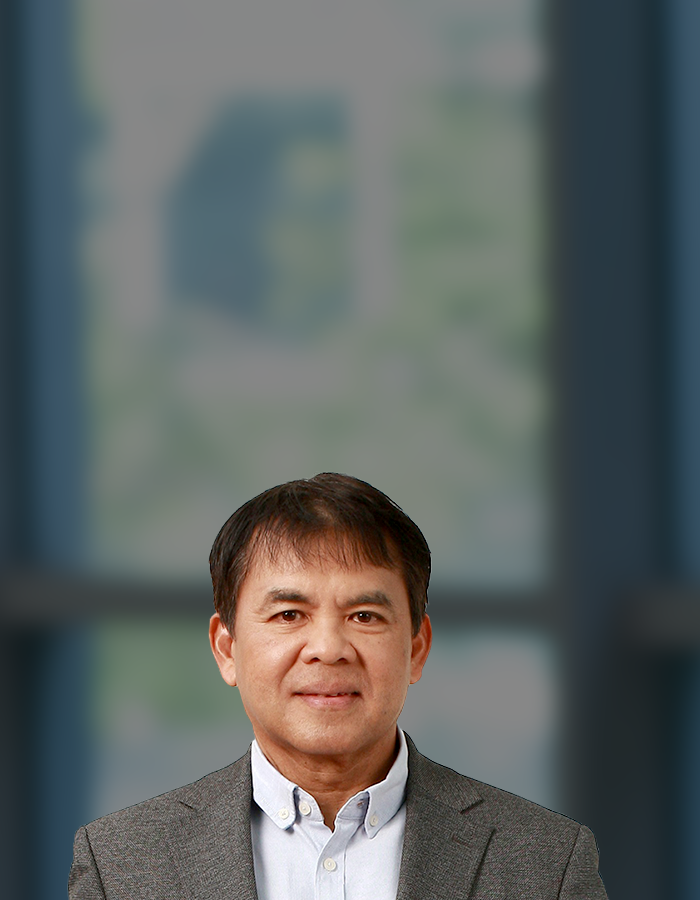
Dato' Mohd Nizam Zainordin
Non-Independent Non-Executive Director
Board Committee
Member of Risk Management Committee
Member of Governance & Audit Committee
Dato’ Mohd Nizam Zainordin, 62, Male, Malaysian, is a Non-Independent Non-Executive Director of SD Guthrie Berhad (Guthrie). He was appointed to the Board of Guthrie on 14 July 2017.
He has over 29 years of experience in the finance sector. He began his career with Permodalan Nasional Berhad (PNB) in 1994, and during his tenure, he held various key positions, including Vice President and Senior Vice President. He was appointed Chief Financial Officer (CFO) and Group CFO of PNB in 2010 and 2014, respectively, before assuming the position as Deputy President and Group CFO of PNB until his retirement on 31 December 2023. He has also served as a director of several subsidiary companies within PNB Group of Companies, all of which were unlisted.
Dato’ Mohd Nizam obtained his qualification from the Association of Chartered Certified Accountants (ACCA), United Kingdom, in 1989 and later obtained an Executive Masters of Business Administration from the Asian Institute of Management in 1999. He holds a Fellowship with ACCA, United Kingdom, and is a member of the Malaysian Institute of Accountants.
Training Programmes Attended (1 January 2025 – 31 December 2025)
| Date of Training | Title of the Seminar/Workshop/Course | Presenter/Organiser | ||
|---|---|---|---|---|
| 5 - 6 February 2025 | INSEAD Board Education Programme: Phoenix Encounter Workshop (Session 1) | Guthrie/INSEAD | ||
| 29 April 2025 | INSEAD Board Education Programme: A Brave New World: Trade Wars, Technology Race, & Geopolitics in the Age of Trump (Session 2) | Guthrie/INSEAD | ||
| 3 June 2025 | Fireside Chat | PNB | ||
| 23 July 2025 | E-Invoice Training for Directors | Guthrie | ||
| 27 August 2025 | Generative & Agentic AI Workshop | Guthrie/Asia School of Business | ||
| 22 September 2025 | INSEAD Board Education Programme: Growth Strategy – Powering Growth at SD Guthrie (Session 3) | Guthrie/INSEAD | ||
| 21 October 2025 | PNB Knowledge Forum 2025 - Transformation | PNB Research Institute Sdn Bhd | ||
| 13 November 2025 | INSEAD Board Education Programme: Growth Strategy Judgment & Decision Making (Session 4) | Guthrie/INSEAD | ||

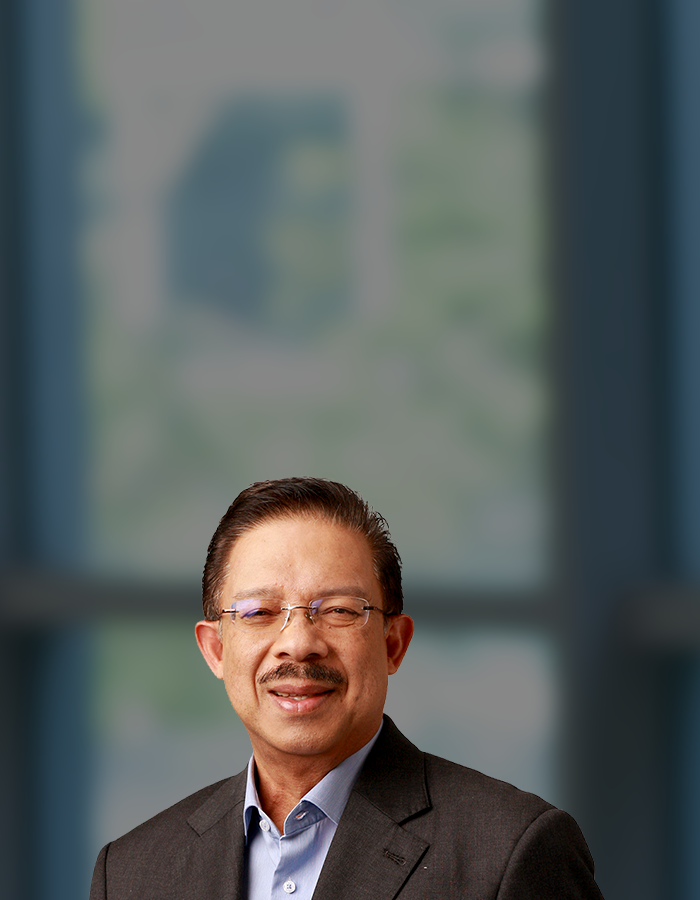
Tan Sri Mohd Zuki Ali
Non-Independent and Non-Executive Director
Tan Sri Mohd Zuki Ali, 63, Male, Malaysian, is a Non-Independent Non-Executive Director of SD Guthrie Berhad (Guthrie). He was appointed to the Board of Guthrie on 15 January 2025.
With over 30 years in Government service, he brings extensive expertise in policy-setting, public administration, and intergovernmental institutions. He served as the Chief Secretary of Malaysia from 1 January 2020 until his retirement on 10 August 2024. Prior to that, he was the Chief Secretary of the Ministry of Defence in 2019. He has also held various leadership positions in the Prime Minister's Department, including Senior Deputy Chief Secretary, Sarawak State Federal Secretary, Director General of Legal Affairs Division, Deputy Chief Secretary (Management), Divisional Secretary, and Senior Consultant.
Tan Sri Mohd Zuki currently serves as the Chairman of the Employees Provident Fund and PESTEC International Berhad (PESTEC). He is also a Board member of PR1MA Corporation Malaysia and holds the position of Pro-Chancellor of Universiti Kebangsaan Malaysia (UKM) and Universiti Malaysia Terengganu.
Previously, he served as Chairman of MRL Sdn Bhd, Cyberview Sdn Bhd, Sinergi Perdana Sdn Bhd, Razak School of Government and the Malaysian Institute of Integrity.
He holds a Master of Business Administration (Finance) from Nanyang Technological University, Singapore through a collaboration programme with the Massachusetts Institute of Technology, Boston, United States and a Bachelor of Economics from UKM.
Training Programmes Attended (1 January 2025 – 31 December 2025)
| Date of Training | Title of the Seminar/Workshop/Course | Presenter/Organiser | ||
|---|---|---|---|---|
| 23 - 24 April 2025 | Directors' Training - Bursa Malaysia Mandatory Accreditation Programme (MAP) | PESTEC | ||
| 29 April 2025 | INSEAD Board Education Programme: A Brave New World: Trade Wars, Technology Race, & Geopolitics in the Age of Trump (Session 2) | Guthrie/INSEAD | ||
| 17 – 18 June 2025 | International Social Wellbeing Conference (ISWC) 2025 | Employee Provident Fund (EPF) | ||
| 18 September 2025 | INSEAD Board Education Programme: Half-Day Refresher Session on the Phoenix Encounter Method | Guthrie/INSEAD | ||
| 22 September 2025 | INSEAD Board Education Programme: Growth Strategy – Powering Growth at SD Guthrie (Session 3) | Guthrie/INSEAD | ||
| 29 September – 3 October 2025 | World Social Security Forum (WSSF) 2025 | EPF | ||
| 16 October 2025 | DTX Summit 2025 - Next-Gen EPF: Transforming EPF into a Digital Leader | EPF | ||
| 13 November 2025 | INSEAD Board Education Programme: Growth Strategy Judgment & Decision Making (Session 4) | Guthrie/INSEAD | ||


Dato’ Halipah Esa
Senior Independent Non-Executive Director
Board Committee
Chairman of Nomination & Remuneration Committee
Member of Sustainability Committee
Member of Board Tender Committee
Dato’ Halipah Esa, 76, Female, Malaysian, is a Senior Independent Non-Executive Director of SD Guthrie Berhad (Guthrie). She was appointed to the Board of Guthrie on 1 September 2020.
She began her career in 1973 with the Administrative and Diplomatic Services in the Economic Planning Unit (EPU) of the Prime Minister’s Department. She has served in various areas of economic development, including macroeconomics, human resources, environment and natural resources, infrastructure, water supply, energy, health, education, housing, urban services, poverty eradication and equity distribution, agriculture, and the manufacturing and services sectors. Prior to her retirement from the civil service in 2006, she was appointed Director General of the EPU. During her tenure, she played a key role in developing national policies, programmes and projects to tackle environment and sustainability issues, including the Sustainable Development of Highland Areas, Wetlands, Coastal Zones and Biodiversity conservation.
Dato' Halipah has also served as Deputy Secretary General of the Ministry of Finance and was appointed as a consultant to the World Bank as well as the United Nations Development Programme.
She has served on the Boards of various companies, namely, S P Setia Berhad, Cagamas Berhad, Malaysia Marine and Heavy Engineering Holdings Berhad, Pengurusan Aset Air Berhad, Petronas, MISC Berhad, KLCC Property Holdings Berhad, NCB Holdings Berhad, Northport (Malaysia) Bhd, UDA Holdings Berhad, Employees Provident Fund, Pensions Trust Fund, Inland Revenue Board, Bank Pertanian Malaysia Berhad, FELDA, Putrajaya Corporation, Putrajaya Holdings Berhad, Malaysia Maritime Academy Sdn Bhd, Malaysia Deposit Insurance Corporation and the Malaysia-Thailand Joint Development Authority.
Dato’ Halipah holds a Bachelor of Arts (Hons) degree in Economics and a Master of Economics degree from the University of Malaya. She has also obtained various certifications, including a Certificate in Economic Management from the IMF Institute, Washington, United States and the Kiel Institute for World Economy, Germany, a Certificate in Advanced Management Programme from the Adam Smith Institute, London, United Kingdom and a Certificate in Circular Economy and Sustainability Strategies from University of Cambridge, United Kingdom.
Training Programmes Attended (1 January 2025 – 31 December 2025)
| Date of Training | Title of the Seminar/Workshop/Course | Presenter/Organiser | ||
|---|---|---|---|---|
| 5 - 6 February 2025 | INSEAD Board Education Programme: Phoenix Encounter Workshop (Session 1) | Guthrie/INSEAD | ||
| 29 April 2025 | INSEAD Board Education Programme: A Brave New World: Trade Wars, Technology Race, & Geopolitics in the Age of Trump (Session 2) | Guthrie/INSEAD | ||
| 23 July 2025 | E-Invoice Training for Directors | Guthrie | ||
| 27 August 2025 | Generative & Agentic AI Workshop | Guthrie/Asia School of Business | ||
| 18 September 2025 | INSEAD Board Education Programme: Half-Day Refresher Session on the Phoenix Encounter Method | Guthrie/INSEAD | ||
| 22 September 2025 | INSEAD Board Education Programme: Growth Strategy – Powering Growth at SD Guthrie (Session 3) | Guthrie/INSEAD | ||
| 13 November 2025 | INSEAD Board Education Programme: Growth Strategy Judgment & Decision Making (Session 4) | Guthrie/INSEAD | ||
17 February 2025
Lick without the drip! Food scientists invent dripless ice-cream (and it has fewer calories!)
Food scientists have invented a dripless ice-cream which is now on UK shelves.
The breakthrough formula gives the same flavour and sensation of cold ice cream with fewer drips onto the cone.
The magic ingredient is a formulation of sustainable palm oil, which gives the same creamy texture as dairy-based ice-cream - with fewer calories.
As the palm oil has a higher melting point than the dairy usually used, the developers say this makes it both 'softer and more stable.'
The effect was first tested in tropical countries, where the temperatures are far higher, says food innovator Ashikin Fauzi, at SD Guthrie, who helped develop the technique.
It's also proved a hit in Middle Eastern holiday spots, like Dubai – and is now on sale in vanilla, raspberry ripple and neopolitan flavours at UK supermarket chain Morrisons.
It's also been adopted by one of the world's biggest manufacturers of ice-cream products, Nestle.
Food innovation expert Ashikin told Femail: 'Ice cream made with this ingredient still tastes cold and creamy, so you get the taste and refreshing sensation of traditional dairy ice-cream. But it stays creamily solid and holds its shape.
'So that means it's not a race to eat it before it turns your cornet soggy. Ice cream is a complex mixture of fat globules, with ice crystals and sugar mixed in.
It holds together as a solid when it's stored at freezing temperatures.
However, the structure starts to fall apart when the ice crystals melt and turn to water.
When dairy fat is replaced by sustainable palm oil, the matrix does not fall apart as soon as the ice melts, so it keeps its shape for longer.
Although the new type of ice-cream does need cooling, it doesn't need to be stored at such low temperatures.
Once outside, it also doesn't melt until it reaches a higher temperature than dairy ice-cream.
'This unique melting behaviour is due to palm fat's higher melting point,' added Ashikin.
'This forms more stable networks inside the ice cream matrix, leading to slower melting and a firmer texture at room temperature.
'We tested it on a sample of consumers in blind taste tests, and they said it tastes as creamy as milk fat ice-cream.'
The new formulation is not only a breakthrough for ice cream, it's also good for the planet because it does not need as much energy to cool it.
Research has found that cooling and freezing uses up 30 percent of the global electricity consumption by the food sector, according to a 2022 industry study.
Dairy also contributes to the climate crisis, according to the UN's Food and Agriculture Organisation, as well as being a polluter of waterways.
And finally, the breakthrough is also good news for the two out of three people who treat themselves to an ice cream at least once a week during the summer, according to a survey of 2,000 UK adults by Opinium Research.
It has been found that eating ice-cream on the beach is our favourite family holiday memory - because it combines the sensory experience of the cold taste with feelings of togetherness, according to research by the Family Holiday Charity.
However palm oils have long been vilified for reportedly raising the risk of heart disease, obesity and other illnesses.
Last year a social media influencer, popular for his videos about health, sparked shock after revealing over half of supermarket versions of vanilla ice cream don't contain the traditional ingredients including vanilla, cream or even fresh milk.
Bringing a resurfaced investigation by the UK's consumer watchdog to light, he told viewers several products instead included seed oils such as palm, palm kernel and coconut.
Cream and milk, meanwhile, were substituted with partially reconstituted dried skimmed milk or whey protein, with vanilla often replaced with a general flavouring.
In the viral video, YouTuber Evan Edinger who boasts more than 800,000 subscribers, noted the use of oils in ice creams wasn't strictly banned in the US.
However, most manufacturers choose to opt for higher quality ingredients to meet stricter legal requirements that allow them to use the 'coveted ice cream label'.
The investigation, carried out in 2018 by consumers' association Which?, found that one in five products examined had none of the three ingredients shoppers could expect to find in vanilla ice-cream.
Only half of the 24 products surveyed contained all three traditional ingredients.
Up until 2015, anything labelled ice cream had to contain at least five per cent dairy fat and 'no less than' 2.5 percent milk protein.
Now, however, since the introduction of the Food Information Regulation, UK manufacturers can choose to use vegetable oils for their fat content rather than cream.
There are currently no requirements for labelling a product ice cream.
Only those labelled as 'dairy ice-cream' should contain at least five per cent dairy fat, some protein from a dairy source and no vegetable fats.
The move, the watchdog said, was to enable more flexibility for reformulation and product innovation.
This has allowed for vegan products, or reduced fat substitutes – such as Halo Top or Ben and Jerry's Moo-phoria Light Ice Cream – to be sold as ice creams.
Click to see the article
03 January 2025
Planting seeds of change among Sabah’s children
Campaign seeks to teach pupils to be environmental stewards
A food-and-beverage manufacturer has expanded its Project ReLeaf reforestation initiative to cultivate greener values among schoolchildren.
At the launch of its inaugural ReLeaf Educational Programme at SK Abaka in Tawau, Sabah, over 100 pupils and teachers joined Nestle Cares volunteers in tree-planting efforts and other interactive activities.
With the support of partners Sime Darby Foundation, SD Guthrie Bhd and the Tropical Rainforest Conservation & Research Centre, the programme engaged both pre-school and primary school students to plant native tree species in the school’s vicinity.
Among the types planted were tropical almond trees or ketapang, jambu air, Taisai Paya, Simpur, Sentang and Obah Jangkang.
These species were selected to enhance local biodiversity and promote ecological balance, while also contributing to the greening of the school area.
Nestle Malaysia chief executive officer Juan Aranols said, “We are committed to shaping a sustainable future for both people and the planet.
“As part of our ‘Forest Positive’ strategy, through Project ReLeaf and previously Project Rileaf, we have already planted three million trees to date.
“This marks our positive progress towards our goal of planting four million trees across Malaysia by the second or third quarter of 2025, as well as contributing to the national ‘Greening Malaysia’ campaign, which aims to plant 100 million trees.
“By extending our efforts to students via the ReLeaf Educational Programme, we strive to inspire the next generation of environmental stewards in safeguarding Malaysia’s precious ecosystems.”
A highlight of the ReLeaf Educational Programme was its six interactive learning stations, designed to engage students in meaningful environmental education.
Participants joined in the practical demonstrations on planting and caring for trees, learned about native species through engaging trivia games, and discovered the critical role trees play in generating oxygen and supporting wildlife.
The pupils also learned about responsible waste management through hands-on activities such as recycling workshops and a “Trash Tower Challenge”.
This helped young learners gain a better understanding on the importance of recycling, waste reduction and sustainable practices that they can apply in their daily lives.
Project ReLeaf plays a key role in Nestle Malaysia’s environmental conservation efforts.
Guided by the 3 “Rs” – Reforest, Restore and Respect – the initiative focuses on reforesting wildlife corridors to connect fragmented forests and protect habitats, as well as restoring riparian buffer zones to minimise water contamination.
They also engage local communities in seedling production and tree planting to create a holistic ecosystem of environmental stewardship.
The project supports both ecological restoration and community livelihoods, creating a greener and more resilient future.
Click to see the article
10 January 2025
Revolutionizing Palm Oil for a Sustainable Future
The palm oil industry has always been at the centre of global debates on sustainability. From being the world’s most efficient oil crop to the controversies surrounding deforestation and biodiversity loss, the narrative around palm oil is complex. However, those who have been part of the industry for a long time have also witnessed its evolution. From improving yields through innovative breeding programmes to addressing global criticism over environmental issues, the industry has come a long way.
When it comes to yield productivity, palm oil’s efficiency is unmatched. Yet, public perception often overlooks this advantage, focusing instead on its environmental controversies. The irrefutable fact is that palm oil produces significantly more oil per hectare than alternatives like soybean or sunflower – and this makes it a vital crop for feeding the world’s population.
Nevertheless, the global population is also at a critical juncture. From around 8.2 billion people currently, it is rapidly surging and expected to reach 9.7 billion by 2050. This means the demand for agricultural products will continue to grow, presenting mankind with the ultimate challenge: how do we increase productivity on limited arable land without compromising the environment, communities, or future generations?
Balancing growth, food security, and environmental protection is no easy task. Palm oil expansion has historically come at a cost, particularly in biodiversity-rich regions like Southeast Asia. However, over the past decade the industry has shown that it can adapt, making significant strides in implementing sustainable practices.
Revolutionizing Palm Oil
For example, genomics research by major industry players like SD Guthrie has been a game-changer for the industry. We have been able to breed palms that can produce significantly more oil yield. This breakthrough innovation is critical as we aim to decouple productivity from deforestation. By understanding the oil palm genome, we are also making inroads towards breeding palms that are resilient to pests, diseases, and extreme weather conditions.
Technological innovations are also allowing us to further maximise efficiency per hectare. Machines are now tackling back-breaking manual work that has characterised the industry for over a century, making work easier and more productive for workers. Drones are being used to spray pesticides more efficiently in nurseries and immature palm plots, while geo-spatial monitoring and GPS tracking optimise machine productivity in the field. Precision agriculture techniques in oil palm plantations ensure that every drop of fertiliser and every ounce of pesticide is used wisely, further minimising waste and environmental impact.
As climate change intensifies, the palm oil industry must also prepare for its impacts. Oil palms are highly sensitive to changes in temperature and rainfall, which directly affect yields. This means that a strong commitment to climate action and achieving net-zero is no longer optional—it is a necessity.
Investments in reducing carbon emissions such as biogas plants and climate resilient practices such as water management, circular economy and turning waste into resources are crucial. Additionally, biomass from palm oil production can be converted into bioenergy or used to create biodegradable materials, reducing reliance on fossil fuels.
Environmental concerns
Beyond environmental concerns, the palm oil industry has a profound impact on people. It provides livelihoods for millions, particularly in rural communities. With proper support, it can drive social development by improving access to education, healthcare, and infrastructure.
Smallholders, who account for a significant portion of global palm oil production, are key to the industry’s sustainable transformation. Many lack access to advanced tools and training. By empowering smallholders with affordable technologies and knowledge-sharing programs, we can ensure that the push for sustainability is inclusive.
Changing the Narrative
One of the biggest challenges the palm oil industry faces is public perception. Palm oil is often demonised, but switching to alternative oils could result in even greater environmental harm.
To change this narrative, the industry must embrace transparency. Traceability tools allow consumers to see exactly where their palm oil comes from and whether it meets sustainability standards. Certifications like RSPO (Roundtable on Sustainable Palm Oil) and MSPO (Malaysian Sustainable Palm Oil) provide assurance that the product is responsibly produced.
However, transparency alone is insufficient. The industry also needs to communicate its story better. Consumers must understand not just the challenges but also the progress being made. From reforestation projects to cutting-edge technology, numerous examples of positive change made by the industry deserve recognition.
Acknowledging the importance of communicating sustainability effectively, SD Guthrie recently launched its new sustainability framework called Beyond Zero. It encapsulates how we have approached sustainability throughout our journey to be one of the world’s leading producers of certified sustainable palm oil. The framework also outlines our commitment moving forward. With Beyond Zero, we aim to go beyond merely mitigating negative impacts to proactively restoring nature and transforming lives and livelihoods.
With the urgency of climate change, doing the bare minimum to comply with sustainability standards is no longer enough. To build a better future, the industry must strive to go above and beyond. The question is not whether the palm oil industry can change – it can and already has. As one of the most scrutinised industries in the world, the industry continues to strengthen its sustainability standards beyond those of many other agricultural sectors.
Looking ahead, one thing is clear: palm oil will remain a viable crop for the future. But its future depends on continued evolution with sustainability at the heart of its transformation.
About Dr. David Ross Appleton
Dr. David Ross Appleton, PhD Dr Appleton is Chief Research & Development Officer, SD Guthrie Berhad (formerly known as Sime Darby Plantation). He joined Sime Darby Plantation R&D in 2010 and later held the position of Head of Biotechnology and Breeding, overseeing the development and commercialization of GenomeSelect and other genetics, breeding and biotechnology programmes. In 2020, he had the role as Head, Product Innovation and Development for SD Guthrie International (formerly known as Sime Darby Oils), before moving back to R&D in 2023 to take up his current position. Dr Appleton moved to Malaysia in 2008 on attachment to Universiti Malaya after working 5 years for MerLion Pharmaceuticals in Singapore as a Principal Research Scientist in Drug Discovery. He is a New Zealander with a PhD in Chemistry from The University of Auckland, New Zealand.
Click to see the article
21 March 2025
EPF chairman Mohd Zuki Ali joins SD Guthrie board
Plantation giant SD Guthrie Bhd (KL:SDG), previously known as Sime Darby Plantation, has announced the appointment of Tan Seri Datuk Seri Mohd Zuki Ali as its non-independent and non-executive director.
Mohd Zuki, who has been the chairman of the Employees Provident Fund (EPF) since September 2024, brings over three decades of experience in government service, according to SD Guthrie’s filing on Wednesday.
“With over 30 years in government service, he brings expertise in policy setting, public administration, and intergovernmental institutions,” SD Guthrie said.
Mohd Zuki also previously served as Malaysia’s 15th chief secretary to the government from 2020 to 2024, and was the secretary general of the Ministry of Defence in 2019.
Mohd Zuki was also recently appointed as non-independent and non-executive chairman of Pestech International Bhd (KL:PESTECH) in December 2024. Pestech is now a subsidiary of Dhaya Maju Infrastructure (Asia) Sdn Bhd.
At midday market break on Wednesday, shares in SD Guthrie were three sen or 0.63% higher at RM4.78, giving the company a market capitalisation of RM33.01 billion.
Click to see the article
03 February 2025
SD Guthrie’s unit acquires 48% stake in Netherlands-based animal feed and biofuel supplier for RM250m
SD Guthrie Bhd’s (KL:SDG) wholly owned downstream arm SD Guthrie International Ltd (SDGI) has acquired a 48% equity interest in Netherlands-based Marvesa Supply Chain Services BV for €54 million (RM250 million) from Dutch private equity firm, Parcom.
The acquisition is made to enhance SDGI’s capabilities in supplying oils and fats to the strategic European animal feed and biofuel industries, and aligns with its long-term strategy to integrate its value chain and expand its footprint in key markets.
Meanwhile, the remaining 52% stake in Marvesa is held by BGR Beheer BV, which is owned by the current executive management of Marvesa.
According to SD Guthrie’s press release statement, Marvesa is a well-established name in the European market, specialising in the sourcing, blending, and distribution of oils and fats to the animal feed and biofuel industries.
Its refinery in Zwijndrecht of the Netherlands, has a capacity of 300,000 tonnes annually and currently serves customers in 11 countries.
The refinery produces a variety of oils and fats that are essential for applications such as industrial frying, emulsifiers, bakery and confectionery ingredients, margarines, dairy products, candles, and milk substitutes, catering to evolving market needs.
“This acquisition positions us for long-term success across emerging markets,” said Dr Shariman Alwani, SDGI’s chief executive officer. “To stay ahead of market demands and regulatory changes, it is crucial that we work together with strong, like-minded partners. Our position in Europe is now stronger, and we will be able to build more robust relationships.”
Meanwhile, Marvesa’s chief executive officer Bart de Bruycker said, “As shareholders in Marvesa, we are deeply invested in its growth and long-term success. This partnership with SDGI is a testament to the strength of our business and our shared vision for sustainable value creation. Together, we are well positioned to drive growth and deliver exceptional value to our customers across Europe and beyond”.
SD Guthrie said the collaboration between SDGI and Marvesa creates powerful synergies. “Marvesa’s established trading volumes in lecithin, soy and other soft oils align with SDGI’s diversification strategy into non-palm sectors,” it said.
“This allows both companies to penetrate high growth opportunities, including in North & Central Asia Pacific, the Middle East & Africa, and the Americas. Marvesa already has a presence in Indonesia and is well positioned for growth in the Southeast Asia region that is experiencing high demand for animal feed ingredients,” it added.
SD Guthrie is one of the world’s largest producers of Certified Sustainable Palm Oil (CSPO), producing about 12% of all CSPO in the world. It is a fully integrated player in the global palm-oil value chain, with business presence in 12 countries.
At Monday’s midday closing, shares of SD Guthrie were down two sen or 0.4% at RM4.83, giving it a market capitalisation of RM33.4 billion.
Click to see the article
05 February 2025
SD Guthrie's Marvesa stake buy a strategic move
SD Guthrie Bhd’s acquisition of a 48% stake in Netherlands-based Marvesa Supply Chain Services BV for €54mil (RM250mil) is seen as a strategic move to strengthen its downstream presence in Europe, but the earnings impact from the investment is expected to be “minimal”.
Kenanga Research noted the investment “should fit well with SD Guthrie’s plantation as well as its downstream operations in Europe”.
However, it added that the impact on earnings is expected to be “minimal”, given the RM250mil consideration and SD Guthrie’s overall asset base of RM31bil.
“No guidance was provided as to the valuation SD Guthrie paid for Marvesa nor any earnings guidance.
“We suspect the acquisition could be neutral given the RM250mil consideration and SD Guthrie’s own valuation status, but even if it is slightly dilutive, the overall impact on financial year 2025 forecasts is likely to be minimal or less than 5%,” it noted.
MIDF Research is, however, more upbeat, noting the acquisition is “well poised to drive further growth” for SD Guthrie’s downstream business while diversifying its exposure beyond palm oil into soft oils such as soybean oil.
“This makes Marvesa an ideal partner to serve customers across 11 countries from its Zwijndrecht refinery in the Netherlands,” it noted.
Marvesa, part of the 60-year-old Marvesa Holding BV, specialises in trading, processing and distributing oils and fats. It operates a 300,000 tonnes refinery in Zwijndrecht, producing oils and fats for industrial frying, emulsifiers, bakery and confectionery ingredients, margarines, dairy products, candles and milk substitutes.
It also has a 100,000 cubic m tank farm across the Netherlands, Spain, Argentina and Indonesia.
Kenanga Research speculated that SD Guthrie’s latest move is likely driven by three key factors – the growth potential in the global animal nutrition market, the increasing demand for traceability in food supply chains and the potential for synergistic growth in the European and Asian markets.
MIDF Research noted that despite concerns over the upcoming European Union Deforestation Regulation, SD Guthrie remains committed to expanding in the region, leveraging its supply chains.
The acquisition is expected to enhance SD Guthrie’s trading volumes in lecithin, soy and other soft oils.
MIDF Research estimates, that if the deal is funded through term loans, SD Guthrie’s net gearing would rise to 0.25 times, still within the sector’s average range of between 19 and 25 times.
It has maintained a “buy” call on SD Guthrie with a target price (TP) of RM5.43 a share “pending further clarity on the earnings guidance”, while Kenanga Research has maintained a “market perform” rating on the counter with a TP of RM4.60 a share.
SD Guthrie shares gained 1.24% to close at RM4.91 yesterday.
Click to see the article
21 March 2025
Not All Palm Oil Is Created Equal
Pioneering Sustainability with SD Guthrie
SD Guthrie Bhd (SDG) has long been at the forefront of sustainable palm oil production, shaping the industry’s best practices through its commitment to climate action, conservation, human rights and responsible sourcing.
As one of the world’s largest sustainable palm oil plantation companies, SDG oversees the entire palm oil value chain — from cultivating oil palm on responsibly managed plantations to refining, processing and distributing high-quality palm oil products worldwide. This end-to-end control ensures superior traceability, sustainability and quality assurance at every stage, from seed to finished product.
At the heart of SDG’s sustainability strategy is the Beyond Zero framework — a bold commitment to not only achieving a fully traceable, deforestation-free supply chain but also driving meaningful positive change. The three pillars of the framework — Zero, Restore and Transform — focus on driving credible positive impacts and creating long-term value for stakeholders. Beyond Zero reflects SDG’s holistic approach to sustainability, eliminating negative impacts (Zero) while actively restoring and transforming (Restore and Transform) ecosystems and the lives of communities. Anchored in industry-leading certifications and compliance with global regulations, including the European Union Deforestation Regulation (EUDR), Beyond Zero serves as SDG’s blueprint for a regenerative and ethical palm oil industry.
For businesses navigating an increasingly regulated landscape, SDGI’s fully traceable, EUDR-compliant CSPO offers a future-proof sourcing solution.” — Dr Shariman Alwani
The Beyond Zero framework goes beyond a collection of corporate sustainability commitments — it is a transformational shift in the way palm oil is cultivated and processed. Its key focus areas include:
- Science-based climate action: SDG is the first palm oil company globally to have its emissions reduction targets verified by the Science Based Targets initiative (SBTi).
- Regenerative agriculture: The company is piloting a regenerative agriculture framework to enhance soil health and carbon sequestration efforts while reducing dependence on chemicals.
- Biodiversity and conservation: With 45,000ha already set aside for conservation and over 2.7 million trees planted since 2009, SDG is leading large-scale reforestation efforts.
- Empowering smallholders: By 2035, SDG aims to support 50,000 smallholders with training, certification and market access, including access to the EU. SDG delivered its first fully EUDR-compliant shipment, which included oil from 17,357 smallholders in its supply chain from Papua New Guinea and the Solomon Islands.
As SDG advances its sustainability journey, its initiatives not only set industry standards but also establish the company as a low-risk, future-proof investment.
Translating Sustainability into Market Value
While SDG sets the industry standard in sustainability, its downstream arm, SD Guthrie International (SDGI), is responsible for translating these commitments into tangible market advantages. Through its Not All Palm Oil Is Created Equal campaign, SDGI is reshaping perceptions around sustainable palm oil and reinforcing its differentiation in the marketplace.
Launched in 2023, the campaign is designed to create awareness among buyers and businesses on the superiority of SDGI’s Certified Sustainable Palm Oil (CSPO). The campaign has already gained traction, boosting SDGI’s brand perception by 39% in Europe and expanding to the Asia Pacific region in 2024. Through strategic partnerships, SDGI works with global food brands to develop tailored, sustainably sourced solutions that align with regulatory and consumer demands.
SDGI aims to provide customers with sustainable, high-quality palm oil products that meet the highest industry standards. Through its various initiatives, the company enables businesses to make responsible sourcing decisions that benefit both their consumers and the planet.
Strengthening Compliance, Risk Mitigation for Businesses
For corporate decision-makers, navigating an increasingly regulated landscape is a priority. With EUDR compliance on the way to becoming a legal requirement, companies sourcing palm oil will need to secure deforestation-free supply chains to avoid financial penalties and reputational damage. SDGI has already delivered its first fully EUDR-compliant shipment ahead of schedule, reinforcing its position as a trusted supplier.
Key advantages for businesses sourcing from SDGI include:
- Regulatory compliance: Fully traceable and EUDR-compliant palm oil mitigates legal and reputational risks.
- Supply chain transparency: Advanced digital traceability systems allow buyers to verify sourcing origins with confidence.
- Science-Based Targets initiative (SBTi) validation: SDGI’s net-zero targets position it as a future-proof partner in ESG-compliant sourcing.
For businesses seeking ethically sourced palm oil, SDGI offers a market-leading solution that ensures compliance without compromising quality, food safety, or operational efficiency.
SDGI's Unique Market Proposition
Through its Innovation Centres in South Africa, the Netherlands and Malaysia, SDGI is at the cutting edge of product innovation - developing tailored formulations that cater to both regulatory and consumer demands. By collaborating with leading food brands, SDGI helps its clients create superior, sustainable food products that comply with stringent EU and halal certifications.
Moreover, SDG’s control over its fully integrated palm oil value chain guarantees consistent product quality. Therefore, businesses sourcing from SDGI, which is the group’s downstream arm, gain access to:
- Deforestation-free, responsibly produced palm oil: Ensuring both regulatory compliance and environmental responsibility.
- Bespoke product formulations: Developed through research and innovation to meet client specifications.
- Advanced supply chain traceability: Every shipment meets regulatory and ethical standards, offering peace of mind to global buyers.
Today’s consumers are increasingly conscious of sustainability, and SDGI’s certified sustainable palm oil allows businesses to align with these expectations while securing a reliable, high-quality product for their supply chain.
Future-Proof Businesses with SDGI
As global demand for sustainable products grows, businesses must align their supply chains with ethical, traceable and regulatory-compliant sourcing. SDGI’s CSPO is not only a responsible choice — it is a strategic advantage.
“For businesses navigating an increasingly regulated landscape, SDGI’s fully traceable, EUDR-compliant CSPO offers a future-proof sourcing solution. Contact us today to explore how our sustainability leadership can benefit your brand,” says SDGI CEO Dr Shariman Alwani, who was appointed to helm the downstream palm oil outfit in September last year.
With Beyond Zero as the sustainability backbone and its many marketing and innovation initiatives, SDG and SDGI are not just selling palm oil — they are shaping the future of sustainable sourcing. Businesses that choose SDGI are not merely aligning with best practices; they are investing in a greener, more responsible future.
Click to see the article