
01 October 2024
Setting Employee Welfare Standards For GLCs
KESUMA, in collaboration with the Department of Occupational Safety and Health (DOSH) and SD Guthrie Berhad, has successfully organised the 2024 Occupational Safety and Health (OSH) Summit alongside government-linked companies (GLCs). The event was officiated by the Deputy Human Resources Minister Datuk Seri Abdul Rahman Mohamad.
This summit serves as an initiative for GLCs in Malaysia to foster cooperation and collaboration, aiming to enhance the management of occupational safety and health within these organisations. This year marks the second consecutive summit, following the positive response received from last year’s event.
DOSH has outlined plans for this programme to become an annual fixture in partnership with GLCs, supported by the establishment of a permanent committee known as the GLC OSH Network. This network will play a crucial role in managing and executing various programmes and activities through the platform.
GLCs are considered the government’s right-hand partners and are key drivers in improving the country’s OSH standards. They employ various methods and approaches to cultivate and implement a “Culture of Prevention” within workplaces.
Strengthening OSH management among GLCs is expected not only to ensure the safety and health of employees but also to set a benchmark for the wider industry. In this regard, GLCs are viewed as role models among industry players and the broader community.
Moreover, adherence to OSH regulations is projected to significantly enhance OSH performance, aligning with the theme of the 2024 summit: “Empowering and Improving OSH Performance through Compliance.”
The government remains committed to providing a strategic and dynamic direction to invigorate the nation’s economy. This commitment aligns with the Malaysia Madani Strategic Framework, which envisions building a civil, advanced, and prosperous Malaysia by 2030 through three outlined strategic pillars.
Click to see the article
28 September 2024
Pertama Digital Director Tan Sri Dr Nik Thani Resigns After 2 Years
Petama Digital has informed that its non-executive director Tan Sri Dr Nik Norzrul Thani has resigned from the group with immediate effect to pursue other interests, he was appointed in September 2022
Tan Sri is a well known corporate figure being the Chairman of T7 Global Berhad. In 2017, he was appointed by the Ministry of International Trade & Industry as Chairman of the Malaysia-Singapore Business Council. Datuk Seri Dr Nik is a Director of several public companies including Amanah Saham Nasional Berhad, Cagamas Holdings Berhad and MUFG Bank (Malaysia) Berhad and SD Guthrie.
Tan Sri Dr Nik is Chairman and Senior Partner at Zaid Ibrahim & Co., the largest law firm in Malaysia and a member of ZICO Law, the premier ASEAN law network. Prior to this, he served with Baker & McKenzie in Singapore.
He was a Visiting Fulbright Scholar at Harvard Law School (1996-1997) and Chevening Visiting Fellow at the Oxford Centre of Islamic Studies, Oxford University (2004/2005). Datuk Seri Dr Nik is also a registered Notary Public
Click to see the article
29 September 2024
Building A Robust Digital Economy: Focus On AI, IR4.0
Malaysia’s digital transformation has gained significant momentum over the past few years, with artificial intelligence (AI) and Industry 4.0 (IR 4.0) at the forefront of this shift. As the country seeks to build a robust digital economy, it is increasingly leveraging technological advancements to spur economic growth, enhance productivity, and foster innovation. The nation’s digital investment in the first half of 2024 alone reached RM66.22 billion, surpassing the total investment recorded in the entirety of 2023, a clear sign of Malaysia’s commitment to establishing itself as a leader in the digital space.
AI and IR 4.0: Driving Economic Growth
AI and IR 4.0 are pivotal in transforming traditional industries by integrating automation, data analytics, and intelligent systems into business operations. These technologies enable industries to optimise production processes, increase efficiency, and reduce operational costs, ultimately leading to enhanced productivity. In Malaysia, the digital economy is projected to contribute 25.5% of the country’s GDP by 2025, up from 23.2% in 2023. This steady growth is largely fueled by the adoption of AI and IR 4.0 technologies across various sectors, including manufacturing, finance, and healthcare.
The integration of AI and IR 4.0 is not only modernising Malaysia’s industries but also creating new job opportunities. In the first half of 2024, 25,498 jobs were created in the digital sector, surpassing the 22,258 jobs generated in 2023. By 2025, the digital economy is expected to create approximately 500,000 jobs, reflecting the increasing demand for a digitally literate workforce. To meet this demand, the Malaysian government is actively investing in upskilling and reskilling programs to ensure that its workforce is equipped with the necessary skills to thrive in the digital age.
Strengthening Digital Infrastructure
A critical component of Malaysia’s digital transformation is the development of its digital infrastructure. The government has made substantial investments in expanding internet access and enhancing connectivity, particularly in rural and underserved areas. By improving digital infrastructure, Malaysia aims to bridge the digital divide and ensure that all citizens and businesses have access to the digital economy’s opportunities.
In addition to infrastructure, the Malaysian government has introduced various initiatives to attract investments and support the growth of digital businesses. One such initiative is the Digital Investment Office, which was established to facilitate digital investments and ensure that Malaysia remains an attractive destination for tech companies. As a result, the country saw approved digital investments reach RM161.97 billion from 2021 to March 2024, more than double the RM70 billion target set for 2025. This influx of investments is a testament to Malaysia’s appeal as a hub for digital innovation and transformation.
Fostering Innovation Through Strategic Partnerships
Malaysia’s digital transformation journey is being supported by partnerships with global tech giants such as Huawei, Google, and Amazon Web Services. These companies are playing a crucial role in accelerating the adoption of AI and IR 4.0 technologies in Malaysia, providing the expertise, tools, and platforms needed to drive innovation. Through these collaborations, Malaysia is not only enhancing its technological capabilities but also positioning itself as a regional leader in digital transformation.
The involvement of these major players also highlights Malaysia’s focus on digital exports and global trade. In the first half of 2024, digital export opportunities were valued at over RM1.936 billion, involving 228 companies across 11 countries. This demonstrates Malaysia’s potential to become a key player in the global digital economy, exporting not only products and services but also digital solutions and innovations that can be applied across various industries.
Sustainability and the Digital Economy
As Malaysia continues to embrace digital transformation, it is also integrating sustainability into its economic agenda. The government has made it clear that the digital economy must contribute to environmental, social, and governance (ESG) objectives, ensuring that growth is both inclusive and sustainable. Several prominent Malaysian companies, including Maybank, SD Guthrie, and Tenaga Nasional Berhad, are leveraging AI and digital tools to enhance their sustainability efforts. For instance, Maybank has committed MYR 80 billion to sustainable finance by 2025, aligning its digital transformation strategy with broader ESG goals.
Malaysia’s Centre 4IR ESG Innovation Challenge is another initiative that underscores the country’s commitment to driving sustainable digital transformation. This challenge encourages businesses to develop and implement innovative digital solutions that contribute to ESG objectives, ensuring that the benefits of digital transformation are felt across society.
The Road Ahead
Looking ahead, Malaysia’s digital economy is poised for continued growth, with AI and IR 4.0 serving as the backbone of this transformation. By 2025, the digital economy is expected to contribute 25.5% of the country’s GDP, supported by a robust digital infrastructure, a digitally skilled workforce, and strategic partnerships with global tech leaders. Moreover, Malaysia’s commitment to sustainability ensures that its digital transformation journey is not only about economic growth but also about creating a more inclusive and environmentally responsible future.
The future of Malaysia’s digital economy is bright, and with the continued integration of AI and IR 4.0 technologies, the country is well on its way to becoming a leader in the global digital landscape. As Malaysia continues to attract investments and foster innovation, it is clear that the digital economy will play a central role in shaping the country’s future, driving both economic progress and sustainable development.
Malaysia’s journey toward building a robust digital economy is a testament to the country’s vision of becoming a global leader in digital transformation. Through strategic investments, partnerships with tech giants, and a focus on AI, IR 4.0, and sustainability, Malaysia is well-positioned to harness the full potential of the digital economy. As the nation continues to push forward with its digital transformation agenda, it is set to achieve significant economic growth while ensuring that this progress is sustainable and inclusive for all.
YB Gobind Singh Deo, Malaysia’s Digital Minister, emphasised that the government is committed to boosting the digital economy, stating that Malaysia is uniquely positioned as an investment hub in Southeast Asia. He highlighted the country’s young, tech-savvy workforce and a conducive regulatory environment. Additionally, he mentioned strategic initiatives like KL20, aimed at making Kuala Lumpur one of the top cities globally for startups, and emphasised the importance of innovation and regulatory support for fostering growth in the digital economy.
Click to see the article
27 July 2024
PM Anwar: Perak river can supply 1,500 million litres of water per day to northern part of state and Penang, meeting essential needs
The channelling of raw water from Perak River to Bukit Merah Dam, which is partly implemented to support the Kerian Integrated Green Industrial Park (KIGIP) project, is expected to be able to supply the projected need of 1,500 million litres of water per day to northern Perak and Penang, the Dewan Rakyat was told today.
Prime Minister Datuk Seri Anwar Ibrahim said this would inadvertently fulfil the water supply needs in the Seberang Perai Selatan area and KIGIP, in addition to solving water woes in Kerian, Larut Matang and Selama districts in the future.
“The projection shows that Perak River’s capacity can reach up to 1,500 million litres per day, which meets the needs in northern Perak and the whole of Penang.
“This is why the government agreed with the large funding, but it shall be managed through the cooperation of Permodalan Nasional Berhad (PNB), Sime Darby, SD Guthrie Berhad and the Perak state government,” he said during the Minister’s Question Time.
Anwar said this in reply to Datuk Muhammad Bakhtiar Wan Chik (PH-Balik Pulau) who wanted to know the direction of the KIGIP project in boosting domestic investment aligns with the Energy Transition Roadmap while also balancing the needs of nearby areas, such as addressing the water supply issues in Seberang Perai Selatan.
The prime minister said that although Kedah had expressed its desire to supply raw water for the said areas, the volume was relatively small, which is only 25 million litres per day, while the initial requirement in northern Perak, namely Larut Matang, Kerian and Selama, reached 300 million litres per day.
“The capacity of the Perak River, if given an injection of funds to manage the river more effectively, can meet the needs of Penang, or most of it, with approximately 700 million litres a day,” he said.
He said the raw water channelling project from Perak River to Bukit Merah Dam with an allocation of RM4 billion is expected to start this year.
“This project is simple because the land in Kerian belongs to Sime Darby. So, there is no acquisition issue involving the 1,000 acres (404 hectares) of land. Once they agreed, the Perak government agrees to expedite it,” he said.
KIGIP is an industrial park project that will be powered by solar energy as the main green energy source, with the first phase involving the development of 404 hectares of land.
With a strategic location, which is close to the electrical and electronics (E&E) sector hub in Penang and Kulim Hi-Tech Park (KHTP) in Kedah, KIGIP will complement the rapid spillover demand of the industry.
Click to see the article
29 June 2024
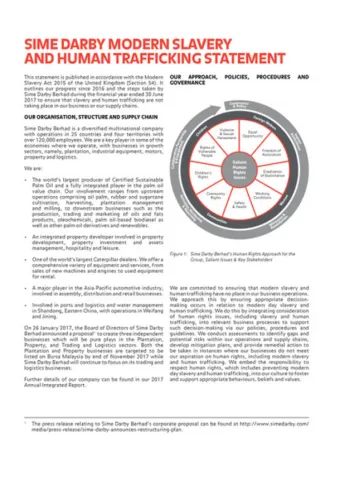
Robots Are Stepping Into One of Asia’s Dirtiest Farm Jobs
A drone buzzes between trees on a humid Malaysian morning, monitoring the oil palm fruits as they ripen. Self-driving trucks rumble over the vast plantation’s uneven ground, laying fertilizer and picking up the densely packed harvested bunches.
These are just some of the robots the Southeast Asian nation’s top palm growers hope will take over the sector’s most difficult and dirty jobs, plugging chronic worker shortages that have disrupted supplies of the world’s most-consumed edible oil.
With global stockpiles set for the first back-to-back decline in more than 40 years, Malaysia has every reason to push for automation to boost production. Increased awareness of the industry’s problematic reliance on migrant workers — clouded by restrictions and labor abuses — has also encouraged companies to find alternative solutions, said Mohamad Helmy Othman Basha, group managing director of SD Guthrie, a government-linked company previously known as Sime Darby Plantation.
"To depend on foreign workers for all these key tasks is actually putting this industry at a very high risk,” Helmy said. "This is why we have to take this plunge. We really have to place these bets.”
Perfecting the robots and deploying them at a commercially viable scale will take years, even as firms pour millions into developing such technology and retraining their staff to use it. But producers are pressing ahead.
The plantation workforce in Malaysia — the world’s No. 2 palm oil producer — was hollowed out during the pandemic, when border restrictions meant companies couldn’t bring in the foreign workers they so heavily rely on. It was the country’s worst-ever worker shortage and palm oil production plummeted, pushing prices to record highs. The industry lost billions.
SD Guthrie learned its lesson. Where possible, the firm has started using machines to take over nonharvesting jobs like spraying pesticide or monitoring fruit and yields. Where the industry average is currently for one worker to maintain 8 to 10 hectares of land, the company wants to boost that to about 17 hectares per worker with the aid of automation.
The company’s investment into robots is set to reach 100 million ringgit ($21.2 million) — or about half its research and development budget — by year-end and it "will spend whatever is required to find a solution,” according to Helmy. Nearly 30% of its annual R&D budget will be spent on this initiative in the next three to four years.
The robots aren’t fully autonomous yet, meaning there is still a need for skilled workers to control and maneuver them. Plus, trickier tasks remain in the hands of humans — like safely cutting down ripe fruit bunches from trees that can be as tall as six-story buildings.
But the technological advances have already opened up an avenue for women to join a traditionally male-dominated workforce. Sri Norhidayu Kussain, a 41-year-old woman, says the robots help with backbreaking tasks like lifting 30-kilogram fruit bunches and loading them into trucks.
"The work is now easier because these machines have successfully reduced the need for physical labor. It’s no longer like before when only men could do these type of jobs,” said Norhidayu, who operates a pesticide-spraying vehicle that can do the job of six workers at SD Guthrie’s Sungai Linau estate in Malaysia’s central state of Selangor.
Women make up 3% of the company’s roughly 700 machine operators and Helmy says the company is trying to attract more.
Labor shortfalls have long been a headache for Malaysian businesses, partially because of strict immigration rules targeting low-skilled workers that in turn have encouraged trafficking and left thousands of undocumented workers without legal protection. International scrutiny of labor abuses has pushed the country to reduce its reliance across several industries including manufacturing, construction and plantations.
SD Guthrie itself faced allegations of forced labor that resulted in a two-year U.S. ban on imports of its products in 2020 — something that Helmy said urged the firm to explore automation.
"Automation, if rolled out strategically will not hurt workers’ livelihoods,” said Adrian Pereira, executive director at the North South Initiative, a Malaysia-based nongovernmental organization focused on social justice. "We really hope government-linked companies will take the lead and demonstrate that this sector can be free of forced labor soon.”
SD Guthrie is the first plantation company in the country to set up a research facility dedicated to developing robots. Other palm giants like Golden Agri-Resources and IOI have also invested in mechanization and artificial intelligence to help harvest the oil used in everything from chocolate to soaps and fuel.
A plantation run entirely by robots will not be a reality soon. Technical issues like getting the robots to self-navigate through hilly terrain or correctly identify ripe fruit bunches, have held back past automation initiatives. This is in stark contrast to crops like soybeans or rapeseed — waist-high row crops grown on flat fields — where farmers can tend to hundreds of hectares with tractors and giant harvesting machines.
But speaking amid whirring and beeping prototypes at the company’s robotics lab in Selangor, the firm’s Chief Digital Officer Aditya Tuli said change was here to stay.
"Once we start mechanizing, we do imagine that there will be an increase or a positive impact to production numbers,” he said. "We are chasing that.”
Click to see the article.
14 June 2024
SD Guthrie: Harnessing the Power of the Sun
The global race to harness solar energy is gaining momentum, with solar parks emerging as a leading sustainable energy solution. The world's largest solar park, spanning 32,947 acres in Xinjiang, China, recently came online with a capacity of 5 GW, enough to power Luxembourg or Papua New Guinea for a year. Previously, the Bhadla Solar Park in Rajasthan, India, held the title with a 2.245 GW capacity across 14,000 acres or 56 km2, just under the size of Manhattan (59.1 km2).
The key factors in harnessing solar energy are high levels of sunlight and extensive land availability. SD Guthrie Berhad (SDG), formerly known as Sime Darby Plantation Berhad, has a strategic advantage with its vast landbank in Malaysia, a country with a tropical climate offering 4 to 8 hours of daily sunshine and about 1,500 to 2,000 kWh/m2 of solar radiation annually. As the largest landowner in Malaysia's private sector, SDG's 842,000 acres of landbank include over 109,000 unutilised acres. The company plans to leverage on this landbank for renewable energy solutions.
The first step towards this plan is its participation in the proposed Kerian Integrated Green Industrial Park (KIGIP) in Perak, Malaysia. SDG, in collaboration with its largest shareholder, Permodalan Nasional Berhad (PNB), will co-develop KIGIP, a 1,000-acre development within SDG's Tali Ayer Estate, which is adjacent to a 660-acre site earmarked for solar farms with an estimated 200MW capacity, to serve as the principal green energy source for the area. In a marked departure from its previous ventures into solar energy, SDG intends to own and operate the Kerian solar farm.
A Leap Towards Solar: Embracing Renewable Energy
SDG's commitment to renewable energy extends beyond KIGIP. The company plans to convert less productive agricultural lands into solar farms and is in discussions with state agencies to develop more industrial parks based on this model.
Since 2018, the Company has leased land for third-party solar farms under Malaysia's Large-Scale Solar (LSS) programme. To date, SDG has leased land for a 20MW LSS1 project, 12 LSS4 projects with a total capacity of 336 MW, and for 11 projects under the Corporate Green Power Programme (CGPP) with a capacity of 260 MW. SDG is targeting more sites under the upcoming LSS5 programme as well. Remarkably, 40% of the LSS4 quota and 32% of the CGPP quota awarded by Energy Commission of Malaysia is situated on SDG's land.
Malaysia's abundant sunlight and government commitment to eco-friendly practices make solar farms a highly profitable venture. The National Energy Transition Roadmap (NETR) is a comprehensive strategic plan launched by the Malaysian Government to transition the country's energy systems from conventional, fossil-fuel-based sources to cleaner, more sustainable alternatives. This roadmap champions solar and floating solar photovoltaic projects, emphasising the nation's shift towards renewable energy.
By integrating solar energy into its business model, SDG secures a sustainable revenue stream while contributing to the global shift towards renewable energy. This strategic move aligns with the company's new tagline, Unlocking Nature's Superpowers,' reflecting its broader goals of environmental responsibility, operational excellence, and long-term sustainability.
Unlocking Nature's Superpower
SDGuthrie.com
Click to see the article.
01 June 2024
Creating Legacy For Long-Term Sustainability
DARKNESS engulfed the vast ballroom and flashes of synchronised red neon lighting found their target – Tan Sri Dr Nik Norzrul Thani Nik Hassan Thani.
Dressed to the nines, the chairman of SD Guthrie Berhad (SD Guthrie), formerly SD Plantation, took to the stage, paying homage to the company’s extensive history and milestones before bidding adieu to the “Sime Darby” brand.
“Today marks the start of our new beginning as SD Guthrie. The board’s decision to move away from the Sime Darby brand was necessary.
“Shareholders gave us their overwhelming support, with 99.99% of them voting in favour of changing SD Plantation to SD Guthrie.
“With this rebrand, we (SD Guthrie) will have opportunities for growth that enable us to move away from traditional plantations and allow us to control our own brand with the strategic objective of embedding value in our own intrinsic brand name.
“It is important to celebrate our heritage. But for me, the future is more exciting.
“We, SD Guthrie, are excited about the opportunities that lie ahead, and the work we are currently undertaking.
“Make no mistake, we are and always will be one of the leaders in the plantation industry but we are going to be much more.
“As a big landowner, a financially strong company, an industry leader, and employer of thousands of exceptionally bright people who are here tonight, we will move SD Guthrie to new heights,” said Nik Norzrul Thani in his opening speech during the company’s grand rebranding ceremony yesterday at the Kuala Lumpur Convention Centre.
Launching the new brand
There is only one chance to make a good first impression when it comes to introducing a new brand to the world, and SD Guthrie did it with a big bang launch.
Over a thousand guests, VIPs, key industry players, stakeholders, and employees attended the meaningful event and were entertained by the great Datuk Seri Siti Nurhaliza, the legendary Ruth Sahanaya, as well as singer Dasha Logan, violinist Joanne Yeoh, and comedian Douglas Lim – the entertaining host for the night.
The star-studded cast aside, the biggest wow of the night was an original musical, performed for the first time on Thursday, SD Guthrie: The Musical.
It is the story of the company from its origins in 1821, to the spectacular representation of the dawn raid of the London Stock Exchange in 1981 to “bring Guthrie home”.
Many in the audience were overwhelmed by the show, with one corporate figure rating it an 11/10.
Extending legacy
In proposing “SD Guthrie” as the new brand, the company presents itself as a fully integrated player in the industry with a robust and rapidly growing downstream business supporting its world class upstream operations.
It also, most crucially, has potential beyond upstream plantations, particularly in the development of green industrial parks and renewable energy.
“Knowing what lies in our future, we wanted an international name that sounds strong, is timeless, flexible and holds meaning for us.
“We decided on SD Guthrie because it achieved all our objectives – it acknowledges our past and positions us for an exciting future,” said SD Guthrie group managing director Datuk Mohamad Helmy Othman Basha.
“We will amplify our commitments to sustainability, innovation and quality in our plantation business, even as we explore new business verticals that will allow us to realise the full potential of our assets,” Mohamad Helmy added.
With its new brand, SD Guthrie pays homage to its recent past as part of the Sime Darby group, as well as its origins more than 200 years ago with Alexander Guthrie.
The second part of the story is even more pertinent for Malaysians; the dawn raid, on that proud day in September 1981, when PNB acquired control of Guthrie from the London Stock Exchange, in just under four hours.
The company started out as a trading house in Singapore in 1821, called Guthrie & Co.
Over the years, through multiple corporate exercises, it grew into one of the largest plantation companies in the world.
What’s in a logo?
A logo is arguably one of the most important assets of a business as it is the front face of its identity, which builds customer loyalty, supports marketing and advertising, and fosters pride among employees.
This new SD Guthrie logo represents the extraordinary legacy of the company, and the organisation it will be in the future.
The red and orange sunburst colours taken from the oil palm fruit, symbolise vibrance, vitality and energy.
Designed similar to a “Yin and Yang”, it shows the coming together of forces in balance and equilibrium, reflecting the new brand’s attitude.
On the one hand, it dares to push boundaries, to take the lead, and chart a new course for its business, while on the other hand, it will always do so with care and with nature at the heart of everything it does. SD Guthrie works with nature, for the greater benefit of all.
Moving forward, SD Guthrie’s upstream business in Malaysia will be known as SD Guthrie Plantation and there will be no changes to its upstream businesses in Indonesia and Papua New Guinea and Solomon Islands.
They will remain as Minamas and New Britain Palm Oil.
The company’s downstream business will be known as SD Guthrie International with all its non-food businesses following its mother brand such as SD Guthrie Renewables, SD Guthrie Research.
The “Sime Darby” brand is owned and controlled by Sime Darby Berhad, the former parent company of SD Guthrie.
Since the demerger and its listing as the former SD Plantation six and a half years ago, it had operated under a licence, subject to the terms of a brand and trademark licensing agreement, paying an annual fee for the use of the “Sime Darby” brand.
This situation imposed significant constraints on the company’s ability to make its own strategic decisions for the brand and business.
Changing a brand name can sometimes lead to a loss of brand equity. However, as Sime Darby Berhad owns the Sime Darby brand, it does not present an issue to SD Guthrie.
A series of engagements with key stakeholders will be undertaken over the next several weeks to create awareness of the brand name change.
“We are actively and regularly communicating with employees, customers, and other stakeholders, emphasising that this name change will not alter our core identity.
“Our purpose ‘care to nourish, dare to flourish’ and core values ‘integrity, respect and responsibility, enterprise, excellence’ remain the same,” said Mohamad Helmy.
Click to see the article
01 May 2024
SDP proposes name change to SD Guthrie
Sime Darby Plantation Bhd (SDP), the world’s largest palm oil producer by acreage, has proposed to change its name to SD Guthrie Bhd.
In a statement, the group said it will seek shareholders’ approval for the new name at an EGM.
SDP chairman Tan Sri Nik Norzrul Thani Nik Hassan Thani said the notice of the EGM will be issued in due course.
“This is a significant milestone in our 200-year history and comes at a pivotal time for us as an organisation.
“We have established clear leadership in our industry on many fronts and have grown our downstream business into a significant revenue contributor.”
As a landowner, Nik Norzrul said the group is cognisant of the many opportunities to create value for its shareholders.
“The decision to rebrand was made after several months of discussions with experts in the fields of law, intellectual property and brand identity.
“All necessary legal and regulatory approvals for the rebranding will be obtained.”
Group managing director Datuk Mohamad Helmy Othman Basha, meanwhile, said it is the prerogative of any large company with ambitions for sustainable growth to own and control its brand and identity.
“With this change to SD Guthrie, we will be able to assert full control over our identity and explore opportunities that will best serve the interests of our shareholders.
“The Sime Darby brand is owned and controlled by Sime Darby Bhd, the former parent company of SDP. Since the demerger and listing of SDP 6½ years ago, it has operated under a licence, subject to the terms of a brand and trademark licensing agreement, paying an annual fee for the use of the Sime Darby brand.”
He added that this situation imposed significant constraints on SDP’s ability to make its own strategic decisions for the brand and business.
“In proposing SD Guthrie as the new brand, the company aims to present itself as a fully integrated player in the industry, with interests and potential beyond upstream plantations.”
Click to see the article.