

29 May 2014
Sime Darby Berhad Delivers Pre-Tax Profit of RM1.0 billion for 3Q FY 2013/2014
The Group achieves better earnings due to higher contribution from the Plantation Division.
Kuala Lumpur, 29 May 2014 – Sime Darby Berhad registered a pre-tax profit of RM1.0 billion and a net profit of RM852.5 million for the third quarter ended 31 March 2014 (3Q FY2013/2014). Both the Group’s pre-tax profit and net profit for 3Q FY2013/2014 rose by 7 percent and 23 percent respectively, compared to the corresponding quarter of the previous financial year following improved results from the Plantation Division and a lower effective tax rate.
For the nine months ended 31 March 2014 (9M FY2013/2014), the Group posted a pre-tax profit of RM2.7 billion and a net profit of RM2.2 billion. The nine months pre-tax profit and net profit declined by 16 percent and 10 percent respectively, compared to the corresponding period of the previous financial year.
Commenting on the overall performance of the Group, Sime Darby’s President and Group Chief Executive, Tan Sri Dato’ Seri Mohd Bakke Salleh said, “The Group had produced a satisfactory performance. Despite operating in a challenging environment, Sime Darby is on track to achieve its net profit Key Performance Indicator (KPI) of RM2.8 billion for the financial year ending 30 June 2014. The resilient performance of the Plantation Division is testament to the initiatives that have been put in place to enhance operational efficiencies of the Division. With the uncertainty in the global economy, it is important, now more than ever, for us to intensify our efforts to enhance efficiency and institute prudent cost management and saving measures in order to remain competitive and continue to deliver long-term returns to our shareholders.”
He added that the Group also continues to show progress in the key long-term strategic initiatives. “The Motors Division and SISMA Auto have formed a joint venture to represent Jaguar and Land Rover in Malaysia. The joint venture, Jaguar Land Rover (Malaysia), has been appointed as the exclusive importer for Jaguar and Land Rover marques. Another significant development is the Plantation Division’s initiative to build and nurture a sustainable portfolio of palm-related industrial biotechnology companies with its first investment in Verdezyne Inc.” said Mohd Bakke.
3Q FY2013/2014 versus 3Q FY2012/2013 (Year-on-Year Comparison)
The Plantation Division posted a profit before interest and tax (PBIT) of RM454.8 million for the period under review, an increase of 10 percent compared to RM413.2 million in the corresponding quarter of the previous year. The higher PBIT was attributable to the improvements in oil extraction rate (OER) and average crude palm oil (CPO) price realised. The OER rose from 21.95 percent in 3Q FY2012/2013 to 22.17 percent in 3Q FY2013/2014 while the average CPO price realised recorded a 20 percent increase from RM2,147 per tonne to RM2,573 per tonne. The improvements have more than offset the decline in fresh fruit bunch (FFB) production which fell by 6 percent to 2.10 million tonnes in the quarter under review. The Division recorded a lower crop production in the quarter due to the change in cropping pattern in Indonesia.
The midstream and downstream operations recorded a profit of RM19.5 million in 3Q FY2013/2014 compared to a profit of RM39.7 million in the previous corresponding quarter. The 51 percent decline in profit was mainly due to losses arising from the jointly-controlled entities as a result of weaker market conditions in Europe.
The Industrial Division’s PBIT of RM220.6 million for the period under review was lower by 16 percent compared to RM263.1 million in the previous corresponding quarter. The PBIT of the Australasia operations reported a decline of 38 percent due to lower equipment sales and product support sales in the mining sector. On a positive note, the performances of the Singapore and China/Hong Kong operations rose by 68 percent and 58 percent respectively, attributable to higher equipment deliveries in the marine and oil & gas sectors. The Division also experienced an improvement in order book by 24 percent to RM2.6 billion as at 31 March 2014 as compared to RM2.1 billion as at 31 December 2013.
The Motors Division recorded a PBIT of RM142.9 million in the third quarter of this year, a decline of 21 percent compared to RM181.6 million in the corresponding period of the preceding year. This was mainly attributable to the lower contribution from the Singapore operation due to changes in government regulation, as well as lower earnings from the China/Hong Kong operations because of competitive market conditions. However, the Malaysia operation posted a better result driven by higher sales in the brands represented.
The Property Division posted a PBIT of RM105.5 million in 3Q FY2013/2014 compared to RM139.3 million in the same period last year, representing a decline of 24 percent. The decline in earnings was due to the gain registered on the sale of land in Pagoh, Johor in the previous financial year. Nevertheless, the Division’s average take-up rate continued to remain strong. New launches of double-storey terrace houses such as the Garinia in City of Elmina and Nahara 1 & 2 in Bandar Bukit Raja garnered an average take-up rate of 89 percent since their launches between January to March 2014. On the international front, the launch of Phase Two of the Battersea Power Station project received overwhelming response with 95 percent of the 254 units reserved in the first week of sales.
The Energy & Utilities Division’s PBIT for 3Q FY2013/2014 declined by 34% to RM39.1 million. The port operations in China recorded a lower profit contribution due to lower throughput caused by the slowdown of the Chinese economy. However, the decline in PBIT was mitigated by higher contribution from the power business.

08 July 2014
Palm Oil Industry Comes Together In Significant Sustainability Initiative
Petaling Jaya, 8 July 2014 - The world’s largest palm oil players have taken a significant step forward in sustainability, by committing to the Sustainable Palm Oil Manifesto which sets higher standards for growers, traders, end users, and other stakeholders. The Manifesto demands increased commitment to sustainable production right across the supply chain and is an important step the industry is taking to set the direction for sustainable agriculture.
The Manifesto commits its signatories to no deforestation, creating traceable and transparent supply chains, and protecting peat areas, while ensuring economic and social benefits for the local people and communities where oil palm is grown. These standards are higher than, and in addition to, those set by the Roundtable on Sustainable Palm Oil (RSPO), of which all signatories are members.
Five oil palm growers – who are the largest in the industry, together producing more than 9% of the world’s palm oil – were the first to sign the Manifesto. They are Sime Darby Plantation, IOI Corporation Berhad, Kuala Lumpur Kepong Berhad, Musim Mas Group, and Asian Agri. Other signatories include global palm oil trader Cargill and Apical.
These signatories, along with global agribusiness group, Wilmar International Limited, will also be funding research to define what constitutes a High Carbon Stock (HCS) forest and to establish HCS thresholds that take into account environmental, socio-economic and political factors in developing and emerging economies.
Unlike High Conservation Value (HCV) areas, which are areas of critical importance in terms of ecological, social or cultural value, HCS needs further study to establish appropriate thresholds that will not stifle the economic development of nations while ensuring that environmental concerns are addressed. The research will establish these, and determine suitable assessment methods to identify HCS forests, which will be excluded from future oil palm plantation development.
Speaking on behalf of the five growers, Tan Sri Dato’ Seri Mohd Bakke Salleh, President and Group Chief Executive of Sime Darby Bhd, said that while the signatories include many of the industry’s key players, the Manifesto is an open invitation to all stakeholders in the palm oil value chain, including civil society and environmental groups, to sign up and work together to increase momentum in the drive towards sustainability.
“This Manifesto represents an important milestone for the global palm oil industry. As the world’s leading palm oil producers, we want to make clear our commitment to driving progress towards sustainability in the industry, and across all sustainable agriculture, and to leading by example.”
“While many of these growers have been consistently improving their sustainability performance over the last five years, the Sustainable Palm Oil Manifesto puts their commitment in writing and calls on the rest of the industry to follow their lead,” Mohd Bakke said.
The Sustainable Palm Oil Manifesto aims to build upon the signatories’ existing commitments to the Roundtable for Sustainable Palm Oil (RSPO). The RSPO’s Principles and Criteria have established the foundation for the growing, production, processing and trading of sustainable palm oil. It is currently the only sustainability standard available in the global edible oil industry, making palm oil the only edible oil produced on a large scale that adheres to stringent social and environmental standards.
30 July 2014
The World's Largest Palm Oil Players Commit to Funding High Carbon Stock Study
Kuala Lumpur, 30 July 2014 - The world’s largest palm oil players are jointly funding a comprehensive 12-month study that will:
- clearly define what constitutes a High Carbon Stock (HCS) forest;
- provide practical guidance on how to delineate HCS forests on the ground; and
- establish thresholds for HCS that take account of regional socio-economic conditions and opportunities.
The study will take a wide-ranging and practical approach, using robust scientific methods to estimate both above and below ground carbon stocks, and carbon emissions resulting from conversion to oil palm plantations. An inclusive, consultative approach will be adopted (working with governments and leading social and developmental economics experts) to help deepen today's understanding of sustainable palm oil.
Malaysian companies IOI Corporation Berhad, Kuala Lumpur Kepong Berhad and Sime Darby Plantation, Indonesia’s Asian Agri and Musim Mas Group, and global agribusiness groups Cargill and Wilmar International, are funding the study and have committed to adopt the study’s findings in all their operations and supply chains.
The HCS study is a key component of the Sustainable Palm Oil Manifesto, which was signed by oil palm growers Sime Darby Plantation, IOI Corporation Berhad, Kuala Lumpur Kepong Berhad, Musim Mas Group, and Asian Agri, as well as global palm oil trader Apical and global agribusiness group Cargill. The Manifesto includes a commitment to no deforestation, creating traceable and transparent supply chains, and protecting peat areas, while ensuring economic and social benefits for the local people and communities where oil palm is grown.
To oversee this Study, a Steering Committee has been set up, independently co-chaired by Sir Jonathon Porritt, and Chief Research Scientist from Australia’s Commonwealth Scientific and Industrial Research Organisation (CSIRO), Dr John Raison. They are joined by independent economic advisor for the agribusiness sector, Dr James Fry, who will lend his expertise in international commodities to the process.
Leading environmentalist, Sir Jonathon Porritt, said: “Everyone acknowledges just how important it is to have robust methodologies in place to determine exactly what is meant by ‘High Carbon Stock’. This study will help to shed light both on the biophysical and on the socio-economic dimensions of that critical area of enquiry, taking a fully integrated approach in order to address the concerns of all stakeholders, including those of NGOs, local communities, smallholders and governments.”
The Steering Committee comprises delegates from the signatories of the Manifesto, representing key stakeholders in the palm oil value chain, along with Wilmar International which, although not a signatory, has joined the group to co-fund the study. Collectively, members of the Steering Committee have massive experience in palm oil research. They will be applying this expertise to support an independent, systematic and robust scientific process. Observers to this process include the Roundtable on Sustainable Palm Oil (RSPO) and the Sustainable Trade Initiative (IDH) who will actively contribute to ensure a transparent, objective and holistic approach. There are plans for discussions with wider stakeholder groups including the RSPO, to help ensure that the results of the study achieve international acceptance and are integrated into RSPO’s existing standards and policies.
Over the next weeks, the Steering Committee will appoint a Technical Committee to further scope the work, and then to assemble two groups of experts to contribute to the HCS study. A team of experts specialising in above-ground biomass, soil carbon, remote sensing and oil palm management will determine methods for estimating carbon stocks on the ground in regions where further oil palm development is likely. Concurrently, a team of socio-economic experts will assess the impact of adopting varying HCS forest thresholds on the developmental needs of local communities and governments in the same regions.
The consultants and the Technical Committee will then work together to integrate the findings and to produce an independent report, which will be finalised following extensive consultation. The report will recommend threshold values for what constitutes HCS forests, taking into account environmental concerns, regional socio-economic contexts, and the practical considerations in developing and managing economically viable oil palm plantations.
Sir Jonathon Porritt said, “The Steering Committee will have a critical role in overseeing this study, building common ground across the entire value chain to help define HCS values and thresholds. This is a highly significant move forward for the palm oil industry, and it should be rapidly emulated by others in the agricultural sector.”
Dr John Raison stated, “In-depth analysis will be needed to define HCS forest thresholds that also take account of both carbon emissions as well as local developmental opportunities. The Technical Committee will conduct an open and transparent process, and will consult widely in developing an independent report that is based on the best available science and practical experience.”

19 September 2014
Major Growers Commit to No HCS Development as HCS Study Starts in Earnest
Kuala Lumpur, 19 September 2014 - The world’s five biggest growers of oil palm, namely Asian Agri, IOI Corporation Berhad, Kuala Lumpur Kepong Berhad, Musim Mas Group and Sime Darby Plantation, have agreed not to develop potential high carbon stock areas with immediate effect, while the High Carbon Stock (HCS) Study they are funding is underway.
The HCS Study will, when completed, provide reliable information on greenhouse gas emissions (GHG) and socio-economic considerations to guide decisions on land conversion to oil palm plantations. The steering committee overseeing the 12-month study is led by leading environmentalist Sir Jonathon Porritt and eminent forest ecologist Dr John Raison.
The study is being funded by the five grower companies, agribusiness groups Wilmar International and Cargill and consumer-goods company Unilever.
This latest decision by the growers comes as a technical committee of 8 scientific experts comes together to undertake the task of guiding and contributing to the work for the HCS Study.
Dr Raison, who is leading the science study said “This study is both well-resourced and fully independent, with all findings to be publicly available. It will extend earlier HCS work to provide more reliable estimates of GHG emissions from both biomass and soils resulting from the establishment as well as on-going management of oil palm plantations. It will also examine the socio-economic implications of setting varying thresholds for acceptable GHG emissions in different locations. These are critical inputs to guide improved land use planning, and better management of oil palm plantations.”
The grower companies and their co-funders in the HCS Study recognise that the findings of the Study will have far reaching implications on developing countries along the equatorial belt, where oil palm is typically grown. As this is a relatively new and complex area of study, similar efforts such as the HCS Approach which was announced on 16 September 2014, are welcome developments that will bring more knowledge and experience to the table, furthering the advancement of sustainable development along the palm oil supply chain.
As members of the Roundtable on Sustainable Palm Oil (RSPO), the growers are already preserving virgin forests, High Conservation Value (HCV) areas, and peat land. They are also working to submit carbon maps and greenhouse gas emission estimates voluntarily to the RSPO.
Sustainable Palm Oil Manifesto
The five growers are signatories of the Manifesto, which sets higher standards on sustainable palm oil production compared to the RSPO, for growers, traders, end users, and other stakeholders.
The Manifesto demands increased commitment to sustainable production across the supply chain. This includes no deforestation, creating traceable and transparent supply chains, and protecting peat areas, while ensuring economic and social benefits for the local people and communities where oil palm is grown, and respecting their right to give consent to proposed developments or conservation through the Free, Prior and Informed Consent (FPIC) process.
The HCS Study is a key component of the Manifesto.
Further announcements will be made on the progress of the study.
05 November 2014
World Leading Experts Embark on High Carbon Stock Study
Kuala Lumpur, 5 November 2014 - A team of leading experts has been appointed to undertake a comprehensive, independent and scientifically robust Study on what constitutes high carbon stock forests in the context of their conversion to oil palm plantations. A detailed description of the Study can be found at www.carbonstockstudy.com.
The Study will take into account socio-economic considerations, including the rights of nations’ and peoples’ to development. The team is made up of acknowledged experts in different academic areas, who will together form the Technical Committee for the High Carbon Stock (HCS) Study. The Technical Committee is chaired by Chief Research Scientist at Australia’s Commonwealth Scientific and Industrial Research Organisation (CSIRO), Dr John Raison, and is made up of:
- Dr Jerome Chave of Laboratoire Evolution et Diversité Biologique, leading above and below ground biomass studies;
- Dr Hans Joosten of University of Greifswald, leading soil carbon studies;
- Dr Florian Siegert of Ludwig-Maximilians-Universität München, leading remote sensing work;
- Dr Ruth DeFries of Columbia University; leading the socio-economic and sustainable development aspects of the study, together with
- Dr Philippa Atkinson; author, consultant and researcher specialising in Liberia and the West African sub-region; and
- Goh Kah Joo of Applied Agricultural Resources Sdn Bhd, who will provide insights into the global oil palm industry.
The Technical Committee will be supported by a team of Research Consultants. The Technical Committee will provide guidance to, and monitor the progress of these Research Consultants in undertaking the in-depth scientific analyses required.
The Technical Committee will prepare a draft synthesis report based on the research done, and provide recommendations for consideration by a wide range of stakeholders, including governments on:
- A definition of HCS forests that is based on potential GHG emissions from biomass and soils; as well as a practical method for identifying and delineating HCS forests on the ground;
- Suggested threshold values for GHG emissions from HCS forests, that take account of the regional socio-economic context in Southeast Asian and African countries where new oil palm developments are planned; and
- Guidance on how to accommodate the rights and livelihoods of local communities and indigenous peoples when implementing a future HCS approach to land use planning.
The draft synthesis report will be open to review and comment during a 2-month consultation period in mid-2015. The Technical Committee will independently finalise its report after considering feedback from that process.
The first Technical Committee meeting will also include a representative of the HCS Approach Steering Group, and Marcus Colchester representing the human rights organisation, Forest Peoples Programme, who will both provide their insights and experience to the research work.
Throughout the duration of the Study, Dr John Raison, who is also Co-chair of the Steering Committee charged with the task of overseeing the Study, will provide regular updates on the progress of the work to the Steering Committee. Steering Committee members are some of the world’s largest palm oil producers, such as Asian Agri, IOI Corporation Berhad, Kuala Lumpur Kepong Berhad, Musim Mas Group and Sime Darby Plantation; global agribusiness groups Cargill and Wilmar International; and consumer-goods company Unilever. The palm oil producing companies have all agreed to set aside areas that could be considered to contain high levels of carbon stock, whilst the Study is being conducted.
Observers to the Steering Committee include representatives from the Roundtable on Sustainable Palm Oil (RSPO), IDH, The Sustainable Trade Initiative, Neste Oil, the Malaysian Palm Oil Board (MPOB), Proforest and the Global Environment Centre (GEC), who will all actively contribute to ensure a transparent, objective and holistic approach.
Once the findings of the Study have been released, Signatories of the Sustainable Palm Oil Manifesto shall adopt these findings across their operations and supply chains. All of the Signatories’ direct suppliers are required to comply with the RSPO’s Principles and Criteria, and to take remedial action to correct any violations. Signatories will not do business with serious repeat violators of the RSPO’s Principles and Criteria.
07 November 2014
Sime Darby Donates 5.7 Million Rubber Gloves to Fight Ebola in Liberia
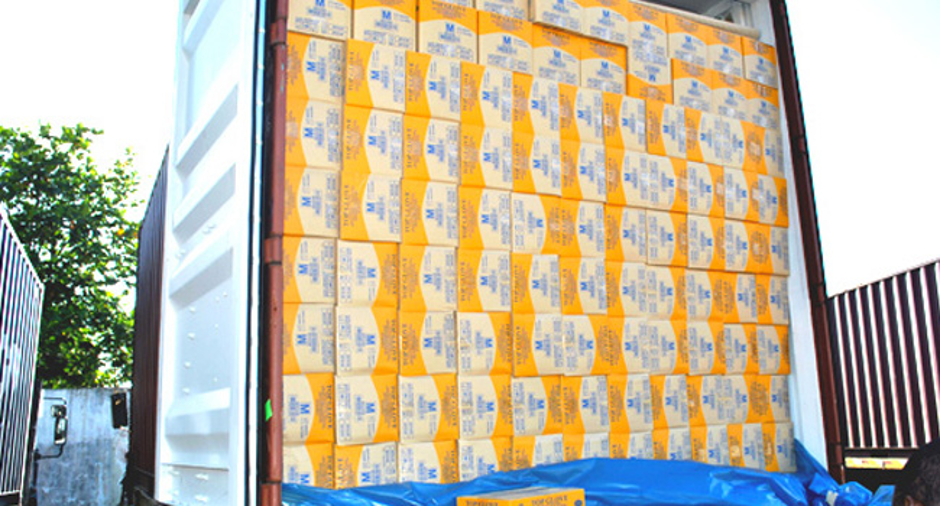
Monrovia, 7 November 2014 – The Sime Darby Foundation (SDF), the philanthropic arm of Sime Darby, is donating 5.7 million rubber gloves worth USD155,000 to help Liberia fight the Ebola virus disease (EVD).
The gloves shipment, which came in three containers, arrived at the Port of Monrovia on 31 October. The assistance is part of a collaborative effort by the Malaysian government with Malaysian companies to assist five African countries, namely Liberia, Guinea, Sierra Leone, Nigeria and Congo combat the spread of Ebola.
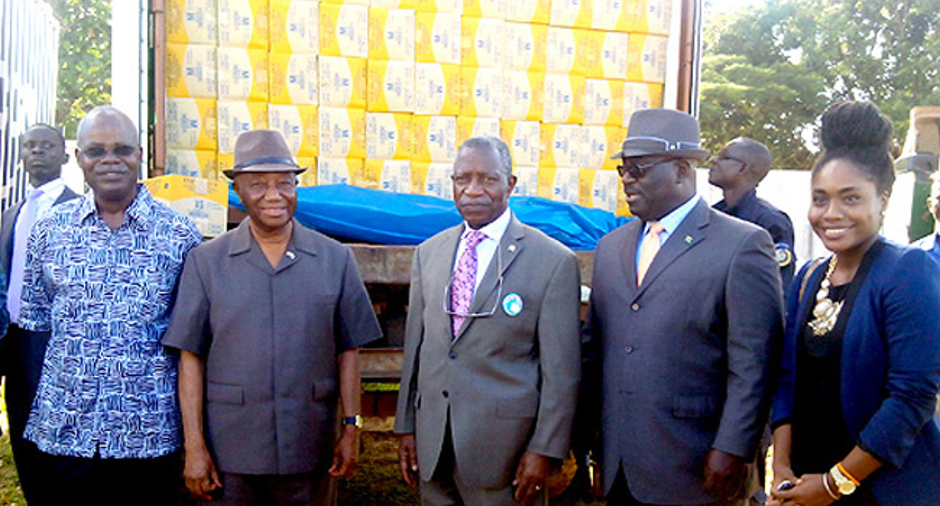
Sime Darby, which operates in Liberia, will hand over the shipment to the Government of Liberia. Subsequently, the gloves will be distributed to health workers, non-government organisations (NGOs) and communities.
The Government of Liberia has requested for help from countries all over the world to fight the deadly disease which has hit Liberia the hardest. The Ebola outbreak has claimed more than 4,500 lives across West Africa, including 2,200 in Liberia.In the worst-affected countries - Guinea,Liberia and Sierra Leone - about 9,000 people have been found to have the Ebola virus,which has a fatality rate of about 70% of those infected.
Besides the gloves, the SDF has also contributed USD157,220 to the International Federation of the Red Cross and Red Crescent Societies(IFRC) to carry out Ebola awareness programmes and campaigns in Liberia.
IFRC is working with the Liberian Red Cross Society (LRCS), which is leading efforts to control the spread of the virus through programmes to reduce mortality and morbidity related to Ebola.

Key activities include training and mobilisation of volunteers to affected communities and providing psychosocial support to help those affected continue with their lives. Other activities include setting up diagnosis facilities, expanding on-going awareness programmes to Sime Darby estates and developing an identification system to manage any outbreak of EVD. Sime Darby Plantation Liberia currently has a workforce of almost 3,000.
In 2009, Sime Darby Plantation signed a 63-year concession agreement with the government of Liberia to develop oil palm and rubber plantations in Grand Cape Mount, Bomi, Gbarpoluand Bong counties.
28 November 2014
Sime Darby Berhad Registers a Pre-Tax Profit of RM674.9 million for 1Q FY2014/2015
The Group sets a Key Performance Indicator (KPI) Net Earnings target of RM2.5 billion and a Return on Average Shareholders’ Equity target of 8.5% for FY2014/15
Kuala Lumpur, 28 November 2014 – Sime Darby Berhad recorded a pre-tax profit of RM674.9 million and a net profit of RM500.7 million for the first quarter ended 30 September 2014 (1Q FY2014/15), representing a slight increase of 1 percent and 2 percent respectively, compared to the same period in the last financial year.
The Group posted a resilient financial performance in the quarter under review despite the highly challenging operating environment. The Plantation Division was the biggest contributor to profit on the back of improvements in fresh fruit bunches (FFB) production and oil extraction rate (OER). The Motors and Property Divisions also achieved improved earnings due to better vehicle sales in Australia, New Zealand and Vietnam and higher profit from recently launched property development projects, respectively.
“In the first three months of the current financial year, we continued to face significant challenges to the Group, particularly lower average crude palm oil (CPO) price realised and falling coal prices. However, our ability to drive operational improvements across the Group and undertake stringent capital management has allowed us to achieve a satisfactory performance. The strength and depth of the Group’s diversified portfolio remains crucial in withstanding the ever changing market conditions,” said Tan Sri Dato’ Seri Mohd Bakke Salleh, Sime Darby’s President and Group Chief Executive.
1Q FY2014/15 versus 1Q FY2013/14 (Year-on-Year Comparison)
The Plantation Division achieved a profit before interest and tax (PBIT) of RM289.3 million in the period under review compared to RM254.6 million in the same period last financial year. The PBIT increase of 14 percent was attributable to improved profit from the Upstream segment, which achieved higher sales volume and lower operating cost in addition to the improvement in operational efficiencies. This helped to offset the lower average CPO price realised of RM2,187 per tonne in 1Q FY2014/15 compared to RM2,331 per tonne in 1Q FY2013/14. The Group’s FFB production was higher at 2.52 million tonnes in the first quarter of the current financial year compared to 2.47 million tonnes in the first quarter of the previous financial year. Indonesian FFB production improved by 11 percent YoY. However, Malaysian operations registered lower FFB production by 2 percent YoY, for the quarter under review. Overall OER also improved by 0.26 percentage point from 21.39% in the first quarter of FY2013/14 to 21.65% in the first quarter of FY2014/15.
The midstream and downstream operations recorded a loss of RM18.9 million for the current quarter compared to a profit of RM11.0 million previously. The loss was largely due to unfavourable sales mix from the company’s refineries in Europe and Indonesia.
The Industrial Division recorded a PBIT of RM190.1 million in 1Q FY2014/15, a drop of 42 percent compared to RM327.2 million in 1Q FY2013/14. Cost cutting pressure from key mining customers as a response to persistently low coal prices and resultant lower margins continue to adversely impact the Australasian operations. Consequently, the results in Australia have been negatively impacted by lower equipment deliveries and lower product support sales. However, China operations posted a YoY PBIT improvement of 22 percent due to better margin realisation from engine deliveries. In Malaysia, despite the softening market conditions, profit contribution for the period under review rose by 24 percent to RM27 million as a result of the various cost saving measures and project finalisation.
The Motors Division’s PBIT increased by 3 percent from RM106.6 million in the first quarter of the last financial year to RM110.0 million in the first quarter of the current financial year. This improvement was mainly driven by higher PBIT from Australia and New Zealand, which increased 7 fold to RM21.4 million, on the back of contributions from the newly acquired BMW operations in Brisbane and also the Trucks operations in New Zealand. BMW operations in Vietnam continued its commendable performance in its third quarter of operations, post-acquisition. China/HK and Malaysia, however, reported a decline of 37 percent and 12 percent respectively. The China/HK operations continue to face margin pressures due to stiff competition in the luxury segment while the Malaysian operations are faced with supply issues and the tightening of consumer credit.
For the quarter under review, the Property Division posted a PBIT of RM137.1 million, an increase of more than 100 percent compared to RM65.5 million in the same quarter last financial year. The improved performance was partly the result of a gain on the disposal of a 9.9% equity interest in Eastern & Oriental Berhad amounting to RM55.5 million. Excluding this gain, the Division achieved a PBIT increase of 25 percent in view of higher profits from the Elmina East project and contributions from the construction works at the Pagoh Education Hub. The Division has unbilled sales of RM2.2 billion as at 30th September 2014.
The Energy & Utilities Division recorded a PBIT of RM21.7 million for 1Q FY2014/15. The increase of 67 percent from RM13.0 million in 1Q FY2013/14 was largely due to higher profit from the ports and water operations in China, reflecting the positive impact of an increase in throughput and higher average tariff achieved.
Headline Key Performance Indicators (KPIs)
The Group also announced its KPIs for the financial year ending 30 June 2015, with a Net Earnings target of RM2.5 billion and a Return on Average Shareholders’ Equity target of 8.5 percent.
02 March 2015
Sime Darby Plantation Completed NBPOL Acquisition
Total landbank grows to one million hectares and NBPOL will immediately contribute to profits
Kuala Lumpur, 2 March 2015 - Sime Darby Plantation (SDP), the plantation arm of Sime Darby Berhad, has completed the acquisition of New Britain Palm Oil Limited (NBPOL) today, bringing it closer to meeting its expansion target.
The purchase of NBPOL adds another 135,000 hectares of land in Papua New Guinea, bringing SDP’s total land bank to almost one million hectares spread out in five countries.
“This is a historic day for Sime Darby. NBPOL was founded by Harrisons & Crosfield, the company that was part of a merger exercise that created the Sime Darby of today, the world’s biggest producer of certified sustainable palm oil. It is a family reunion of sorts,” said Sime Darby Berhad President and Group Chief Executive Tan Sri Dato’ Seri Mohd Bakke Salleh.
SDP will have five representatives on the board of NBPOL, namely Dato’ Henry Sackville Barlow, Dato’ Rashidi Che Omar, Encik Rosely Kusip, Tan Sri Dato’ Seri Mohd Bakke Salleh and Datuk Franki Anthony Dass. Dato’ Henry Sackville Barlow is set to be appointed chairman of the board.
They will replace the outgoing directors namely Mr Antonio Monteiro de Castro, Dato’ Kamaruzzaman Abu Kassim and Encik Ahamad Mohamad.
SDP will focus on integrating the operations of both companies over the next few months. NBPOL provides a strategic fit to SDP with its track record in sustainability as all of its production is certified sustainable. SDP is a founder member of the Roundtable on Sustainable Palm Oil and together with NBPOL’s capacity, it can produce almost 26 per cent of the global CSPO output.
“As a well-managed company with an experienced management team, NBPOL will immediately contribute to the bottom line of SDP. We have been working on identifying the synergies and our immediate priority will be to unlock value from these synergies,” said Datuk Franki Anthony Dass, Managing Director of SDP.
Apart from the expansion of its upstream business in Papua New Guinea, NBPOL provides the opportunity for SDP to grow its downstream operations in Europe. NBPOL’s Liverpool refinery will complement SDP’s refinery in the Netherlands. NBPOL already supplies to more than 110 customers in the United Kingdom and Ireland.
“NBPOL has a long standing commitment to sustainability, similar to SDP. This is a union of like-minded organisations and we’re excited to be part of the Sime Darby family,” said Nick Thompson, CEO of NBPOL.
13 May 2015
High Carbon Stock Scientific Studies Nearing Completion
Kuala Lumpur, 13 May 2015 - 50 scientific experts are nearing the completion of a set of research reports, which were initiated in February this year. The work will underpin the development of a new methodology for the assessment of High Carbon Stock (HCS) forests.
Led by Dr John Raison, a former Chief Research Scientist at Australia’s Commonwealth Scientific and Industrial Research Organisation (CSIRO), this team of experts (listed below) are providing critical input to an independent and scientifically robust study that will guide decisions on land conversion to oil palm. The scientists provide global experience in the estimation of changes in soil and biomass carbon stocks, the use of remote sensing to support estimation of greenhouse gas (GHG) fluxes, and assessment of the socio-economic impacts of new plantation development.
These independent studies will be made publicly available. These individual reports will provide the basis for a Synthesis Report which will be publicly available in late 2015. The Synthesis Report aims to provide:
- A definition of HCS forests that is based on the level of net GHG emissions from biomass and soils that would result from their conversion to oil palm plantations;
- Threshold values for GHG emissions to enable the identification of forests where conversion to oil palm is acceptable. The thresholds will vary geographically to take account of the regional socio-economic context (and thus the variable social welfare benefit resulting from new plantation development) in Southeast Asian and African countries where expansion of the oil palm industry is planned;
- A practical method for identifying and delineating (mapping) these HCS forests on the ground; and
- Guidance on how to accommodate the rights and livelihoods of local communities and indigenous peoples when implementing a future HCS approach to land use planning.
A draft Synthesis Report will be open to public review during a 6-week consultation period from June 2015. Feedback from that process will be considered in the finalisation of the Synthesis Report. A detailed description of the Study can be found at www.carbonstockstudy.com.
“We’re making good progress and with the full technical team on board, we’re moving ahead rapidly. This landmark study aims to provide decision makers with critical information on the environmental and socio-economic implications of setting different thresholds for acceptable GHG emissions in any new development,” said Dr John Raison.
The technical team is fully cognisant of the fact that HCS is merely one of several inputs to be considered in land use planning decisions. Other critical inputs such as government policies and regulations, high conservation values (HCVs), agronomic considerations, socio-economic factors and other externalities must also be taken into account. The loss of carbon stock (resulting in GHG emissions) will rarely be the sole factor in determining whether a particular forest should be developed.
Chair of the Steering Committee overseeing the HCS Study, Sir Jonathon Porritt added: “It is hoped that the tools developed will provide additional guidance on the impacts of forest conversion to people and the planet, and assist in the land use change planning process along with other established processes such as High Conservation Value (HCV), Environmental and Social Impact Assessments (ESIA), and Free, Prior and Informed Consent (FPIC).”
The HCS Study invites input from all stakeholders, and is open to collaboration in the spirit of improving the sustainability of the palm oil industry.
19 June 2015
High Carbon Stock Draft Synthesis Report Open for Public Consultation
Kuala Lumpur, 19 June 2015 - A landmark scientific study which will provide a definition of high carbon stock forests, enabling oil palms to be grown more sustainably, is now open for public consultation.
The High Carbon Stock (HCS) Science Study’s draft Synthesis Report brings together independent research and discussions to date, conducted by 50 scientific experts in the fields of biomass, soil carbon, remote sensing, and socio-economics as they relate to the development of new oil palm plantations.
The methodology derived from the HCS Science Study is termed HCS+. “HCS” relates to the focus on greenhouse gas (GHG) emissions which are important due to its adverse impact on global climate, and the “+” indicates that there will be opportunities for improved livelihoods created at the concession or regional scale by allowing some level of responsible conversion (with associated net GHG emissions) of land to oil palm plantations.
A wide range of stakeholders have already been consulted, and members of the scientific community, palm oil industry figures, NGOs, academia, and other interested parties are now invited to submit feedback via the HCS Study’s website, www.carbonstockstudy.com , before the end of July 2015.
The Synthesis Report provides:
- A definition of HCS+ forests that is based on the level of net GHG emissions from biomass and soils resulting from the development of oil palm plantations;
- Threshold values for GHG emissions to enable the identification of forests where conversion to oil palm is acceptable. The thresholds may vary geographically to take account of the regional differences in forests as well as socio-economic context (and thus the variable socio-economic benefit resulting from new plantation development) in Southeast Asian and African countries where expansion of the oil palm industry is planned;
- A practical method for identifying and mapping these HCS+ forests on the ground; and
- Guidance on how to accommodate the rights and livelihoods of local communities and indigenous peoples when implementing a future HCS+ approach into land use planning.
All feedback from the public consultation process will be considered in the finalisation of the Synthesis Report, which is scheduled for completion in December 2015.
“In line with our commitment to transparency and inclusivity, we welcome input from all stakeholders to further strengthen our research findings. Given the high level of interest from the palm oil industry, we will also be conducting targeted peer reviews with leading experts and industry veterans to ensure our findings are based on the best available science and practical experience,” said Dr John Raison, former Chief Research Scientist at Australia’s Commonwealth Scientific and Industrial Research Organisation (CSIRO) who is leading the HCS Science Study.
Chair of the Steering Committee overseeing the HCS Study, Sir Jonathon Porritt added: “We are committed to ensuring a science-based process that is independent, objective and holistic, building upon existing knowledge in this critical area of enquiry. Feedback and public scrutiny is an important part of that scientific process, in ensuring our findings meet the highest standards of scientific quality. We urge interested parties to use this opportunity to come forward with comments on our work.”
The draft Synthesis Report and information on the HCS Study is available at www.carbonstockstudy.com.